
Musing Out Loud...
Some things never change. As sure as summer you have heat, swimming...and tragedy.
In July 1921, it was that of 12-year-old Donald Smith Hawkins, a student of Duncan Public School and the adopted son of James Hawkins, foreman of the James Logging Co., Cottonwood Creek.
While his father worked in camp, Mrs. Hawkins and Donald lived at Tyee Siding; but she was away so, Donald was staying with his dad in a floating shack at Youbou, downstream from Cottonwood Creek on the north shore of Cowichan Lake.
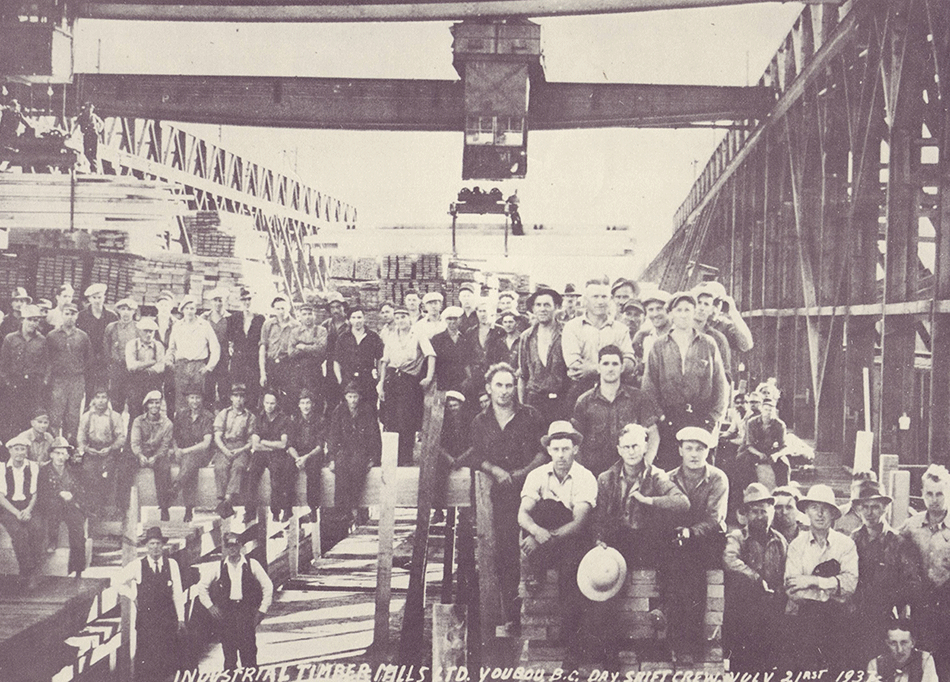
Youbou mill workers found themselves dragging the lake for a body. —Author’s Collection
At the inquest held by Dr. H.F.D. Stephens, RN, coroner, the only witness to appear, camp cook Frank Lacomb, said he saw Donald on the float house porch late in the evening. He’d told the boy to go to bed and turned in himself.
A quarter of an hour later, Hawkins Sr. called to ask him where Donald was; Lacom replied that he thought he was in bed. But Donald wasn't in the bedroom, neither were his nightclothes or a peavy which had been standing on the porch.
A search was immediately begun but, by late the next day, volunteers were dragging the lake looking for a body. BC Constable William Kier, who as it happened was nearby, at Lake Cowichan, was informed and took charge. First, they recovered the peavy, then the body, from 70 feet of water and just 15 feet from the float house.
Donald was wearing his clothes over his nightdress.
What the peavy had to do with his drowning remains unanswered; after the inevitable verdict of accidental death by drowning, Donald Hawkins was interred in the little cemetery of St. Mary's, Somenos.
A non-swimmer, his drowning prompted Constable Kier to urge parents to ensure that their children learned to swim.
* * * * *
If you visit St. Mary’s Cemetery, you’re to notice that some graves have been vandalized in years past.
The latest victim of this senseless destruction is the historic Sooke Harbour Cemetery. Among the desecrated graves is that of John Muir, one of the community’s best-known and earliest settlers.
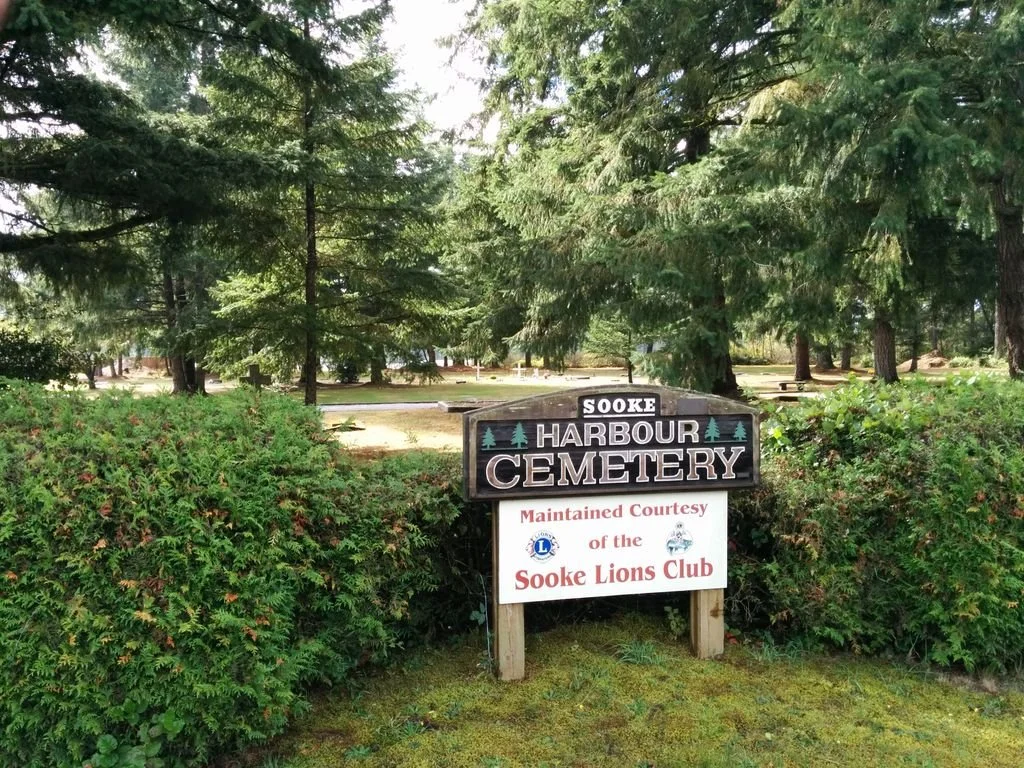
Whatever would prompt anyone to desecrate a cemetery? —findagrave.com
Murray Lambert, a member of the Sooke Lions Club, expressed the outrage of many: “It’s happened [here] before, but I don’t think it’s ever happened to this degree. I think this is the worst it’s ever been.”
He said he’ll willingly contribute to a reward for any information that leads to the identity of the vandal(s).
It can be a sad world that we live in, sometimes...
* * * * *
The Chemainus Valley Museum is presenting a new exhibit on the internment of Chemainus’s Japanese residents during the Second World War.
Entitled None Came Back, the exhibit includes part of a new walking tour “which aims to shed light on the Japanese Canadian community that lived in Chemainus...using archival documents, photos and artifacts.”
“We [want] to give the public a better understanding of the deep history of the community and that it wasn’t [only] white settlers who built the community,” CVM volunteer Hiram Beaubier explained.
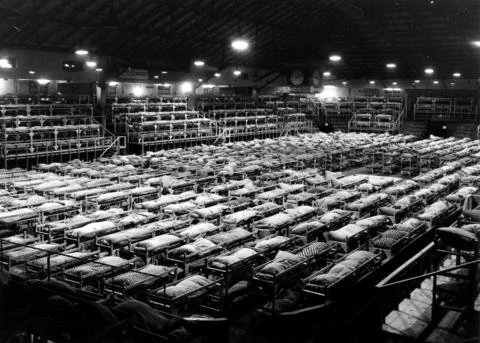
Men’s dormitory in the PNE Building before they and their families were assigned to various BC Interior locations, usually sub-standard buildings in semi-derelict ghost towns. —Vancouver City Archives
Displays are arranged in a timeline, beginning with the first arrival of Japanese men who sought employment in the Mount Sicker mines to the rising discrimination they and their families faced. Japan’s entry in the Second World War provoked their internment in the BC Interior and the appropriation of all their worldly goods.
Each display is accompanied by a panel that tells the impacts of the discrimination, exclusion and internment through the eyes of the Kawahara family, descendants of whom will return to Chemainus to attend the exhibit’s opening on July 11.
Almost 22,000 Japanese Canadians were interned, their property seized and sold at fire sale prices to go towards the costs of their imprisonment. Chronicles readers can learn the full, sad story elsewhere online. If they do so they’ll come to understand that the Internment is one of Canada’s darkest chapters.
* * * * *
This is my first chance to express my deepest gratitude to Belinda and Patricia for having carried the load of publishing the Chronicles over the past month.
It’s good to be back.
* * * * *

Have a question, comment or suggestion for TW? Use our Contact Page.