
Editorially speaking…
It took them long enough but they finally did it—rename Victoria’s Bay street Armoury in honour of General Sir Arthur Currie.
For those readers who don’t recognize him, this onetime Victoria school teacher, realtor and militiaman was slated to be promoted to, if Great Britain’s Prime Minister Lloyd George had his way, the supreme commander of British and Allied forces during the First World War.
The trench war that had bogged down for four years in the mud and hell of Belgian and French and had resulted in the wholesale slaughter by bullheaded field marshals and generals on both sides of entire armies. Not 10’s of 1,000’s, not 100’s of 1,000’s but millions of men sent to their deaths to no real purpose.
So it was with the Canadians who had the misfortune to be commanded by the British Army. Until Currie took charge.
* * * * *
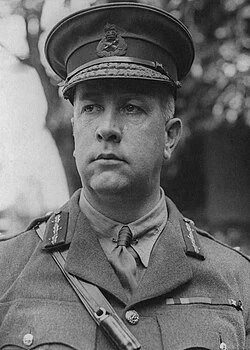
General Sir Arthur Currie. —Wikipedia
Today we call them weekend warriors. A century ago, reservists were known as Saturday Soldiers. Men who gave up their evenings to drill in the local armouries, their weekends and vacation time to training ‘schemes’ at regional military bases. When war came, they were the first to sign up. And the first to go overseas to experience that hellish phenomenon of the First World War that became ever cursed as trench warfare.
Of these legions of militiamen, 43-year-old former Victoria insurance salesman Arthur Currie became Canada’s first full general. More than that, he became, in the eyes of many historians, the Allies’ ablest corps commander—even if he looked anything but heroic with his paunch and double-chin.
Having moved to the Island as a teenager from Napperton, Ont., where he was born in 1875, he’d taught in a one-room Sidney schoolhouse and at a Victoria boys’ school before switching to selling insurance and serving as a militiaman with the city’s venerable 5th Regiment, where he rose quickly through the ranks from private to regimental commanding officer.
This was the position he held upon the outbreak of war in August 1914. Promoted to brigadier general, he was gazetted to command the 1st Canadian Division and, three years later, as commander of the Canadian Corps. It was under Gen. Currie’s inspired direction that Canadian soldiers ultimately turned the tide of war by capturing vitally strategic Vimy Ridge.
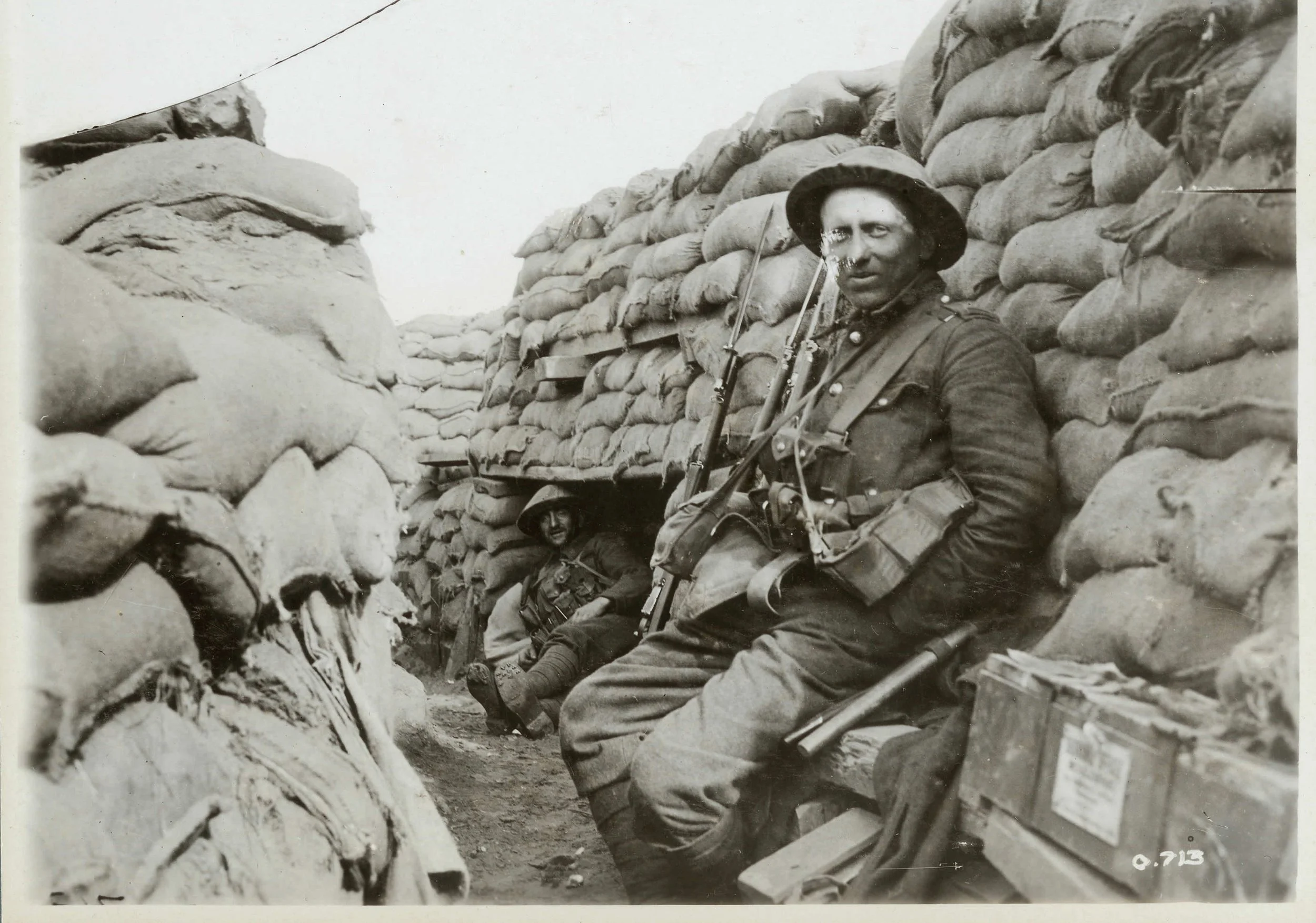
General Currie saved lives by meticulously planning attacks that achieved victory—without ordering his men to certain death as had long been the practice of British and French commanders.—www.warmuseum.ca/firstworldwar/wp
Currie was decorated with the GCMG, Croix de Guerre with palms and Distinguished Service Medal, and knighted by King George V.
Such was the distinguished visitor who received an enthusiastic reception in Nanaimo in November 1919. Just a year since Armistice, memories of the sacrifices made by local men were fresh in the memories of families and friends. Upon his being presented by Mayor McKenzie, the general and Lady Currie received a rousing ovation from the audience which had packed the Dominion Theatre, decorated with flags and bunting, to capacity.
Currie began his address by thanking “the men and women at home for the support they’d given the boys at the front,” particularly the “comforts” they’d sent to those serving overseas.
He referred to the battles of Passchendaele, Lens, Amiens, Ypres, Arras, Cambrai–“there never was a more formidable position to attack”–Valenciennes and Mons, the latter town captured by the Canadians in the early hours of Armistice Day–and the last, great German offensive. He also acknowledged the late enemy as “not a superman but he was a good soldier”.
He cited facts and figures that showed how the Canadians had, time and again, won staggering gains and had ultimately defeated fully one-quarter of the German Army on the Western Front. Although this was achieved at the cost of almost 70,000 casualties, “in proportion to our strength, we...sustained less than any British troops in the war”.
Currie concluded by paying tribute to those Canadians who’d paid the ultimate sacrifice: “By dying they re-created Canada. Let us make ourselves and Canada worthy of their sacrifices.”
He was heartily applauded and J.M. Rudd, chairman, thanked him on behalf of the Victory Loan Committee which had sponsored his appearance.
Mrs. T.W. Martindale, representing the ladies of Nanaimo, presented Lady Currie with a bouquet of white flowers.
On behalf of the Victory bond drive, J.B. Warnicker appealed to Nanaimo residents to buy more bonds for “selfishness” and patriotism (the bonds paid interest that stayed home rather than going to overseas capitalists), and for sentiment, as the monies generated helped former servicemen to re-establish their lives in peacetime.
Jensen’s Orchestra delighted all and Donald Hyslop, appearing in uniform, recited ‘In Flanders Fields’, followed by songs by Norman Carter, Jean Patterson and the Victory Choir. The evening concluded when the whole audience participated in a rousing rendition of ‘Everybody’s Saving Money,’ sung to the tune of a popular ditty, ‘Bubbles’.
* * * * *
Currie served as inspector general of the militia forces in Canada until he became principal and vice-chancellor of McGill University in 1920, a position he held until his death in 1933. The Canadian Encyclopedia states that, despite his having been without benefit of post-secondary education himself, “he was extraordinarily successful as a university administrator, and at a time of particular importance in McGill’s development”.
Not bad for the onetime Saturday Soldier whose name now—at last—graces the former Bay Street Armoury.
* * * * *
Have a question, comment or suggestion for TW? Use our Contact Page.