
Musing Out Loud...
Journalism has had its unsung provincial heroes, too.
In 1890, well known journalist, then speaker in the Legislative Assembly, D. W. Higgins recalled a long-gone colleague and an equally forgotten incident from 1861.
The protagonist of his tale was Leonard McClure, publisher of the Daily Press which, ever so briefly, challenged the Colonist’s hold on Victoria readers. A “Remarkably clever man,” to quote Higgins, McClure had doubled as editor and sole reporter for the Press. In the latter role he had attended the sittings of the Vancouver Island House of Assembly (in which he later sat as a member) in 1861. Although the struggle between the two newspapers was short-lived, it was, to quote Higgins, “war to the knife.”
At the start of the 1861 session, a bare quorum of members assembled in one of the famous “Birdcages,” the Pagoda like legislative buildings. Reporters of the day sat at the end of a long table which served as colonial political arena, opposite the Speaker’s chair. Business had proceeded with the usual bickering and banter until, one afternoon, the affairs of state were slack. The Speaker, Dr. J. S. Helmcken, noting that the representatives of the Fourth Estate were present, seized the opportunity to suggest that, as there was nothing more to be done that day, they turn to the letting of the contract for a lengthy bill by tender.
(There being no Queen’s Printer at the time, all government printing was put out to public tender.)
The manuscript was then handed to the representative of the Colonist; although primarily a reporter, giving estimates on printing jobs was all part of the day's work during the morning newspaper’s infancy. Making a great show of examining the document, he made his calculations, passed them up to the Speaker, then disdainfully tossed the document across the table to his competitor.
McClure accepted it with trembling hand. Although the Press was even smaller than the Colonist, meaning all the more duties to be borne by the publisher, commercial printing was beyond his realm of responsibility. McClure, in fact, had not a clue as to the job’s value.
“He thought, however, that it would never do to acknowledge ignorance of what that August assembly supposed to be his legitimate business,” notes the record, “and accordingly made a pretence of examining it.”
For many long minutes, he gave the document his closest attention, looking at every page, scribbling feverishly on his notepad, as he wondered frantically how he could save face. Glancing up, he saw that the legislatures legislators were becoming impatient and, in utter desperation, he seized a figure from mid-air, jotted it down on his notepad, and handed it along the table to the Speaker.
To his horror, Helmcken erupted in laughter.
Panicking, McClure wondered whether his quote had been outrageously high or low, as he looked about for an avenue of escape. But it was too late to plead that he was suddenly taken ill and, drawing a deep breath, he braced himself for the ultimate humiliation of being made a fool before his arch-rival from the Colonist.
His terror was such that he almost failed to hear Helmcken say: “Why, these fellows have tied each other!”
McClure was so overcome with amazement and relief that he almost fainted.
“Now, what is to be done?” asked Helmcken. “I'll tell you what, they shall draw cuts for the job.”
Without bidding, the clerk reached for a broom, conveniently placed against the wall for such tie-breaking decisions, snapped off two straws of unequal lengths, and handed them to the Speaker.
The Colonist drew first.
It was the wrong one, and the printing contract was awarded to the Press. Ironically, it proved to be the best-paying printing job ever handled by the Press and prolonged the fledgling journal’s career much more then otherwise would have been the case.
McClure had not only saved his pride and reputation that day, he had bought time for his beloved newspaper. But, of course, he had won the battle but not the war. The [Times] Colonist remains in business to this day, but the Press has long gone the way of hundreds of other British Columbia newspapers. With it went Leonard McClure, until recalled, 30-odd years after, by his rival, D.W. Higgins.
In 1890 Higgins, who became Speaker of the House himself, told the story to a Colonist reporter and explained that he had not learned the true story behind the printing contract until told years after, undoubtedly by McClure. Higgins thought it likely that, upon reading the belated account in the Colonist, Dr. Helmcken would learn the true story of the printing contract for the first time.
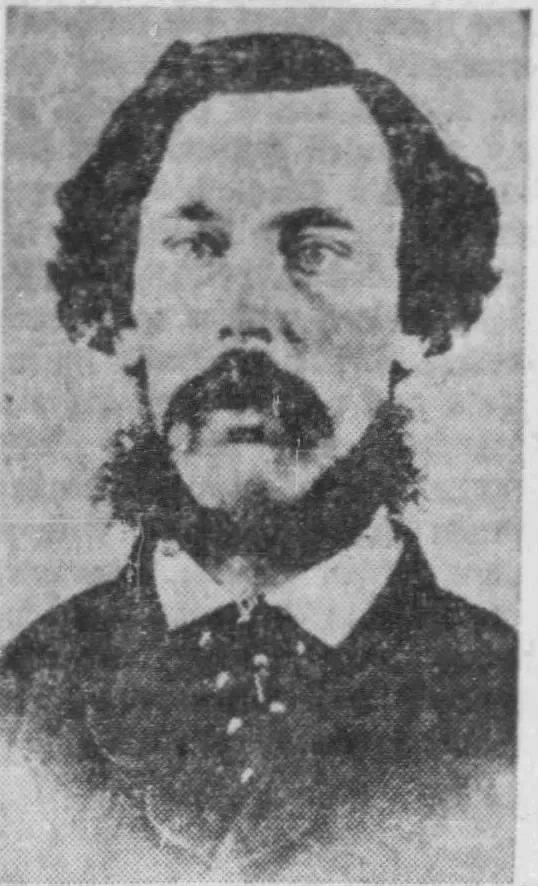
Leonard McClure—newspapers.com
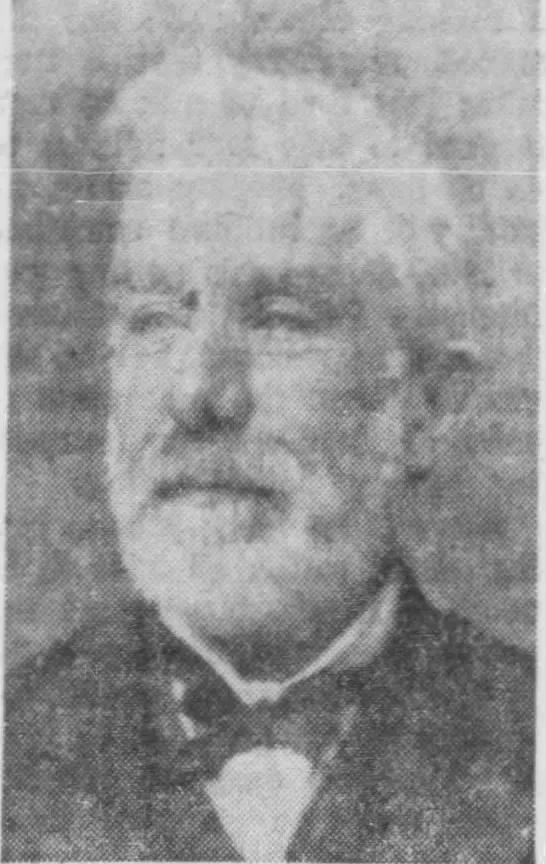
Dr. J.S. Helmcken—newspapers.com
* * * * *

Have a question, comment or suggestion for TW? Use our Contact Page.