
Musing Out Loud...
Forensic science. It’s everywhere these days, at least entertainment-wise.
Every time I scroll through my social media programs of choice, there they are, crime stories from the past—so-called cold cases—brought to the fore to entertain and to enlighten, often generations later. Not to mention, albeit less frequently, in the news when it’s reported that police have solved a decades-old murder case through the combined magic of DNA and, of all things, popular genealogical websites.
I’m not going to try to explain how this works here, that’s not the point of today’s editorial ramble... I write about history, right? And criminal cases are history, right?
I’m also cleaning up my old files and found this gem that I wrote more than 40 years ago. It’s about forensic science, sort-of, but also about old-fashioned police legwork and makes for an interesting blend of the new and the old that led to the solution of an old tragedy...
* * * * *
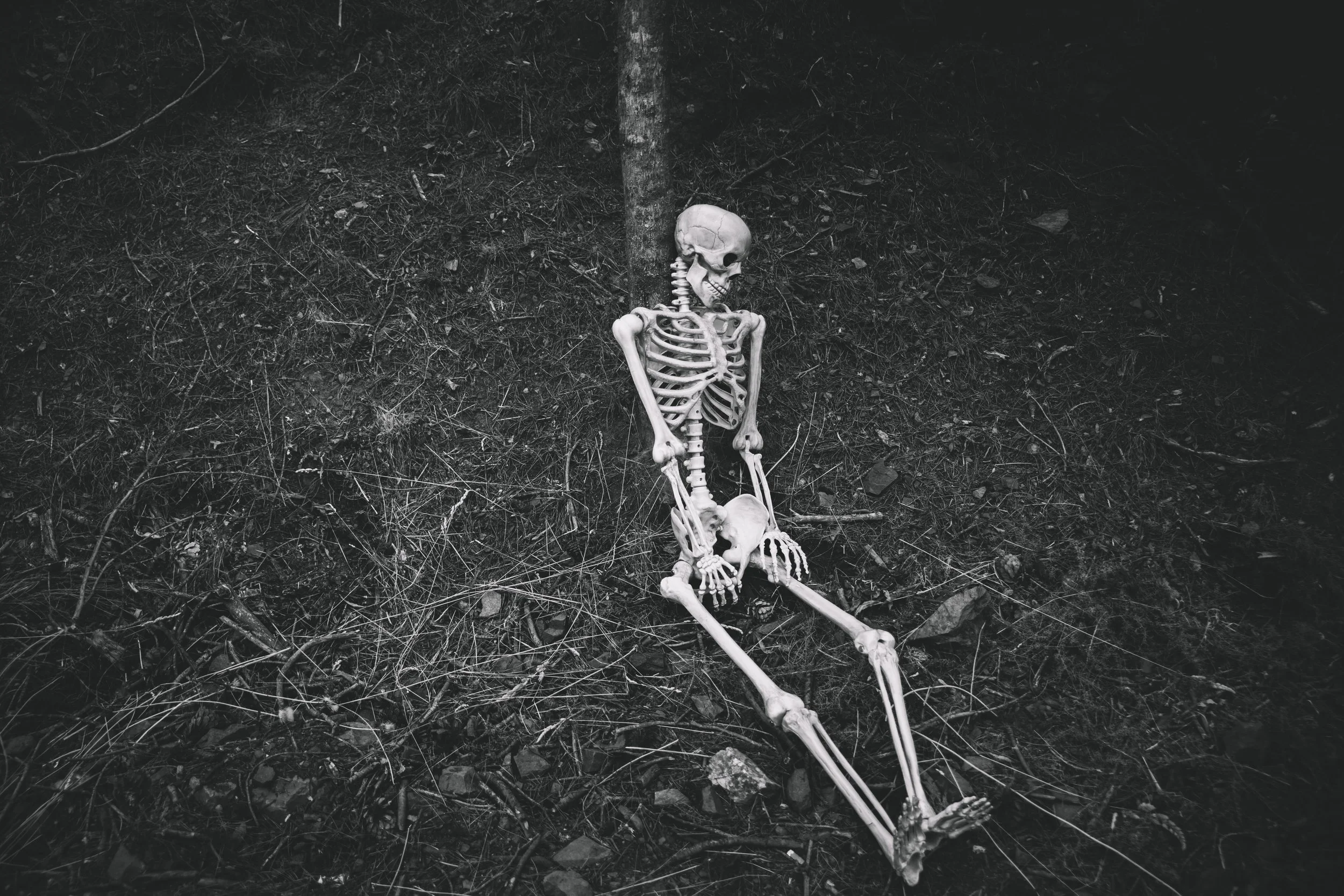
In October 1964, the discovery of a human skeleton and rusted rifle allowed police to finally stamp ‘Case Closed’ on a 30-year-old murder file.
Newspapers reported that the weathered bones, found near the Chilcotin cow town of Alexis Creek, were those of Harry Seymour who’d “vanished after the gun- slaying of Mrs. Johnny Baptiste in February 1934”.
Former Game warden and BC Provincial Police Const. Bill Broughton, one of those who had for 11 years, unsuccessfully tracked Seymour, said, “All we knew for sure is that there was a big drinking party going on when the woman was shot and killed...”
He’d led a party “in by dog team and brought out the body of Mrs. Baptiste. The inquest found nothing conclusive. We got reports from various persons, but nobody seemed to remember anything about the incident except Buffalo Johnny Hance.”
In the fall of 1964, forestry worker Edward Quilt, who’d known Seymour in 1934, was hunting at the head of lonely Elkin Valley near Taseko Lake. Pushing through dense foliage and shadowing jack pine, he suddenly found himself standing over a human skull.
Nearby were the scattered remains of the skeleton, except the leg bones which probably had been carried off by animals.
Quilt was startled to note a bullet hole in the forehead and, searching the undergrowth, he methodically pieced together the dead man's fate. Almost hidden in the grass was a battered .22 calibre rifle, in the breech an empty shell. Under the carpeting moss, he found several un-fired .22 cartridges, a shell for a .32/20, and an old campfire. He poked the skull and rifle into his pack and hiked 100 miles to Hanceville.
RCMP Corporal Wilf Berrow noted the location and checked his files of wanted and missing persons. None fitted the skeleton’s circumstances, nor did any unsolved case, so he consulted Coroner Rene Hance. This longtime resident soon recalled Harry Seymour having shot Mrs. Johnny Baptiste with a .22 rifle in a murderous rage during a drinking party.
He said that when Seymour had run from the cabin with his friend, Buffalo Johnny Hance, at his heels, he’d jammed another cartridge into the breech, warned Hance not to try stopping him, and galloped off into the snowy darkness. He was never seen again.
After Johnny rode 75 miles to Hanceville to report the slaying, an inquest was held and a murder warrant issued for Seymour. Johnny then led police, including Game Warden Broughton and Coroner Hance, to the Baptiste cabin. The journey took them three days in a four-horse sleigh at -25°F., with the posse grimly aware that arresting Seymour would be no easy task. Born in the area, he knew the Chilcotin as few others did.
The fact that a handful of constables were responsible for 9,000 square miles of mountain and forest didn't increase chances of his capture.
Months passed, then years, police never failing to check the smallest lead, the wildest rumour. But no Harry Seymour. People began to regard him as a phantom, comparing him to the legendary Simon Gun-an-Noot who’d eluded police for 13 years before surrendering and being acquitted of the murders for which he’d been sought.
With the passage of more years, Seymour was forgotten—until Edward Quilt stumbled upon a skeleton near Taseko Lake in October 1964. The site was just eight miles from the Baptiste cabin where the shooting had occurred.
While Corporal Berrow traced the corroded rifle, the crumbling skeleton was forwarded for examination to Dr. C.E. Borden of the University of BC's anthropological department. After two months, Berrow found a man who identified the rifle as Seymour's by a tin patch on its stock.
Finally, when all the evidence was considered, Coroner Hance concluded: “Taking all circumstances into consideration and in view of statements taken as results of the investigation, I believe that this is the skull and bones of Harry Seymour, also known as Seymour Harry, and that he met his death by a gunshot wound in the forehead in the vicinity of the Johnson trail in the vicinity of Taseko Lake in the country of Cariboo, between 20 and 30 years ago.”
Another “cold case” solved, this one by science and boots-on-the-ground police work.
* * * * *

Have a question, comment or suggestion for TW? Use our Contact Page.