
Musing Out Loud...
WHEN INSANITY COULD BE A DEATH SENTENCE
The news is full of them today—stories about homelessness and illegal drugs. These afflictions are often the direct cause of, or the direct result of, mental illness.
How did society deal with insanity in the old days?
For extreme cases, Victoria and Vancouver had their ‘lunatic asylums’ where inmates were kept under lock and key—no real improvement over the cells in the Bastion Street Police Barracks where they were originally confined.
But it kept them off the streets and out of harm’s way, right?
Compare then and now, 1868, 2026:
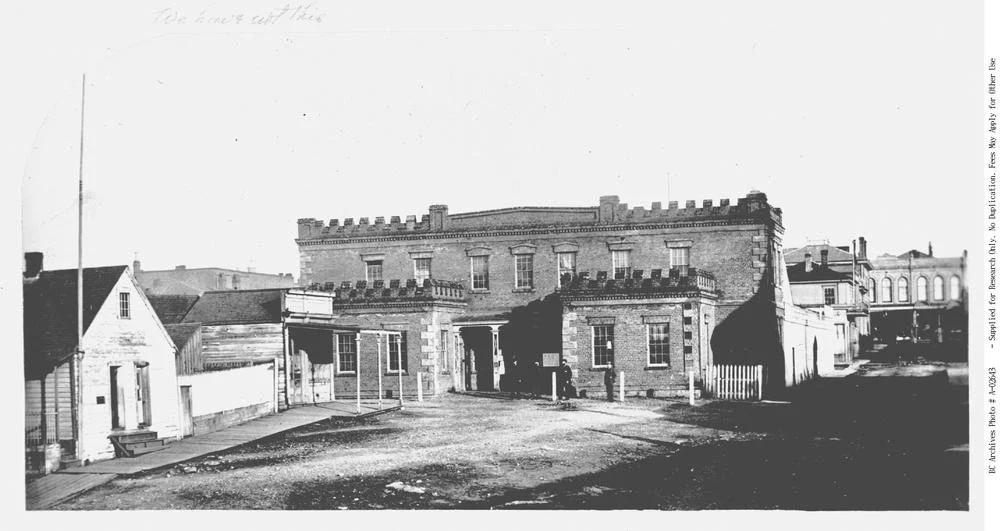
Before Victoria had a ‘lunatic asylum,’ anyone who was suffering from mental illness to the extent that they posed a danger to themselves or to others, was incarcerated in the Bastion Square Police Barracks like any common criminal. —BC Archives
Mental illness, we know today, is just that: an illness which can be treated, often cured, like most physical maladies. 158 years ago, however, it was something to be feared, its victims subjected not only to their own demons but to the misunderstanding and maltreatment of fellow citizens.
This was a double tragedy, at least one historian having sadly noted that the incidence of insanity in Victoria and throughout the colonies of Vancouver Island and BC was much higher than he'd witnessed elsewhere during his world travels. In four years, no fewer than eight of his friends and acquaintances had become mentally ill, those surviving doing so as inmates of the so-called 'asylums' of that unenlightened age.
That's if they were lucky; many were left to their own devices or imprisoned.
Even this was more than the authorities were willing to do for William Black, a 35-year-old Belfast native, in the spring of 1868. When the “tall, dark-complexioned man with dark hair, whiskers and moustaches” surrendered himself to the police because he thought that he was losing his mind, they'd turned him out into the street
He disappeared, only a few friends expressing fears for his safety and organizing a small-scale search, prompted by reports that, at 10:30 p.m. Saturday, the night that Black vanished, shouting had been heard coming from the old bridge linking James Bay with town.
"A man's voice was heard distinctly, twice imploring some other person not to throw him over the bridge," reported the Colonist. It was thought that the voice could have been that of a drunk, of someone involved in a fight (not an uncommon occurrence along the city waterfront), or even that of a highwayman's victim (also not an unheard-of occurrence).
Black's faithful friends, unassisted by the police, dragged the Inner Harbour, then spread farther afield, to Saanich, where they asked one and all if they’d seen the helpless Black. But no one had and the Colonist glumly concluded, "There is no room for hope that he is still in the land of the living."
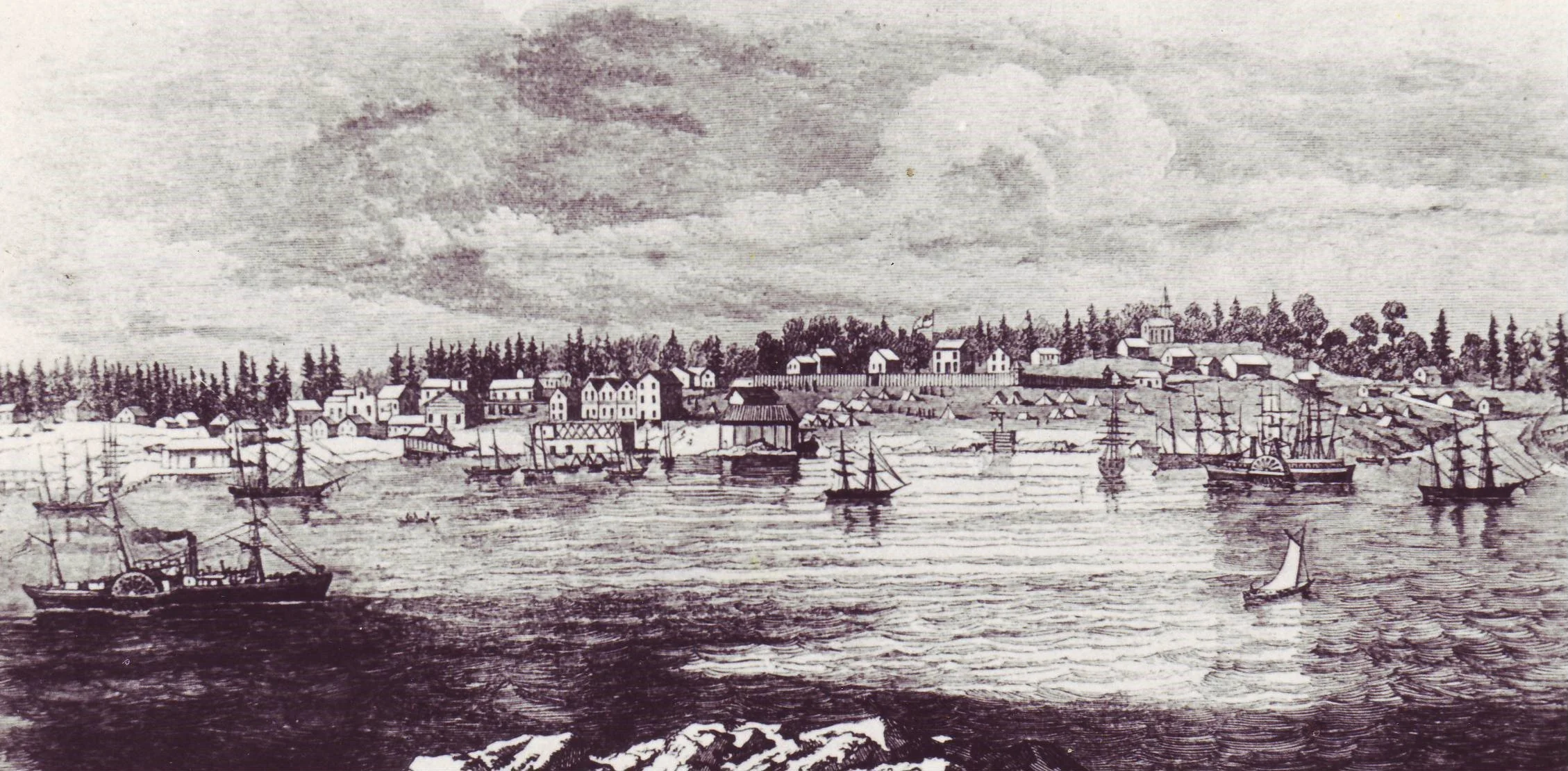
Black’s friends even dragged Victoria’s Inner Harbour in search of his body. —Author’s Collection
Then even his friends despaired and poor William Black lapsed into obscurity until late in March, when the then lonely beaches of Foul Bay yielded a gruesome discovery.
In the shallow depths was found half a human skeleton, only the “white and bare” spinal column remaining above the waist. The legs, however, were intact and still clothed in fine black “casimere” trousers and expensive calfskin boots. This time police were moved to investigate, and they tentatively identified the remains as those of the missing William Black.
They surmised that he’d met his fate, one way or another, in the Inner Harbour, his body having been carried to Foul Bay by the tide.
Upon positive identification of the clothing by his friends two days later, Black was formally interred after an inquest ruled that he’d committed suicide by drowning while insane. His mystery was revived the following month, however, when a second body was pulled ashore, this time from the chilly waters off Clover Point. Clad only in a red shirt and undershirt, the headless corpse, that of a Caucasian, bore a tattoo on the left arm.
Because it was found near the remains of William Black, a coroner’s jury concluded that the cries for help which had been heard that Saturday night on the James Bay bridge had been those of the second man, who’d been accosted by the raving Irishman.
Earlier, Black had ‘chased two or three persons along ‘Birdcage Walk,’ and the jury thought that he’d encountered the unidentified man and had hurled both of them into the water.
Alas, it seems to be an axiom of human nature that we fear most that which we don’t understand, and mental illness, even today, remains so much a mystery.
To Victorians of 160 years ago, it was a mortal sin—its victims to be pitied, but to be locked up so that they posed no danger to themselves or others. How many times such inhumane treatment wrought even greater injury to those suffering from mental illness will never be known.
* * * * *
A picture is worth a thousands words, they say, and Facebook has made a fortune from posting what amount to online snapshots. Usually, the captions are cryptic to the point of being worthless.
But, like a gazillion others, I post regularly. I do try to give captions with a least some substance—the journalists’ mantra of who, what, where, when and—ideally—why. But I, too, cheat when pressed for time or energy.
That said, I’m sometimes surprised by the resulting comments, such as this one in June, which was picked up by several other sites:
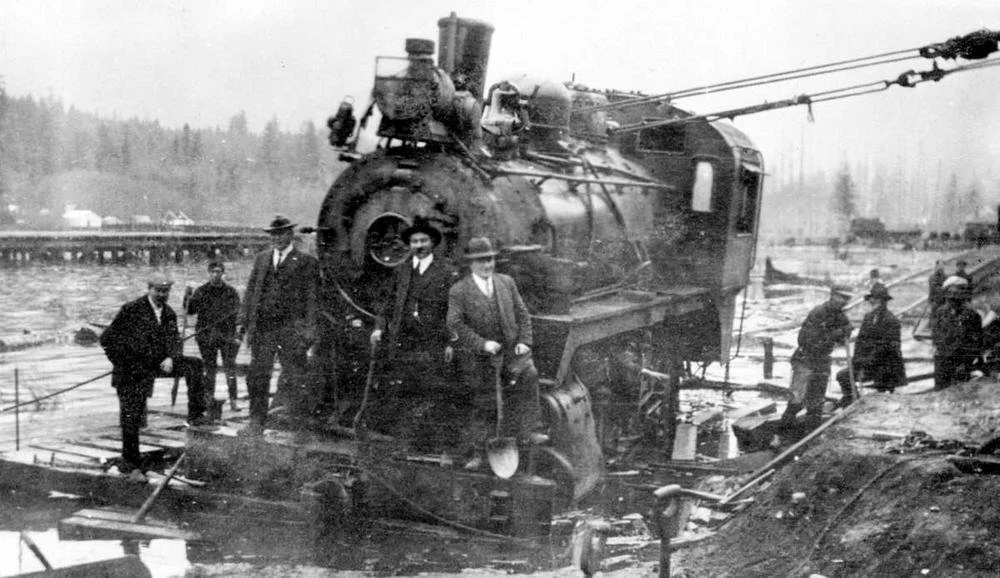
Oops! —BC Archives
Train accidents were common that we realize today. They were a cost of doing business.
In this 1913 BC Archives photo we see an Esquimalt & Nanaimo Railway locomotive derailed at Lake Cowichan...
That’s all I said but it reawakened legends of one or two lost locies in Cowichan Lake, to which Kerry Davis commented, “About a decade ago, while I was elected, the [Cowichan Valley Regional District] got a UDAR scan of the entire like bottom. No locomotives were found.”
Responded Colin Bayley: “That is what I had heard, too, it’s just an old wives’ tale.”
So much for legend! I’m with the late great Farley Mowatt who reportedly said, Never let the facts get in the way of a good story.
* * * * *

Have a question, comment or suggestion for TW? Use our Contact Page.