
Musing Out Loud...
I rarely do book reviews here in the Chronicles, but there’s always an exception, and a brand new book (it was released just over a week ago) about Alexander Dunsmuir of the Vancouver Island coal mining dynasty grabbed my interest.
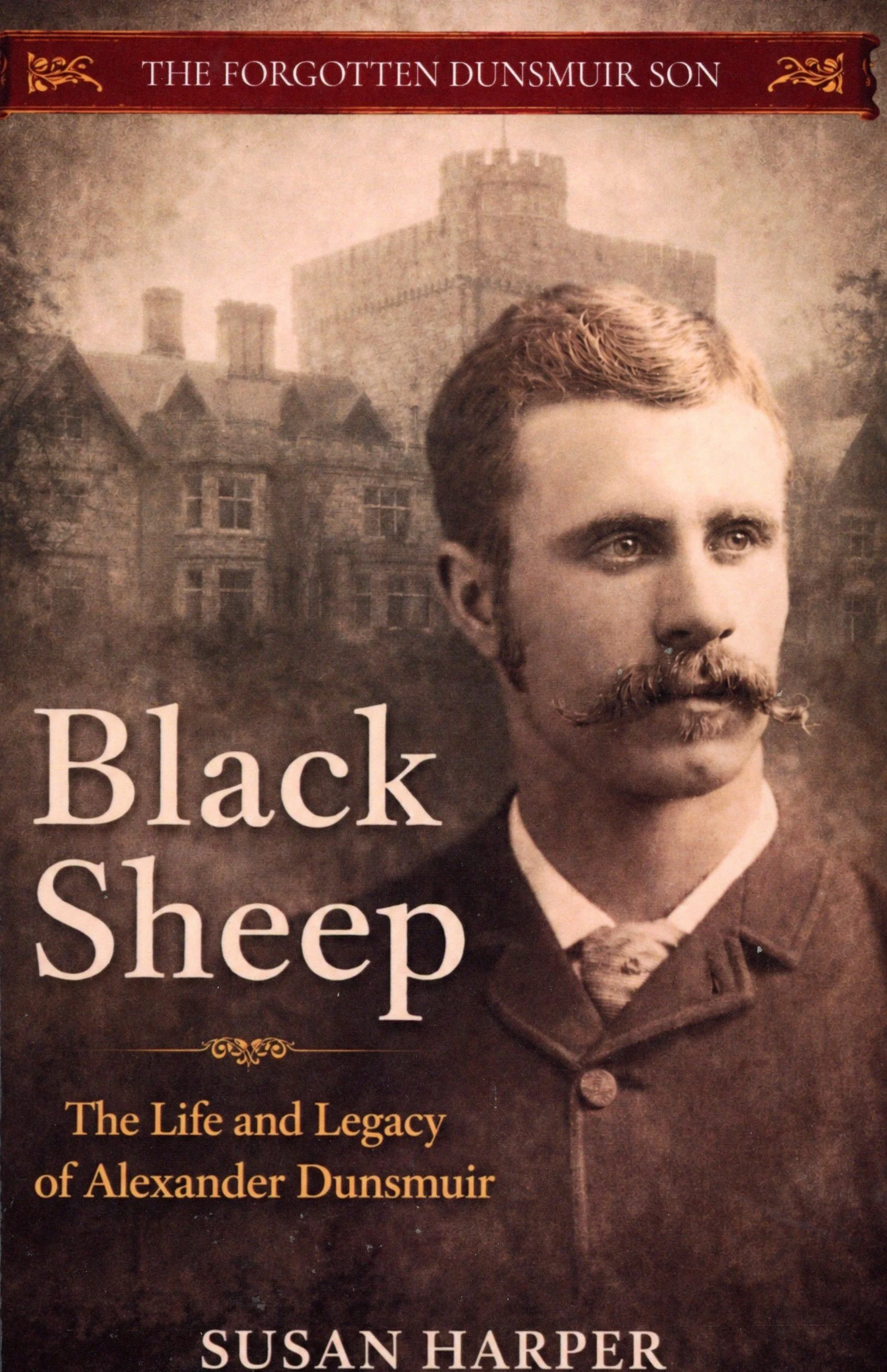
Hot off the press, Susan Harper’s biographical study of the ‘other’ Dunsmuir son.
Beavering away as I am on my four-volume history of the Greater Nanaimo area coal mines, anything that adds to my knowledge of this (to me) fascinating subject is irresistible.
So, I placed my order with Amazon and had Black Sheep: The Life and Legacy of Alexander Dunsmuir, in a matter of days.
I’m familiar with Alex’s sad story, that of the first white child born in Nanaimo and his parents’ favoured son, who killed himself with drink. If that sounds dismissive, I suppose it is; when I wrote about him years ago, I probably let my naturally judgmental inner voice speak.
Author Susan Harper has been more sympathetic to this tragic figure who, during his short lifetime, made international news and left a legacy of family discord and bitter litigation that lasted for at least two generations.
Here’s what I wrote about Alexander Dunsmuir, 16 years ago.
* * * * *
I’ve mentioned before the somewhat tentative tributes mapmakers have paid the Dunsmuirs. When one considers the economic, political and social clout this coal mining dynasty held over BC for half a century, their immortality, as measured by their enduring geographical presence, seems slight.
One might think they have, in fact, been slighted.
Where’s the glory in Qualicum’s tiny Dunsmuir, Ladysmith’s Dunsmuir Islands and Burleith Arm, Cedar’s Joan Point, Crofton’s Joan Avenue, or Vancouver’s, Victoria’s, Nanaimo’s or Cumberland’s Dunsmuir streets? Hardly mountain peaks, rivers or cities.
Each of the above-named geographical features recognize father and mother (Robert and Joan) and first son, James. There’s no mention of younger brother Alexander, although he helped to further the family fortune. According to the Gazetteer, BC has 12 ‘Alexanders,’ six ‘Alexandras,’ five ‘Alex’s,’ one ‘Alexandria’ and an ‘Alex Allan.’
Only Alexandra Peak, east of Buttle Lake, is on Vancouver Island. None of these is named for Alex Dunsmuir.
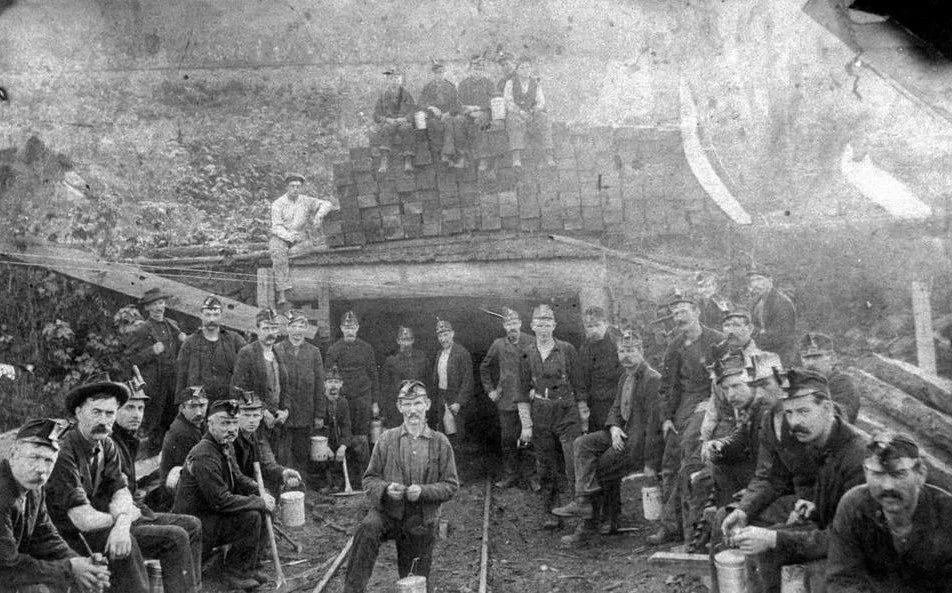
The Alexandra Mine, South Wellington. —BC Archives
There was an Alexandra Slope, one of many mines working the Douglas coal seam at South Wellington, this one bought by Robert Dunsmuir and partners from landowner James Beck. When Robert became sole proprietor he named it (according to one’s source) the Alexander, the Alexandria or the Alexandra (after the Princess of Wales, wife of the future King Edward VII).
Ah, we’re getting warm: Dunsmuir–Alexander–Alexander Dunsmuir! Nope, the BC Department of Mines’ Annual Reports, but for a single reference to Alexandra, refer, incorrectly, to Alexandria (with an ‘i’).
Whichever spelling or gender, it’s a moot point now as the mine is long shut down and sealed off. Which more or less applies to Alex Dunsmuir, too: buried and all but forgotten.
So what’s the story behind “Mr. Alex’s” apparent anonymity? He was, among other accomplishments, the first white child born in Nanaimo and his parents’ favoured son. Upon the death of Robert Dunsmuir, Alex and older brother James controlled one of the largest industrial empires on the continent.
Fame and fortune were Alex’s birthright. What went wrong?
As manager of the San Francisco office, where the bulk and best of Vancouver Island coal was sold, Alexander found himself for the first time his own boss–no parents, no brother to watch over him. He began to drink–for more complex reasons than his being unsupervised, of course.
By the time the family realized that he had a problem it was too late. He would, in fact, die of acute alcohol poisoning at the age of 46.
Sober, he and James made a formidable team, Alex handling sales, promotion and distribution, his brother running the mines, railway and steamships. They did it so well that the revenues poured in, further enriching themselves, their mother (sole owner since Robert’s death), and ensuring that their idle sisters (and their husbands) could continue to live the lives of luxury to which they’d become accustomed.
After years of arguing business policy with their headstrong matriarch, and of increasing resentment at their sisters’ sharing the profits without contributing to their earnings, James and Alex pressured Mrs. Dunsmuir into selling them her interest, incorporated the company–and cut a secret deal whereby each willed his share of the company to the other brother rather than to his wife and heirs.
Finally freed of needing his mother’s approval, Alex married his ‘secret’ live-in companion of 20 years and–died from ‘alcoholic dementia,’ although the cause of death was camouflaged as meningitis.
He’d literally killed himself with a bottle. He also dealt a mortal blow to familial relations when his will was read. Years of bitter litigation between the surviving Dunsmuirs followed.
In short, you won’t find mention of Alex Dunsmuir on a BC map. But he is immortalized in California. When his train paused at the small station of Pusher in 1886, so struck was he by its lack of amenities that he offered its citizens a water fountain–there’s irony for you!–if they’d rename their community for him.
They did and the fountain is there today, in Dunsmuir, Cal., its donor gratefully acknowledged by a small plaque.
The Alexandra Mine had its own townsite during the few years that it operated. After the mine closed, the small settlement (up to 300 residents at its peak) survived as South Wellington. Other than a sinkhole beside the E&N Railway tracks, you’d never know that a mine existed here.
Its slack pile was later levelled to create a community sports field; today, it’s a private residence and a field.
* * * * *

Have a question, comment or suggestion for TW? Use our Contact Page.