
Musing Out Loud...
Albertans have voted to remain in Canada. Good news, indeed, but a sad fact that even a single person in the wild rose province thought that separation was practicable let alone preferable.
Because a separate Alberta, besides being a monkey wrench in Confederation, could never stand alone. It would, inevitably, be sucked into the American orbit. While Canada wouldn’t become Trump’s 51st state, Alberta would, with God alone knows what ultimate consequences for those of the rest of us north of the 49th parallel.
But this isn’t first time that Canadians have expressed their discontent and toyed with taking another road, including merging with the U.S.
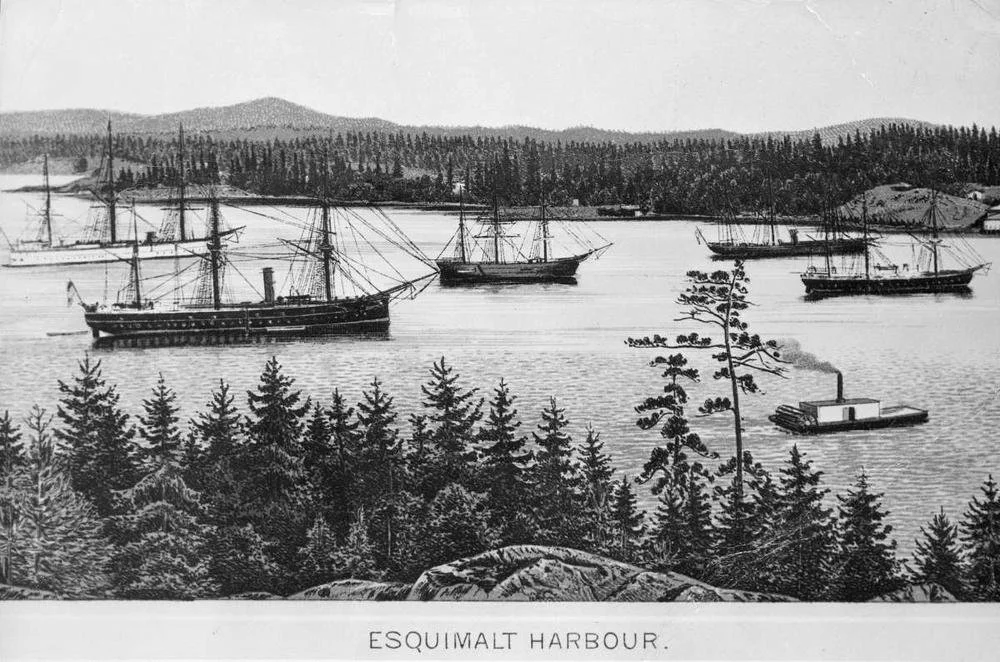
In 1867, Esquimalt Harbour was the home of the Pacific Squadron of the Royal Navy. Yet many in British Columbia thought the Mother Country was treating them “with chilling indifference”. —BC Archives
BC’s agreeing to join Confederation was based upon Ottawa’s promise to build a trans-continental railway within 10 years. For various reasons (Google them) that didn’t happen and dissension in the westernmost province hit the boiling point. Even 20 years before that, there were times when Confederation seemed to be a lost cause.
So, today, from my archives, this combined editorial from both the Daily Colonist and Victoria Chronicle, of April 29, 1867, that was published in the Times Colonist some years ago. It certainly makes one wonder how we became a province.
* * * * *
It has been truly said that “liberty will not descend to a people—a people must raise themselves to liberty; it is a blessing that must be earned before it can be enjoyed.”
On all sides it is agreed that Great Britain has treated her Pacific colony with shameful, inexcusable neglect. A neglect that early blighted every effort of the people to keep pace with the progress of their American neighbours, and has resulted finally in the utter prostration and almost irretrievable ruin of every interest within its borders.
“Instead of the young and feeble community being tenderly nurtured and encouraged by a helping hand from the Mother Country, it has been treated with a chilling indifference that has steeled the hearts of the colonists against England and her institutions.
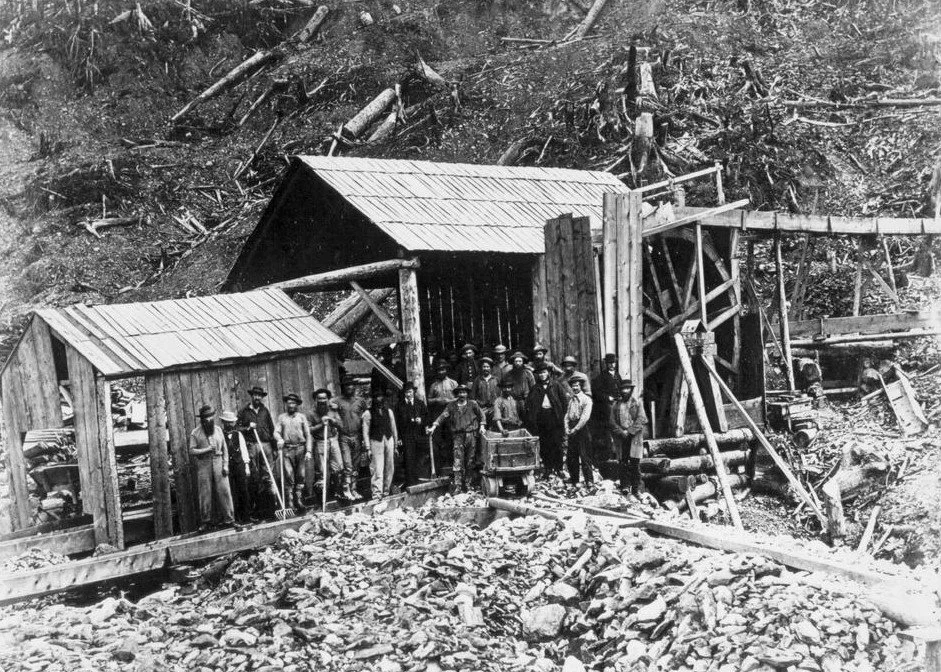
Did these Williams Creek miners really prefer annexation to the U.S.? —BC Archives
Our citizens have been subjected to every species of insult and extortion that it is possible to inflict upon a free people, until at last they are prepared for any species of change that would hold out even remote prospect of bettering their condition.
Many of them sigh for another form of government, so impressed are they with the belief of the failure of the attempt to establish British institutions on the Pacific Coast; and since no change could be for the worse, they would welcome annexation to the United states in preference to continuing in a state of poverty and wretchedness.
In writing this, we know that we speak the mind of nine out of every 10 men in the colony—men who after struggling for years to awaken the home government to a sense of the wrongs under the weight of which we are staggering, have at last sat down in despair at the gloomy prospects before them.
The same line of policy that drew together the Boston Tea Party and cost England her 13 American colonies, is being pursued toward us. The same policy that estranged Canadians from the Mother Country and brought on the rebellion of ‘37, is being continued here.
The people—disgusted, disheartened and all but ruined—are loud in their expression of a preference for the stars and stripes. This state of feeling is the natural result of the manner in which we have been and are being treated by the Mother Country.
We are not of the class to believe that the negotiations now going on for the sale of this colony to the Americans will amount to anything.
The British government—especially a Tory government—will not sell a foot of the territory it now holds.
We believe, however, that were such a bargain affected it would result most advantageously to the material and political interests of this colony. It would make Victoria the halfway House of Sitka on the North and San Francisco on the South; it would make our harbour the rendezvous for the whaling fleet; the cheapness of coal would induce manufacturers to establish their factories in our midst and ship their goods in place of, as we are doing, fuel to Oregon or California.
But is annexation the only panacea for our ills? Is it only by allying ourselves to a foreign nation that we can enjoy the blessings which we have truly sketched?
We should be sorry to think so. We believe that confederation with the eastern provinces is the only course that will reserve the loyalty of this people or save the country from falling into a condition of hopelessness from which it may not emerge during a time of men now living.
The immediate confederation of this colony and the assumption of our debt by the united province; the dismissal of the present expensive staff of officials and the substitution of a cheap form of local government; guarantee of a loan by the Imperial government for the construction of a railway through British territory to connect with the Grand Trunk [Railway] of Canada.
These are the three principal wants.
Once let it be known that the colony has been joined to its eastern sisters; that an economical government has been obtained; and that the Imperial government feels sufficient confidence in our future to endorse our paper; and public confidence will everywhere revive, money will pour in from all quarters, we shall hear no more of our bonds flying around like pieces of waste paper; nor see advertisements in the Daily Telegraph cautioning people against having anything to do with the Pacific colony “because it is gone in!”
If the home government desires to retain our affections, it has got to manifest an interest in our welfare. It must not teach us to forget our duty as British subjects by first forgetting its duty toward us.
It must foster, encourage and assist us in maintaining a connection that will add as much to the glory and strength of the Mother Country as it will result in our own prosperity.
But if, on the other hand, Great Britain wishes to cast us off, she has only to continue her present policy for a few months longer and her Pacific colonies may be found some fine morning in the present year knocking at the door of the White House for admission.
* * * * *
Disgruntled Albertans may have what they truly believe to be legitimate grievances. But they should be careful what they wish for. Can they do better as an independent nation or as an American state?
To borrow Churchill’s famous summation of democracy, Canada isn’t perfect, it’s just the best there is.
* * * * *

Have a question, comment or suggestion for TW? Use our Contact Page.