
Musing Out Loud...
In the lead-up to this year’s Remembrance Day the “airwaves” were flooded with tributes to those who fought and fell for Canada in the world wars, Afghanistan and peacekeeping missions.
And every man and woman who has ever donned a uniform to serve their country.
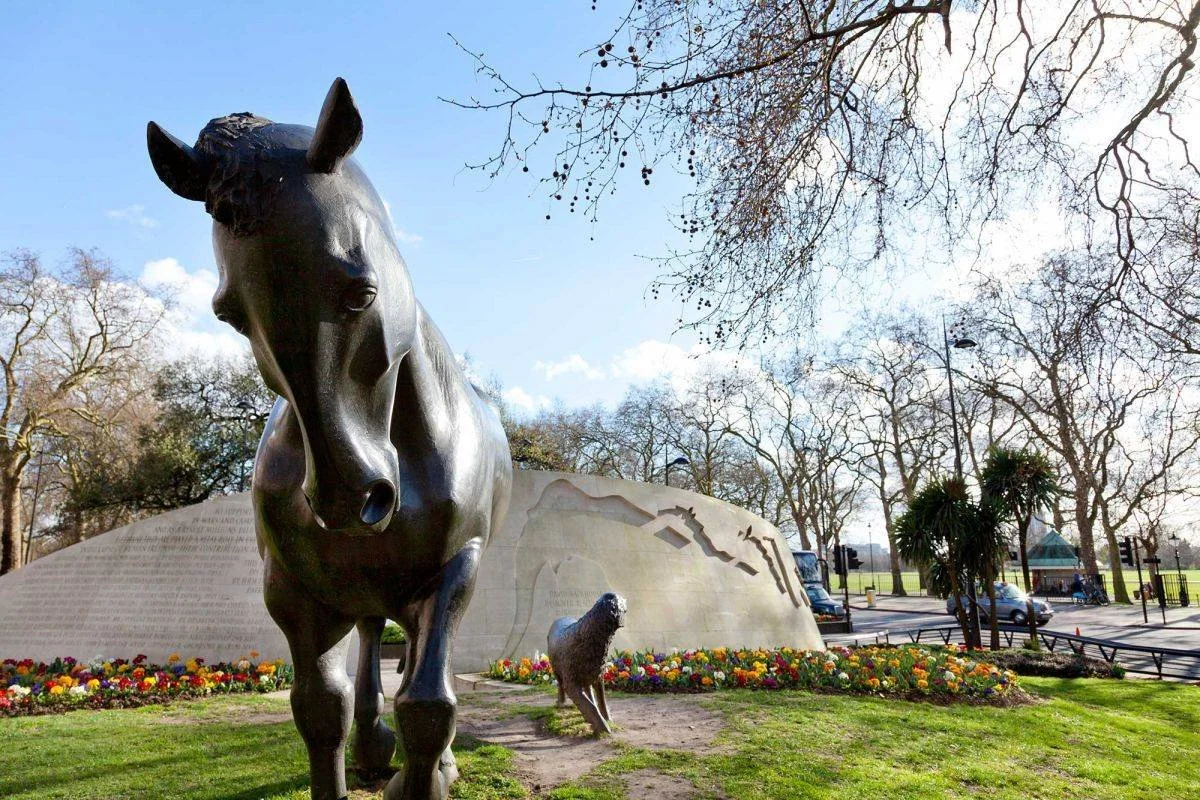
The Animals in War Memorial, London, honours the wartime contributions and sacrifices of animals. —https://animalsinwar.org.uk/
A new slant this year was an acknowledgement of the essential role that animals have played in warfare: horses, mules and donkeys as pack animals, dogs in a multitude of roles, and pigeons as couriers.
All of which coincided with this week’s and last week’s tribute in the Chronicles to “pit ponies” and their larger compatriots, horses and mules, which, unlike a miner, had no say in forsaking sunny skies and green fields for the dark, damp and dangerous underground.
All of which sent me to Google and the first site that came up is that for The Animals In War Memorial in London, which is described as “a powerful and moving tribute to all the animals that served, suffered and died alongside the British, Commonwealth and Allied forces in the wars and conflicts of the 20th century”.
And so they should be honoured!
They shared all the hardships and suffering (perhaps even more so) of their human masters, like it or not, and the most they could hope for, besides survival, was shelter and a meal. No Cenotaphs, no medals, no parades for them.
Hence The Animals in War Memorial Fund memorial at Brook Gate, Park Lane, on the edge of Hyde Park, which was unveiled by HRH The Princess Royal in November 2004, on the anniversary of the start of the First World War at a cost of £2 million. That the money was forthcoming from a national appeal and the generosity of individual donor speaks to humanity’s acknowledgement and appreciation of the necessary roles played by animals.
Canada has also honoured its animal heroes with a monument as described below:
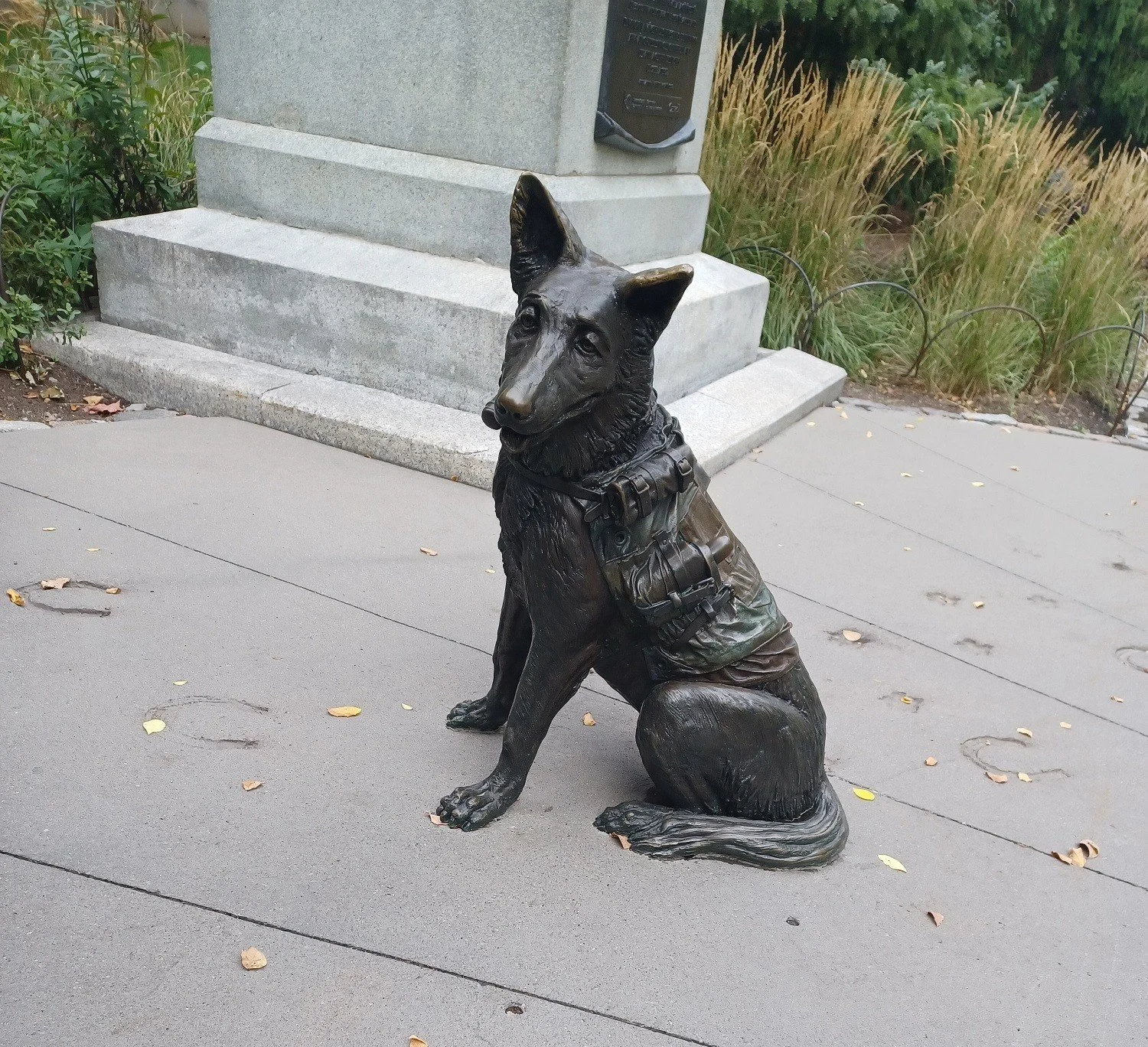
A bronze, life-sized statue of a medical service dog stands guard over the dedication. It is wearing an authentic replica of a medical backpack that war dogs used during the First World War. Canada’s military still employs dogs to this day. The Animals in War Dedication was created in 2012 by Canadian artist and sculptor David Clendining.
Three bronze plaques depict animals in war and provide interesting facts about their roles, their sacrifices, and their unwavering loyalty. Among the roles animals have played in war:
Mules: carried panniers and artillery.
Horses: carried mounted troops and hauled field guns.
Carrier pigeons: delivered messages to specific destinations.
Dogs: used as messengers, medical assistants, bomb detectors, and search and rescue workers.
Animals in War
For centuries, animals have demonstrated an enduring partnership with humans during times of war. They have served as means of transportation, beasts of burden, messengers, protectors and mascots. Still today, dogs use their unique, sharply tuned instincts to detect mine clusters, and conduct search and rescue operations. We remember the contribution and sacrifice of all animals.
(The plaques acknowledge the:)
Relentless shelling in the First World War (1914 – 1918) left huge craters of mud and sewage. Horses and mules could best navigate these difficult conditions to supply the front and evacuate the wounded.
Horses carried soldiers, and pulled gun carriages, supply wagons and ambulances. Many paid the ultimate price and their loss was mourned by those they served.
The Honouring War Animals project was inspired by Second World War and Korean War veteran Lloyd Swick, and supported by artist David Glendining and a group of individuals dedicated to the cause.
* * * * *

Have a question, comment or suggestion for TW? Use our Contact Page.