
Editorially speaking…
By now longtime readers realize that I never kid around here on the Chronicles where history is sacrosanct if not, well, always 100 percent accurate. Usually, on those happily rare occasions, I can count on readers to point out errors or inconsistencies.
Generally speaking, a man just flat out tells you—not always in the Queen's English, but at least you know where you stand. Women are more subtle. Rather than a 2x4 between the eyes, it's more like surgery—they can leave you with such a warm feeling that it takes half an hour for you to realize that it's blood.
Okay, I just contradicted myself about kidding. The fact of the matter is that I welcome—I urge—readers to draw my attention to any errors and/or omissions so that I don't repeat them in the future, and to set the record straight for future researchers.
History isn't an exact science, it's a living drama, with all those quirks and quandaries of the human condition. That's what makes it so fascinating—and so damned unreliable.
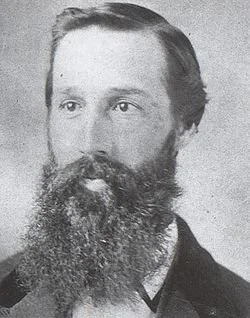
The real BC premier, William Smithe. —Wikipedia
That said, one of my early errors was a double-header. The photo accompanying “William Smithe, our man in Victoria,” showed him as handsome and distinguished with the regulation facial hair of his day. The late Jack Green informed me that the picture really was that of his grandfather, H. Ashdown Green.
To be fair, Jack didn't catch on immediately either, as “All those old guys in beards look alike.” But Ashdown Green it was, not William Smithe. The next time I scanned an old photo I made sure to attach its caption immediately, not a year after the fact.
Then there was my mention of Duncan's getting a start when railway and coal baron Robert Dunsmuir agreed to build an E&N Railway station there. He did so at the urging of locals and because (I wrote) that he couldn't come to terms with property owner Archibald Kier for land at Somenos.
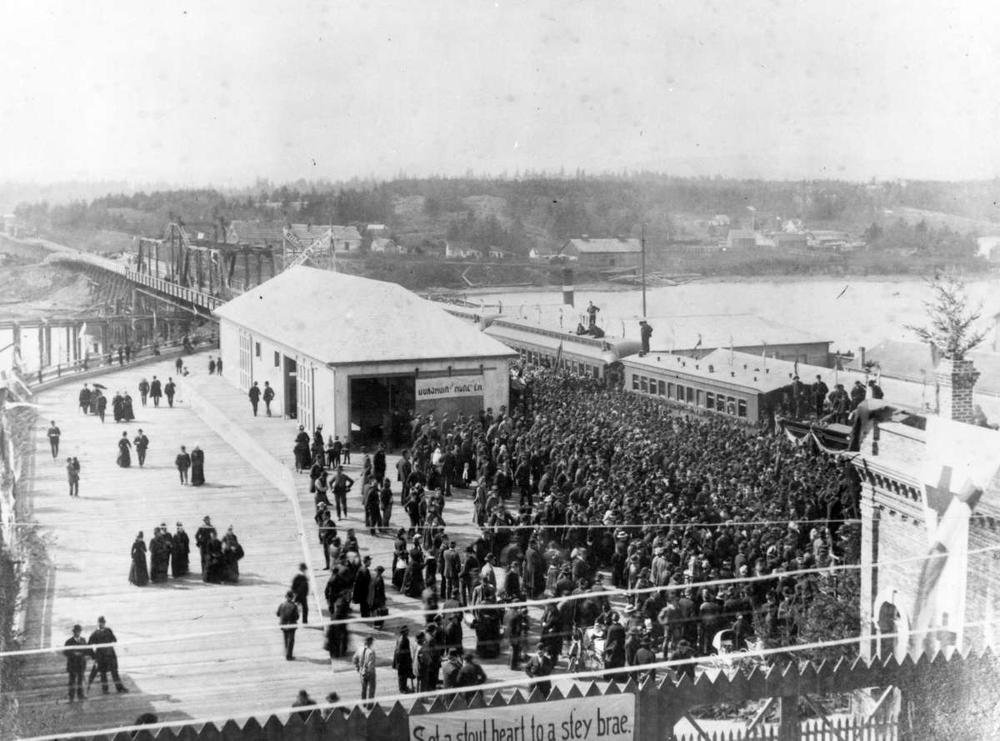
Victoria, of course, had its own Esquimalt & Nanaimo Railway station, so why not Duncans Crossing (Duncan)? —BC Archives
There was, in fact, a Somenos station, just north of today's Highway 18, and I swear that the historically knowledgeable friend who spotted my error was so pleased to catch me out that she was salivating.
Of considerably greater import was my reference to a local fellow author as being deceased. The “late” Ken Boyd was happy to inform me that the Chronicles was premature, that he was alive and well. I was pleased to wish that he remained so but, of course, all these years later he has since proved me correct.
Not all feedback (I swear) is critical.
Some readers call when a particular Chronicle strikes their fancy. or to give further information. Or just to say that (bless ‘em) they’re faithful readers. At least two people used to clip my columns for mailing to family out of the country. One man used to type them out even though I’d offered him computer printouts. He said he it gave him something to do.
Some columns struck a nerve.
There are those who believe that the past, particularly if it's unpalatable to some surviving family members (even generations later) should be buried and go unmentioned despite its being in the public record. On principal, this doesn't wash in an open society.
However, it behooves a writer who deals in other people's stories and other people's lives to treat his subjects with due care and respect. It has never been my intention to reopen old wounds, or to defame the dead, for the simple sake of telling a “good” story.
Sensationalism, insensitivity and the callus exploitation of those unable to speak for themselves—and who, perhaps, suffered enough in their lifetimes without being further abused posthumously—is unacceptable. The key, of course, is knowing where the line lies.
Which brings me to the best part of writing the Chronicles: being able to momentarily focus the spotlight, so to speak, on someone from our past whose contributions have been overshadowed by the passage of time. I so believe that recognition earned is recognition due that it gives me real joy to write about such pioneers.
This includes women, by the way, who may seem to be conspicuous by their absence over the past years. One of history's glaring oversights is the lack of mention and credit given to women and their roles (not always supporting roles, either, but as giants in their own right). If you don't read about them here, or often enough, it's because of the paucity of material available to me.
The same applies to our first “settlers,” First Nations peoples.
Which isn't to say that we should recognize only the great and good. Some of history’s best characters are its reprobates, its rebels, its eccentrics, even, sometimes, its outlaws. They, too, should be recognized for the rich legacy they've bequeathed us. Call it history, call it entertainment—whatever—it's our heritage.
And what a rich one it is.
To those who take the trouble to phone, write or to say hello on the street, thank you all. (If I didn't know you're out there I might have hung up my ‘typewriter’ years ago.)
Like the seven-foot-tall biker, all in black at a bank machine. As he turned to go, he glared at me, frowned, and grunted, “You Paterson?” Before I could find the words to deny it, he was out the door with, “Like your column, man.”
Right on, dude!
* * * * *

Have a question, comment or suggestion for TW? Use our Contact Page.