
Editorially speaking…
Today marks the 81st anniversary of the sinking of HMCS Esquimalt, the last Canadian warship lost during the Second World War. Every year, namesake Esquimalt Municipality marks the tragedy that claimed 44 of her 71 officers and crew.
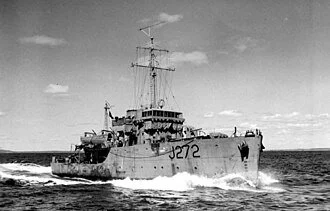
The ill-fated minesweeper HMCS Esquimalt was torpedoed near war’s end in the approaches to Halifax. —Wikipedia
In all my many years of writing, and my millions of words describing historical events, my single most moving conversation—it wasn’t an interview, just a friendly chat—was with the aged mom of one of Esqumalt’s lost company.
I’ve never forgotten Mrs. Knowles—or the photo of the handsome, smiling young sailor on her mantelpiece.
* * * * *
40-50 emails a day can get tedious. And Facebook comments, don’t get me started. Don’t people realize I have better things to do—places to go, things to do?
I’m joking, sort of, of course. Yes, emails and comments take up time very day. But they can also be highly profitable in content, so I grin and bear...
Some emails are little less than fascinating. Take this one from Victoria C., who identifies herself as “the great-great granddaughter of a famous gangster in Vancouver, Joe Celona, a century ago.”
His name didn’t ring a bell with me so I googled him and, sure enough, there he is. To outward appearances in the 1920s and ‘30, Giuseppe Fiorenza aka Joe Celona was a legitimate businessman, the proprietor of a cigar shop. But his real income came from a string of brothels.
When he made newspaper headlines, he was denounced to the world as an “Octopus” and “King of Vice,” the “former overlord of local rackets” and as, in the end, a “convicted procuror” [sic].
As he stood, sneering, in the dock, he and everyone in the courtroom listened as the Crown Prosecutor delivered “one of the most bitter analyses of an accused that has ever been heard from the lips of prosecution counsel in a Canadian criminal court”.
No wonder that his great-great granddaughter, a journalist, wants to write a book about him!
Alas, I was unable to help her in her search and could only wish her well in her project. I’ll certainly want a copy of her book when it comes out.
* * * * *
From friend and faithful reader Bill Irvine, this note re: Crowsnest Pass bootlegger Emilio Picariello and a previous email reference to another legendary rumrunner, Johnny Schnarr:
"Johnny's boats had two 600 [h.p.] airplane engines that made him 10 knots faster than the American Coast Guard."
“Well stated,” writes Bill. “In one of my books (don't have time to look for it) I posted my dad's...report about him sitting on the end of the [Victoria] Breakwater and watching Schnarr go by in his speed boat.”
“It's good to know you are keeping these old 'yarns' alive. Thank you.”
* * * * *
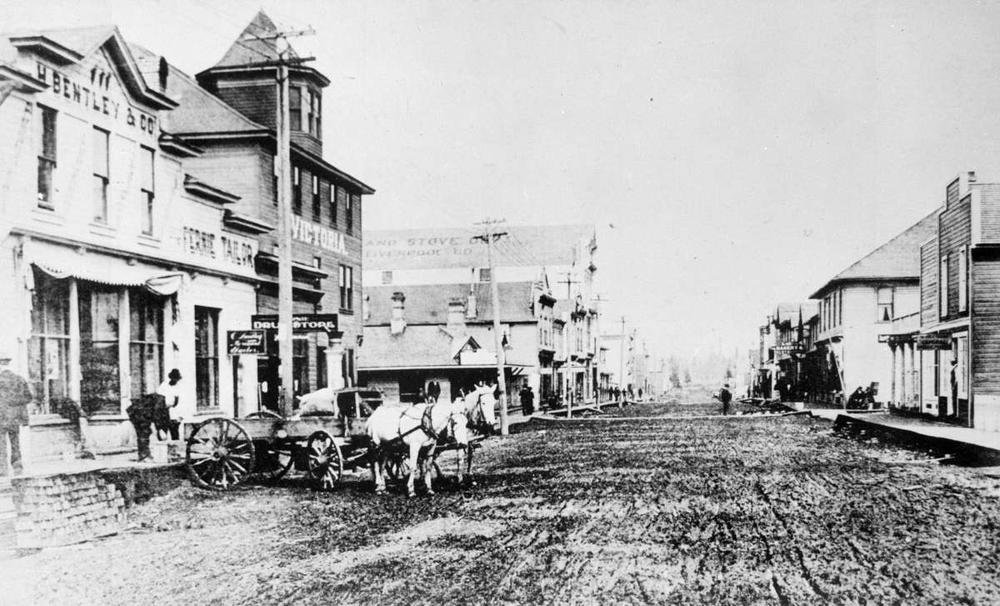
Downtown Fernie, 1899, before the “great fire”. —BC Archives
In a recent Facebook post I mentioned the 1908 fire that devastated Fernie, and received this comment from Sylvie H.: “My grandfather and his family were there during the fire. Granddad was off delivering newspapers in [nearby] Coal Creek on his bicycle.
“As he was coming home he saw smoke in the distance. When he got to Fernie, the town was gone. He was only 8 years old. Didn’t know what to do, so he just cried.”
* * * * *

Have a question, comment or suggestion for TW? Use our Contact Page.