
Object Matrimony: Victoria’s ‘Bluebeard Killer’
(Part 1)
“...He had a feline face, a wolfish mouth, a furtive air; as shy of beauty as of grace—yet he won brides most everywhere.”
According to the dictionary, the term ‘Bluebeard’ (it’s also a plant) means “a man who kills women or treats them in a cruel and controlling manner”. This doesn’t jibe with the popular interpretation: a man who murders a succession of wives, as is the case in a gruesome French fairy tale written by Charles Perrault.
Published way back in 1697, it’s about, Wikipedia tells us, a wealthy man “in the habit of murdering his wives”.
We’re getting warmer.
It remained for another Frenchman, Henri Desire Landru (1869-1922), to give us the Bluebeard that most of us recognize: a matrimonial serial killer.
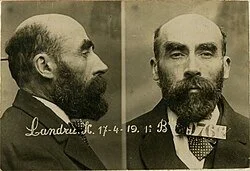
France’s contribution to serial killers, Henri Desire Landru. —Wikipedia
At least three have passed through Victoria that we know of, including James P. Watson who crime writer and retired deputy commissioner of the BC Provincial Police termed “the most dangerous character who ever frequented...Yates Street”.
Now, that’s really saying something if you know anything about Victoria’s dark past!
You can judge for yourself after you read this week’s BC Chronicles.
* * * * *
One modern crime writer has summed him up succinctly, almost clinically: “A serial killer and conman who operated in the early 20th century primarily in the Western United States and Canada. He would lure wealthy women through lonely hearts advertisements, marry them, and then either murder them or abandon them after stealing their money and possessions.”
Today, we have online dating. Back in the 20th century ‘teens and ‘20s, it was the personal columns of newspapers. Here’s an example of James P. Watson’s—or James R. Ruit’s or J. Huit’s, or H.L. Gordon’s, or Harry M. Lewis’s, or Dan Holden’s—appeal for female companionship published in newspapers’ matrimonial columns. Curiously, they’re worded almost as if intended to attract gold diggers rather than wealthy widows or lonely spinsters:
“A gentleman, neat in appearance, of courteous disposition, well connected. Has property and connections with several corporations, a nice bank account and considerable government bonds. Would be pleased to correspond with a young lady or widow. Object matrimony. This advertisement is in good faith.”
Sadly, his ads never failed to attract prospective brides from whom he’d select (not always successfully) the most promising candidates to woo and, despite his unprepossessing appearance, manipulate into surrendering their fortunes and adding to the “nice bank account” he touted in his ads.
Once he’d selected his victim, he’d launch a whirlwind courtship—wow her with his fancy car, wine and dine her in fine restaurants, marry her, perhaps insure her, then begin hustling her and her family and friends for funds to “invest” for them, thereby increasing whatever equity his bride brought to the marriage. The next step was the most important one: convincing her to sign a will naming him as her sole beneficiary.
He’d do the same for her, of course; after all, he wanted her to be taken care of should something happen to him as a Secret Service agent! (Other times, he posed as a banker or travelling salesman).
These ruses also explained his frequent, lengthy absences, which allowed him to seek out more ‘wives,’ as many as four at one time. It must have been quite a balancing act.
When he’d milked her and her relatives to the last drop, it was time for the final act. They’d go camping and he’d return home alone. He’d been careful not to encourage any untidy contact with neighbours, so there was no one close by to ask awkward questions about where his wife was. As for her relatives and friends, he assured them of her continuing good health and explained away her prolonged absence in Mexico, using a typewriter.
This bought him the valuable time he needed to move operations, assume a new identity and...seek out another victim.
He didn’t find it necessary to murder all his wives, some of whom he simply abandoned when they were of no further use to him. It has never been determined how many women fell victim to his charm over just two years, 1918-1920, but some estimates are as high as 45 wives and 20 murders, only stopping with his arrest in 1920.
It all began to unravel when Spokane, Wash. dressmaker Catherine (or Kathryn) Wombacher became suspicious that husband ‘Walter Andrews,’ who’d hit her up for 1000s of dollars in loans, was having an affair, and hired the Nick Harris Detective Agency to follow him on one of his many trips. To their astonishment, Watson, who was supposed to be investigating a diamond smuggling ring, hadn’t even left town—he was keeping house with another ‘wife’ less than half a mile away! Catherine went to the police, charging Watson with bigamy.
The search of a locked black bag that he always kept with him was his real undoing; it was crammed with savings bonds, bank books, safe deposit keys, wills—some signed, some blank—old marriage certificates, love letters, women’s jewellery and wedding rings.
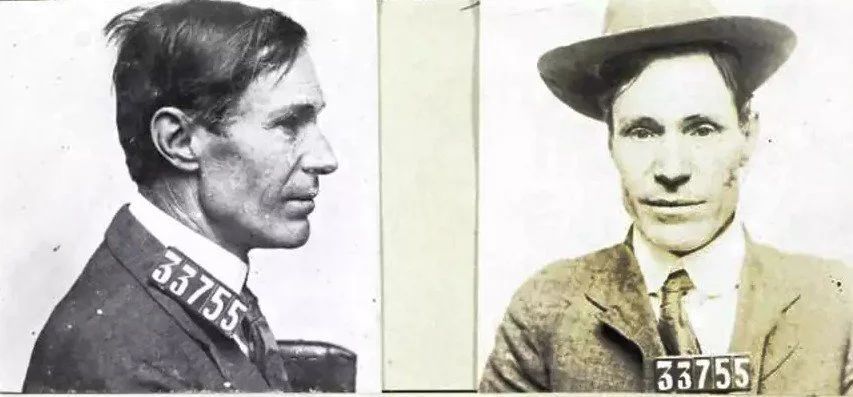
‘Bluebeard’ James Watson (1871-1939), the ‘west coast’s first serial bride killer’. —sfgate.com/history
At this point, he proved to be his own worst enemy. After attempting to cut his throat with a pocketknife, again by slashing his wrists while in hospital, all he had to do was remain silent (he was forever claiming memory loss), accept trial, conviction and a nominal sentence for bigamy. Then, of course, pick up where he left off.
In an age before instant communication and police departments exchanging information, Watson’s use of aliases and his wanderings had to have made investigating his past challenging. When police posted news of his arrest and suspected activities, there was a rush of women seeking annulments or divorces. A check on some of the women who were named on the certificates were soon linked them to several cases of missing persons in various western states.
It took weeks of interrogation by Los Angeles County District Attorney Thomas Lee Woolwine to break him down: “Something just told me to go and marry them, and yet something told me not to. Yet, I would go and do it, and it seemed all at once an impulse came over me to go someplace and make away with them. It seemed like I had done something I was ordered to.”
Then this master of many guises and gall admitted to having murdered nine of his wives. (According to one account, a woman’s body had been found near Plum Station, Wash., and Watson, presuming that it was that of one his wives, in exchange for a plea bargain, confessed to not one but nine murders, usually by bludgeoning or by drowning during their honeymoons.
(As it happened, the body that precipitated his downfall wasn’t his handiwork but, of course, the damage was done.)
Head down beneath a large fedora, ‘James P. Watson, murder suspect,’ is shown in a Los Angeles Times photo as he’s escorted by two sheriffs the day before he was sentenced. The subtitles of the accompanying news story are very much of that period: Perhaps Part Negro. Betrays Evidences of Revolting Moral Perversion in the Manner of His Many Murders of Women Whom He Married.
A more graphic picture in the Times shows a large crowd of suited spectators watching a man in a white tee shirt bent over a shovel in Sugarloaf Canyon, San Diego County, in May 1920. This would have been the grave of Elizabeth Prior/Pryor. A second photo, published the following day, shows police unearthing the body of 43-year-old Nina Lee Deloney, Watson’s last victim, whom he’d married in Oakland in December 1919.
She was “caked in dirt” in a shallow grave of rocks in El Centro, Imperial County, on the southeast border of California in May 1920. It was for her murder that he was sentenced to life imprisonment in San Quentin.
He said he couldn’t remember where he’d buried the others.
Charged with Nina Lee Deloney’s first-degree murder in 1920, ‘Walter Andrew Watson’ aka Huirt appeared before a grand jury indictment hearing, where he sat with head bowed as he whispered “Guilty.” Although prosecutors stoutly denied it, they’d agreed to a sentence of life imprisonment rather than the death penalty in exchange for his confessing to nine of his murders and leading police to his last wife’s grave.
(At which point Los Angeles authorities appear to have been satisfied and closed the case without investigating his other murders.)
Three of his confessed victims were Canadian: Mrs. W.A. Watt, Winnipeg, whom he drowned in Lake Coeur d’Alene, Idaho, as he did Marie Austin. Eleanor Frazier, also from Calgary, he drowned in the Spokane River, Wash. District Attorney Woolwine stated that he was sure Watson, who’d given his true name as Dan Holden, had “laid bare all of the murders he was alleged to have committed”.
On Oct. 16, 1939, bold, black headlines in the Imperial Valley Press announced
‘Bluebeard’ Who Buried 22nd Woman Victim in Imperial County Dies in San Quentin Prison Hospital
Death Recalls Sensational Crime of More Than 19 Years Ago, When Murderer Led Investigators to Grave of Young Woman
There’s much more to the story as you’ll see in next week’s BC Chronicles.
(To be continued)
