
‘Damnable Deeds’ Beneath the Dome
(Part 1)
Well, like it or no, here we are again—we’re within two days of another provincial election, this one two years before its shelf date.
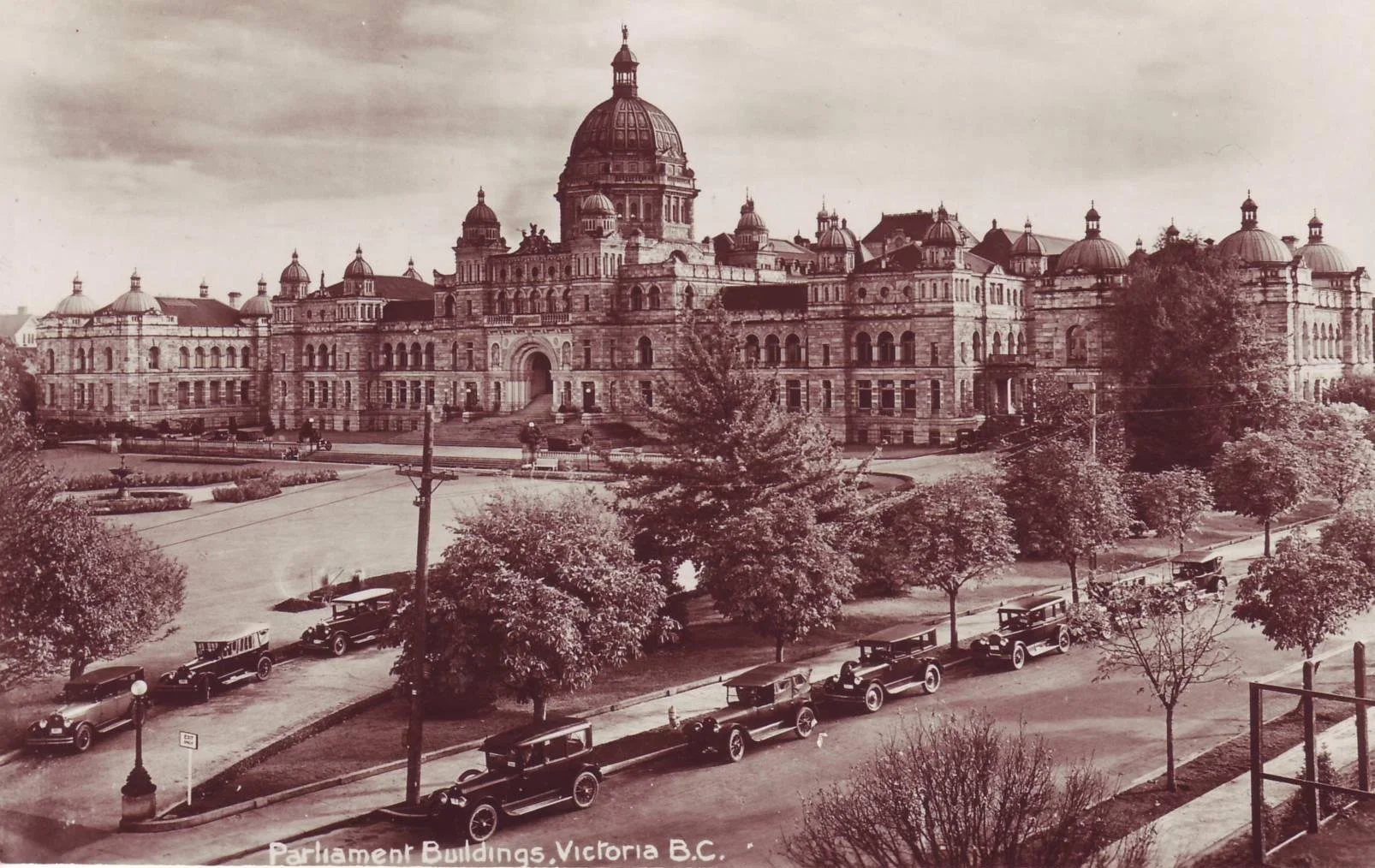
What stories Victoria’s Legislative Buildings can tell! —BC Archives
But why should we be surprised by anything that politicians say, do or don’t do (such as fulfill their promises)?
If that sounds cynical, it’s because even Pollyanna would find it difficult to be otherwise if she’d spent most of a lifetime studying BC history as I have. Make no mistake: I fully believe in the democratic process. The problem, as I see it, is the way it’s practised (perhaps abused is the better word).
But that’s me.
This week in the BC Chronicles we’ll revisit one of the most colourful, even most outrageous, character who has ever graced/disgraced those hallowed chambers beneath the dome of Victoria’s Legislative Building. On a broader level, the characters and the circumstances have changed through the years, but the “damnable deeds,” as one historian termed them, just seem to go on and on and on.
Mind you, on the bright side, there was hardly ever a dull moment.
* * * * *
For what consolation there is for those of us who find provincial politics to be disappointing, we can take some comfort in knowing that that they aren’t making politicians like they used to. I mean, when did you last hear of a physical altercation on the floor of the Legislature? No, no, we’re much more civilized now than in the days when BC was a frontier province.
Ah, yes, those good old days....
We’ve had some, shall we say, colourful, politicians in recent times, but they pale alongside some of the players of the past such as, to name but one, Joe Martin. Joe Martin, you ask? You mean you don’t recognize him as the holder of the dubious title of having had the shortest run as BC premier, all of 107 days? For shame.
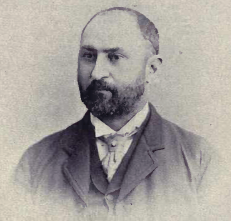
‘Fighting Joe’ (Joseph) Martin (1852-1923) was, without doubt, the all-time pit bull of BC politics. The Dictionary of Canadian Biography uncharitably sums him up thus: “Suspicious in nature and with a capacity for pettiness, he [was] known throughout his career for his feisty, combative spirit [and] considerable eagerness to advance his own interests.”—Wikipedia
Back to Joe Martin and his circuitous route to the BC Legislature. A lawyer and politician (two strikes against him right there), he hailed from Ontario or, as it was known then, Canada West, although he was born in New Brunswick and grew up in Michigan. Before becoming a lawyer he’d sought his teaching ticket by supporting himself as a railway telegraphist and dispatcher.
Despite his being expelled from the Normal School in Toronto because of “unruly behaviour” that included his settling arguments with his fists, he did manage to acquire a Grade A teacher’s certificate at another school and complete two years of Arts at the University of Toronto.
With those credentials, he was appointed principal of the public school in New Edinburgh, ON, but quickly realized that it offered no real future. By this time married with a stepdaughter, he turned to studying law in Ottawa, then moved to Portage la Prairie, Man., where he was called to the bar in 1882.
He’d had his first taste of politics while in Michigan with the Patrons of Husbandry, a farmers’ protest movement. In Manitoba, he embraced liberalism and developed anti-French sentiments. His quick mind and sharp tongue soon got him elected to the Legislative Assembly of Manitoba, but it was contested because of allegations of fraud, and he had to run again in a by-election which he won despite more whispering of misfeasance. He was able hold his seat for almost eight years even after he brought House business to a standstill by being being held in contempt for refusing to apologize for accusing the Speaker of being partisan.
Joe eventually yielded, although his choice of words betrayed his real feelings on the subject.
Upon re-election, he was appointed Attorney General, Minister of Education and, later, Commissioner of Railways in the Greenway government. Never afraid to take a bull by the horns, Joe began criticizing the CPR’s monopoly after the federal government disallowed an act which enabled provinces to charter its own railways.
In 1888, he and the premier went to Ottawa to personally negotiate a compromise. As a result, the CPR did surrender its monopoly and Premier Greenway, claiming the credit, called for a general election. Although it’s now known that the Macdonald government intended to withdraw the CPR’s monopoly as being legally unenforceable, the result was seen to be a major victory for provincial rights and Greenway’s government.
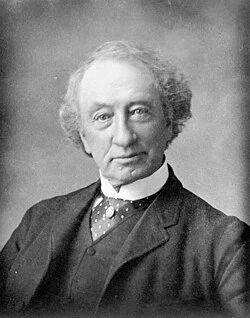
Prime Minister John A. Macdonald blinked, but only because he knew the CPR monopoly was unenforceable. —Wikipedia
As Railway Commissioner, Martin then granted a contract to the Northern Pacific and Manitoba Railway. Work was begun but soon ran into a problem as it had to cross a CPR feeder line whose directors secured a court ordering prohibiting a crossing. Martin responded with a threat of enlisting special constables to protect a newly-recruited army of labourers who’d been enticed with the promise of high wages.
This, as historian S.W. Jackman pointed out in his 1969 book, Portraits of the Premiers, presented something of a quandary because Martin was wearing two opposing hats. As Railway Commissioner, it was his duty to promote construction of the NP&M Railway, but as Attorney General, it was his duty to uphold the law and the rights of the CPR!
The result was a weeks-long stalemate that entered Manitoba history as the Battle of Fort White.
The Greenway government went to court and the navvies were laid off, but, when the dust settled, the province won. As Dr. Jackman puts it, “Martin and his colleagues made their point: the provincial charter was legal and [the NP&M Railway] had the right” to cross the CPR line.
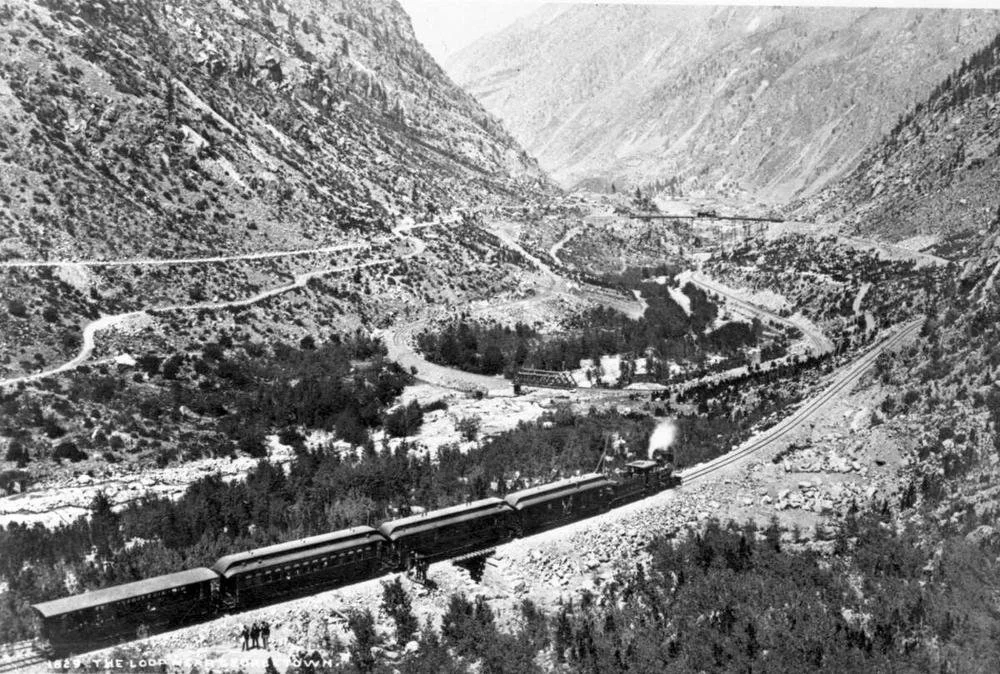
Joe Martin played a leading role in successfully challenging the Canadian Pacific Railway. —BC Archives
By that time Joe, never one to be idle, had already become embroiled in another provincial-federal dust-up as the proponent of a move to end dual English and French speaking schools in the province—despite the fact that his own riding had a large French Canadian and Roman Catholic population. Emotions quickly boiled and Martin, in a fit of passion, promised that the government would not only abolish the bipartite school system, but end the official use of the French language.
His own government was taken by surprise and, upon sober reflection, Joe realized he’d gone too far. He apologized to his fellow Mps, but the genie was out of the bottle. Although the English speaking majority appeared to be in favour of such moves, at the end of that parliamentary session, Joe handed Greenway his resignation and returned to practising law.
What he’d so foolishly started in 1890 eventually reached the national level and precipitated the defeat of the Conservative government after 30 years in office.
Perhaps as tired of putting out fires as many Manitobans had become tired of him, Joe threw his hat in the ring as the Selkirk Liberal candidate in the 1891 federal election. Failing that, two years later, he reclaimed his provincial seat by acclamation in a by-election in Winnipeg, held the post of attorney general for a month, then abandoned both to return to law and a milling business he owned in Portage la Prairie.
These didn’t hold his interest for long, either. He sought and won a long-held Conservative seat in Winnipeg then argued with his fellow Liberals over free trade. He also encountered simmering resentment for his anti-French past. Although the Liberals handily won the 1896 election—the issues included his nemesis, the issue of secular public schools—Martin lost his seat but still felt entitled to the post of Minister of the Interior. When Laurier refused him a cabinet post, Joe turned his back on Ottawa.
Then, out of the blue, he was recruited by his old adversary, the CPR, to be their solicitor in BC. News of his appointment didn’t go well on the west coast, newspaper editor John Houston expressing the thoughts of many when he wrote that he preferred a Manitoba blizzard to Joe Martin.
As it happened, his arrival in Vancouver proved to be perfect timing. ‘Stump Town’ was booming and the perfect arena for a man of Martin’s temperament and talents. Besides acting as a lawyer, which led to yet another dispute, this one with the Law Society of BC, which he won, he became involved in real estate and struck it rich by developing the Hastings Manor Subdivision.
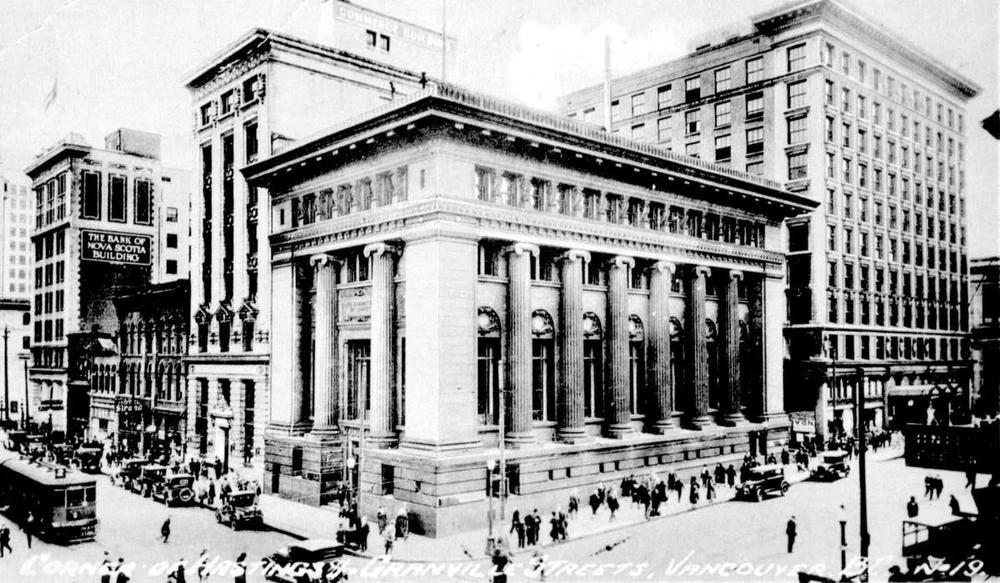
Downtown Vancouver looked nothing as it does in this 1915 photo when Martin hit the scene but he was quick to seize real estate opportunities. —BC Archives
With money and time on his hands, a deadly mix for a man like Martin, he again turned his interest to provincial politics. Again, he charmed the voters and, in 1898, he was elected a Member of Provincial Parliament (MPP, today’s MLA) for the multi-member Vancouver City riding. Once in Victoria, he found a somewhat rudderless Legislature, with the ‘Honest” John Turner government holding only 17 of 38 seats.
Then Lieutenant-Governor Thomas R. McInnes provoked politicians and public alike by dismissing Turner in favour of a government led by former premier Robert Beaven—who didn’t have a seat in the House.
To no one’s surprise but that of the lieutenant-governor, Beaven was unable to assemble majority support and, in desperation, McInnes turned to Charles Semlin to form a government. When Semlin took office as premier, he chose the multi-talented Martin as his Attorney General at the same time as he was Acting Minister of Education, from August 1898 through March 1899. Along the way, he also held the post of Acting Provincial Secretary for all of three days.
It was just the beginning of the single most tempestuous career in BC’s political history.
(To be continued)
