(Part 1)
It’s hard to think of bankers as being colourful; I’ve never met one who was.
But, fortunately for storytellers such as I, there’s always that exception to the rule.
Read More*British Columbia Chronicles special bonus section for Members Only.*
(Part 1)
It’s hard to think of bankers as being colourful; I’ve never met one who was.
But, fortunately for storytellers such as I, there’s always that exception to the rule.
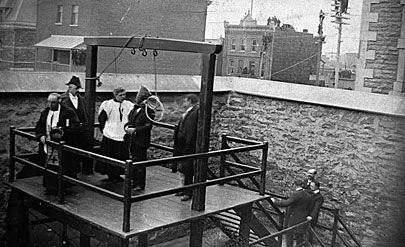
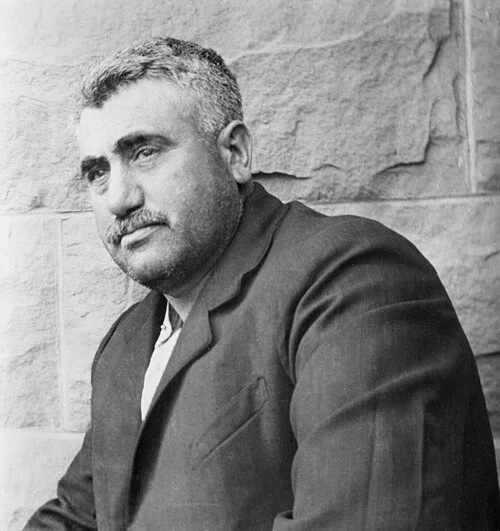
Read MoreEmilio Picariello could have served as a role model for fellow immigrants. He came to Canada with few worldly goods and the added handicap of speaking English as a second language at a time when visible minorities were treated as second class citizens.
Many of them, sad to say, were tragic, sometimes the authors of their own misfortune, others the victims of circumstance. Some of them simply marched to different drummers.
All of them had stories to tell and some, if only briefly, caught the attention of newspaper reporters who were ever on the alert for the out-of-the-ordinary.
Read MoreEmilio Picariello could have served as a role model for fellow immigrants. He came to Canada with few worldly goods and the added handicap of speaking English as a second language at a time when visible minorities were treated as second class citizens.
Read More(Conclusion)
Last week, the late Guy Ilstad began to recall his adventures in 1910 when, at the height of a land boom precipitated by the construction of the Grand Trunk Pacific Railway, he and two teenage friends were hired to stake out 10,000 acres in northern BC for an American company.
To my regret, I never met the late Guy Ilstad. We corresponded for several years, beginning back when I was working for The Daily Colonist in Victoria at the start of my journalistic career.
Our friendship began by my playing a long shot after his name came up while I was researching the intriguing story of Quatsino’s John Sharp. The watchman for a dormant coal company, Sharp’s mysterious death had long intrigued historians because of rumours he’d really been William Clarke Quantrill.
Read MoreThey’re a curse, I tell you!
I defy anyone to pore through old newspapers and documents on a daily basis as I do and not be pulled down, down, down by these unforeseen, unavoidable and irresistible sirens.
You can hardly turn a page, it seems, that there isn’t another story crying out, “Read me.”
Read MoreCertainly the career of Gustav Alvo von Alvensleben was one of extremes—from German aristocrat to BC developer extraordinaire to enemy alien, imprisonment and financial ruin.
Anyone researching provincial history in the years immediately preceding the First World War is sure to see this name celebrated in press stories; some even credit him with founding the Vancouver stock exchange.
Read More(Conclusion)
This week, the conclusion to Noel Robinson’s 1922 profile of Capt. Alex McLean, the “real” Sea Wolf of literary fame in Macleans magazine:
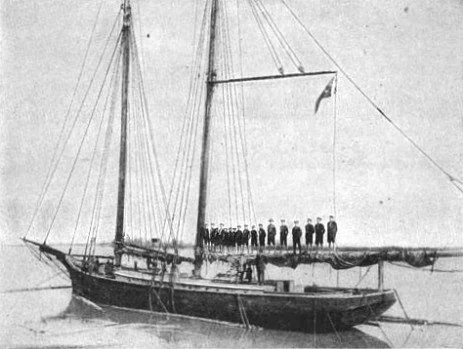
While Captain Alexander McLean never owned or sailed the Casco—a boat always associated with Robert Louis Stevenson because the novelist sailed in her and wrote at least one of his novels aboard her—McLean had a strong desire to possess her and at one time tried to buy her.
Read MoreFour years ago, I told the story of the amazing Capt. Alex McLean who was made immortal—and infamous—by novelist Jack London. The source for my Chronicle was an author much closer to home, Tom MacInnes, in his 1920s book Chinook Days.
Read MoreAnother Christmas, and time to reach into my archives for another Yuletide BC Chronicle.
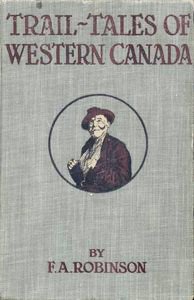
This year, I’m sharing from a book that I found years ago in my travels, an original printing (it’s now available online as a reprint) of F.A. Robinson’s book Trail-Tales of Western Canada, published in 1914.
Read MoreLike dominoes, they keep falling—traditional geographical, so-called place names, long rooted on our maps which have come to be challenged by today’s moral and ideological standards.
Places and topographical features which were named to honour pioneers who played pivotal roles in BC history but who now find themselves under the glass for their beliefs, in particular their publicly expressed or demonstrated stands on racial issues. Sometimes, too, and more and more often lately, not for reasons of moral judgment but to belatedly acknowledge First Nations precedents.
Read More(Conclusion)
He was barely middle-aged, this man of iron will, stamina and religious zeal. But he’d challenged his health so many times and now he was weighed down by sorrow. His closest friends noticed that he seemed to have aged perceptibly, and at least one of them expressed fear for his life.
None could foresee that, after all he’d done for others, Henry Irwin was already running out of time. His premature passing remains one of the sadder ironies of our history.
Read More(Part 3)
Was there ever a bigger heart than that of pioneer missionary Henry “Father Pat” Irwin?
A man who did nothing by halves—he only gave his all.
What bitter irony that, at the moment of his greatest joy, he should be struck by double tragedy.
Read More(Part 2)
As we saw last week, a young Henry Irwin had, as his biographer Anne Mercier wrote in 1909, “laughingly declared his intention of choosing a cold climate and being a missionary there; and he...fulfilled this intention by choosing British Columbia as the province, and New Westminster the diocese, where he would begin work.
“The life of a missionary priest in Canada amongst settlers is not often an eventful one. It generally presents a record of hard, monotonous work like that of a poor priest in a scattered agricultural parish in England. There are, however, some points of difference...”
So wrote, in 1909, The Right Reverend John Dart, D.D., Bishop of New Westminster and Kootenay, in his preface to Mrs. Jerome Mercier’s forthcoming book, Father Pat:
A Hero of the Far West.
It’s interesting to speculate as to how many ways there are to turn a dishonest dollar. There must be as many variations to the old shell game as there are operators, and B.C. has known its share of these shady types.
Almost a century ago, Jacob Jacobsen (if that was his real name) earned his niche in provincial criminal lore when, under the alias John Hellsing, he worked a novel dodge on a Victoria realtor. His was, as a newspaper reported put it, a “smooth scheme,” and one not without its charm if something less than original.
Read MoreIt was a colourful career that Thomas Herbert Murphy reflected upon in the summer of 1930. A lifetime that had been seen him in the mixed roles of sailor, blackbirder, prospector and Justice of the Peace.
Read MoreIt’s so easy to just go with the obvious, to accept old newspaper accounts at face value. After all, the story is exciting enough that others have done it before you, so why look a gift horse in the mouth?
Heck, I’ve done it many times!
Read More‘He lay like a warrior taking his rest,
With his martial cloak around him.’
We haven’t heard from our old friend D.W. Higgins for a while. Not for want of material, I assure you, as my file for this pioneer journalist and one of B.C.’s all time great storytellers continues to grow.
Read More“Mr. President: It is with much diffidence that after repeated urging on your part I undertook to contribute a paper to this society...”
So began, modestly, George Hope Johnston’s address to the Calgary Historical Society in February 1920.
Read More