
‘Damnable Deeds’ Beneath the Dome
(Conclusion)
“Something in...him arouses all of the virulent antagonism of the human race.” —Friend and novelist Donald Barr
Two weeks ago, I introduced you to Fighting Joe Martin, our pugilistic premier from the past. A man of brilliance but with a character so flawed that, like the scorpion, he bit all he met, including his political allies whom, one might think, he needed most during his chaotic career.
But he was elected again and again and again. In Manitoba. In British Columbia. In Great Britain. While getting rich along the way.
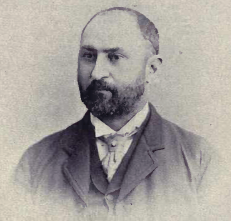
When Martin pronounced himself Leader of the Opposition in Victoria, he faced upstart Richard McBride, and the gloves came off. —Wikipedia
As we’ve seen, Joe’s reputation had preceded him and his arrival in BC in 1898 at the behest of the CPR was likened to that of a Manitoba blizzard. No wonder, then, that he felt right at home. Between legal clients, a skirmish with the BC Law Society, and making a fortune in Vancouver real estate, his thoughts returned to the political arena.
Elected to the provincial legislature for the multi-member Vancouver City riding, he headed to Victoria where he found the John Turner government holding only 17 of 38 seats. When Lieutenant-Governor Thomas R. McInnes dismissed Turner in favour of former premier Robert Beaven—who didn’t have a seat—the situation became even more confusing.
To no one’s surprise but that of the lieutenant-governor, Beaven was unable to assemble majority support and, in desperation, McInnes turned to Charles Semlin to form a government. With a majority of three, Semlin took office as premier and appointed the multi-talented Joe Martin as both Attorney General and Acting Minister of Education.
As Wikipedia tells us, “During the two-year Semlin government, Martin caused controversy by introducing the eight-hour work day (opposed by business owners) and an Alien Exclusion Act to prevent Chinese from owning mining claims. The federal government, at the instance of American interests [Joe had included them as ‘aliens’ in his bill], took steps to disallow the legislation.
“During a controversial public meeting about the issue, Martin breached cabinet solidarity and criticized his own government.
“This resulted in Premier Semlin request[ing] Martin's resignation. When Semlin reconstituted his ministries and met the legislature, he encountered opposition from Martin, often requiring the Speaker of the house to break ties by using his casting vote.”
Semlin had lost faith in him because of his unpredictability, his habit of frequently changing his mind in mid-course, and, on several occasions, his cursing antagonists at public meetings. More seriously, he seemed to be unable to distinguish between the public interest and his own, mixing legislative business with his legal practice, he had a volatile temper and—horrors—sometimes conducted both while “the worse for liquor”.
After Semlin demanded his resignation, Martin joined the Opposition and the Semlin government showed signs of collapsing. Re-enter Lieutenant-Governor McInnes to dismiss him as premier and ask, of all people, Joe Martin to form a government!
Joseph Martin, McInnes informed the Governor General, was the MPP most capable of leading the way out of the political chaos” in which the provincial parties found themselves.
This was high comedy but Joe’s legislative peers weren’t amused; showing rare unison, they voted non-confidence, 28-1.
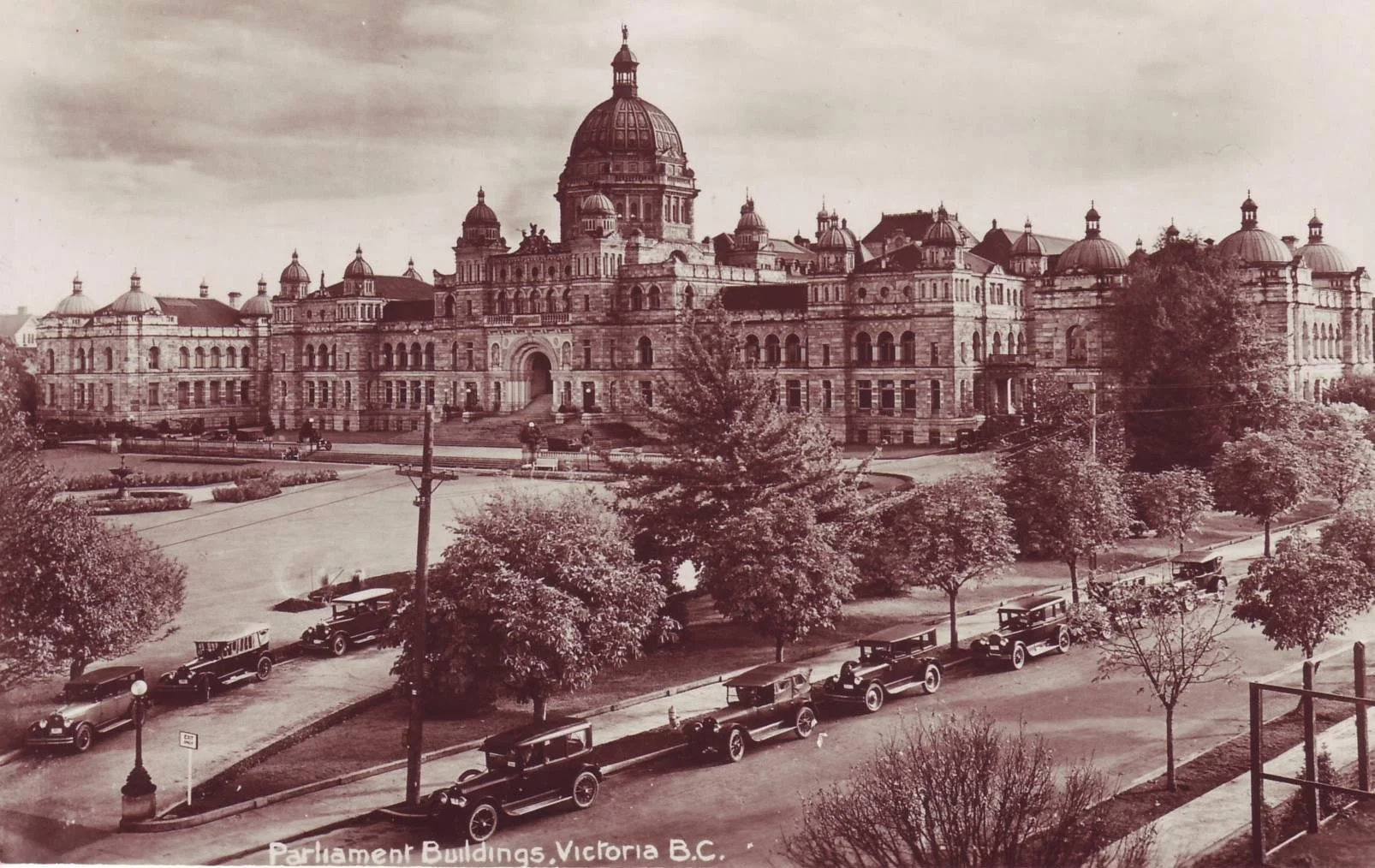
Joe Martin’s premiership has gone down in provincial history as the shortest ever, just 170 days. —BC Archives
When McInnes arrived to prorogue the House, Feb. 28, 1898, he found it empty but for Martin and a sole supporter. The lieutenant-governor took his departure amid a chorus of cat-calls and boos from the galleries.
Somehow, Martin cobbled together a cabinet by appointing two un-elected ministers. The electoral campaign that followed, in the words of Dr. Jackman in Portraits of the Premiers, was “brilliant and certainly a pyrotechnical display of the political art.
“Almost everyone disapproved of the premier, but he was undaunted. He waged war on all fronts. He persuaded a caucus of Liberals in Vancouver to accept him formally as the leader of the party...although other Liberal groups throughout the province repudiated him... Indeed, his platform was an admirable one, being a great contrast to the lacklustre programme of the opposition....”
Never one to shy away from opposition, and refusing to play it safe because he had such a precarious hold on power, Joe met the issues of the day, head-on.
While the province was experiencing high unemployment and declining resource revenues, he pushed for the eight-hour workday, diversification of the economy by promoting the development of new resources, and re-enactment of the statute concerning Asian labour which had been disallowed by the federal government. He also endorsed government ownership of railways—heresy to the province’s big business interests and investors, national and international.
His known antagonism to prohibition, then a major issue of the day, didn’t win him friends among the teetotallers, either.
Hence, not even his pushing for the construction of highways and bridges, and his efforts to found the University of BC, could save him when he went to the polls, and went he down in flames after just 170 days in office—BC’s all-time record for brevity.
Only five of his supporters were elected and there was no Lieutenant-Governor to the rescue this time, McInnes having been fired by Prime Minister Laurier and replaced by Sir Henri-Gustave Joly de Lotbiniere.
After considerable backroom manoeuvring, retired coal baron James Dunsmuir was sworn in as premier and Martin found himself in the boondocks of the Opposition, while showing, the press noted, “extreme friendliness” with his successor and supporting much of the government’s legislation.
By this time, party politics had finally taken root and the Liberal Opposition, in desperate need of a leader, any leader, elected Martin, despite his continuing cooperation with the Dunsmuir government. But, when he pronounced himself Leader of the Opposition, he faced a brash new competitor, Richard McBride.
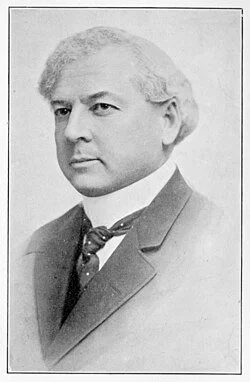
First elected to the BC Legislature in 1898, future premier Richard McBride later served as Minister of Mines in the Dunsmuir government. Before that, however, he professed to be a Liberal, and this brought him head-to-head with Joe Martin.
This is where it gets physical and exciting.
As both claimed leadership, both insisted that the chair of the Opposition leader in the Legislature was his. In the words of a disgusted journalist, the second day of the session degenerated into “irreverence and riot” over who, Martin or McBride, would occupy the chair.
For three hours they and their respective supporters argued loudly and bitterly, all other business of the House being set aside.
Upon members’ return from lunch, McBride plunked himself down in the Leader’s throne, then stood up to hear Rev. Canon Beanlands read the afternoon prayer—allowing Martin to snatch it away. As the two began grappling, others joined in. One member put his hands on Martin’s shoulders and pushed him away as the chair yawed to and fro in a sea of flailing arms and hands and cries of “Shame! Shame!” rang down from the galleries.
When, minutes of pandemonium later, Martin managed to occupy the chair, McBride seated himself on the desk immediately in front of him. It was a stalemate, even Fighting Joe knew he couldn’t use his fists in the House.
There was more arguing, more name-calling, but finally a compromise was reached: members would occupy the same seats they’d occupied the previous session. On that note, the House adjourned after a shameful day that the Vancouver Daily World hoped would never again disgrace a Canadian parliament.
Convinced that the Liberals were going to dump him, Martin surrendered leadership but ran, unsuccessfully, for re-election as an MPP in the 1903 election. This time, he was finished, he told the Vancouver Province, being totally disgusted with the business of politics with its amplitude of abuse from enemies and paucity of thanks from friends.
But, even when acting as a lawyer, Joe’s quick temper and quicker fists got him into trouble, getting him ejected from a Vancouver courtroom after he and a policeman came to blows.
He soon changed his mind about politics, and, discarding his Liberal affiliation, ran federally as a Conservative just two years later. He lost. He failed again, also federally, in 1908 as an independent in Vancouver. The previous year, he’d founded the Vancouver Guardian newspaper. Never one to say die, he again ran as an Independent under the banner of the Asiatic Exclusion League.
This time, he not only lost the election but his deposit.
But not his real estate dealings or his legal clients which included the City of Vancouver, the Vancouver Board of Trade and the Great Northern Railroad. Typically, however, not even a comfortable income could calm the beast within and, ever restless, he announced in 1909 that he was going to retire in the United Kingdom.
Few, at least publicly, shed a tear. The Province, while acknowledging Martin’s undisputed abilities, noted his fiery temper that “made him almost impossible as a member of any government and a constant source of disquiet, if not confusion as a member of a party.”
Probably to no one’s surprise, retirement didn’t suit him either and—within days of his arrival—he was up to his old tricks.
Securing the Liberal nomination for a by-election in Warwickshire, Stratford-on-Avon, he demanded abolition of the House of Lords, votes for women, a land tax, and free trade. He didn’t win, of course, but he’d made his presence known, and he was asked to run in the 1910 general election.
This time he won a seat in the British House of Commons and he sat as the Liberal Member of Parliament for St. Pancras East until 1918, despite the inevitable and increasingly bitter opposition from his fellow Liberals for his extended absenteeism. (Some things never changed for Joe Martin.)
Because the approach of the First World War had precipitated an economic crisis in BC, particularly in real estate, Joe, concerned for his investments, returned to Vancouver in mid-parliamentary session. He was there when war was declared but, instead of booking passage for England as most expected him to do, he reopened his law office and ran for mayor—twice, as mayoralties were contested annually—and was defeated both times.
Not until mid-1916 did he return to England and calmly reclaim his seat in Parliament.
Just three months later, however, he tendered his resignation and announced his return, yet again, to BC and yet another election. This time he ran as the federal Liberal candidate for Cariboo while founding another newspaper, the Evening Journal.
For the three months that the Journal lasted, Martin used it as his personal podium to slice and dice everyone and everything that offended him, including his own Liberals.
By 1917, more than his friends had deserted him; so had much of his wealth. After a fling at operating a coal mine, he returned to England and, having burned his bridges with the Liberals even though he still held his seat for St. Pancras East, crossed the floor and joined the Labour Party who agreed him to run as their candidate in neighbouring Islington South.
But no Labour candidate was nominated and he returned to Vancouver in less than a year to resume his vocal attacks on the Liberals who formed the Opposition in the provincial parliament.
Dr. Jackman incredulously describes his “political dexterity” during this period as “quite astounding”. Indeed, it was, his pingponging between the Old Country and New World are little less than dizzying and, alas, symptomatic of mental decline. He began to show obvious decline physically, too, although this didn’t keep him from his law practice.
In 1920, by this time a widower and alone, with his personal finances (mostly real estate and some mineral shares apparently stabilized and later valued at $100,000), the never-say-die Joe Martin ran as an independent; although he failed to win office he did make a respectable showing.
But not even Joe Martin’s combative constitution could defeat old age and diabetes which finally ended his fiery career in March 1923, when he made history yet again as the first person in Vancouver to be treated with insulin.
* * * * *
For all his faults, for all his mercurial tantrums and political perambulations, it says something about Joseph Martin that he’d retained some loyal clients and friends until the end. As a politician, “He had great opportunities but did not use them wisely,” Dr. Jackman concluded, 60 years ago. “His gross opportunism and his cold contempt for his enemies made him a dangerous opponent, but in his own way he was a great man.
“Politics in British Columbia after his accession to power in 1900 were never quite the same again.”
By now, readers will have lost track of Martin’s parliamentary postings, so here’s a summary: MLA and Attorney General in Manitoba; Member of the House of Commons and confidante of Prime Minister Laurier in Ottawa; MPP, Attorney General and Premier in Victoria; MP in the British House of Commons.
Yes, we’ve had many a colourful and controversial politician here in BC. But there never has been anyone like Fighting Joe Martin. Let us hope they broke the mould.
* * * * *
Rather than leave readers with a perhaps jaundiced view of politics, this word about democracy from the great Winston Churchill:
“It has been said that democracy is the worst form of government except all the others that have been tried.”
