
David Ogilvy
(Part 1)
“David A. N. Ogilvy was an old man who had done only one thing of much public importance in his life and who had gloried in that single event through years of insignificance.....”
How cruel!
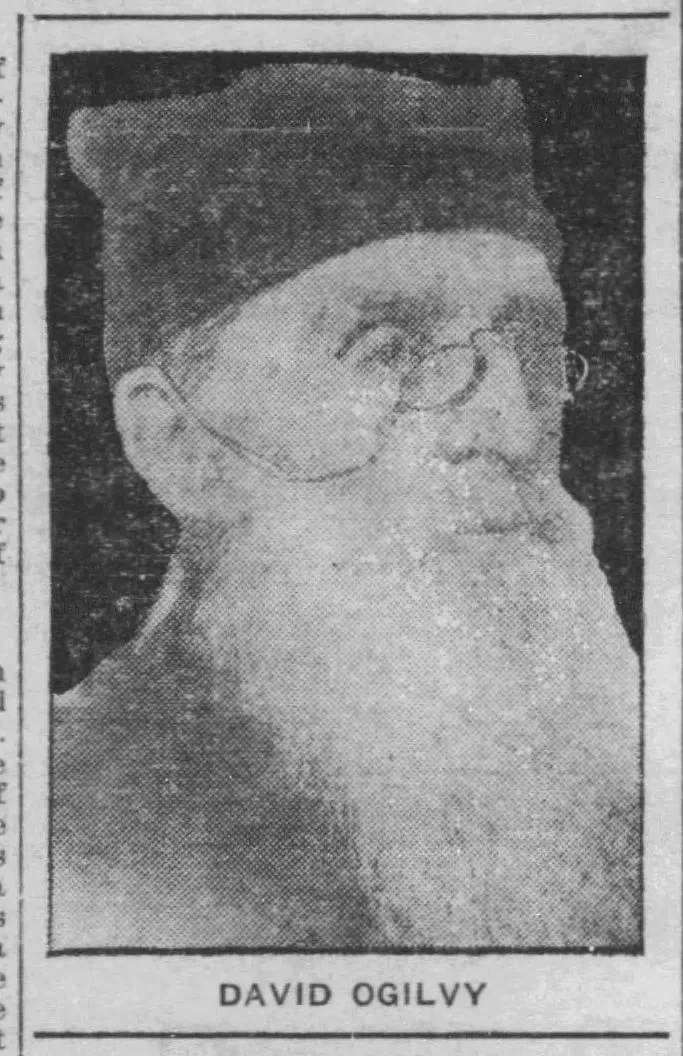
David Ogilvy as he appeared in his final years. The full beard hid his disfigurement left after he was attacked and almost killed while serving as a city police officer. —www.newspapers.com
This "obituary" which appeared in the Victoria Daily Colonist a century ago must be one of the more amazing on local record; it’s not only insulting but inaccurate.
It continued: "He had hoarded his money, living a miserly existence, and when he died the other day with his hospital bill of several thousand dollars still unpaid, he was found to have over $16,000 and a house and lot..."
So who was David Alexander Nelson Ogilvy?
He was more than a man of, to quote this account, "vanities, vagaries, sentiments, dislikes, [and] queer little quirks of character." Quite the contrary, in fact—as a member of the first party to climb Mount Baker he’d led a full and exciting life as a pioneer and policeman.
An eccentric, he most certainly was; but, we would like to think, one of greater stature than that of a lowly miser.
Long a familiar sight on Victoria streets, Ogilvy was described by another source as having been “always jovial and pleasant," and well-liked by those who knew him—hardly the Dickensian stereotype of a miser.
His death, however, hadn’t come as a shock to his friends, as Ogilvy had been failing for several years. But, with the announcement, in the spring of 1924, of his passing at the golden age of 88 years, many Victorians mourned the loss of one of the city's more colourful characters.
Certainly, those familiar with his career must have spared a few moments’ thought for this gentle old widower who’d been a resident for more than 60 years, and who, on Aug. 17, 1868, conquered Washington State's silver-mantled Mount Baker.
Born, "apparently of good family," on April 7, 1837, on the Hill of Angels, Parish of St. Augasten, County of Two Mountains, Que., Ogilvy had headed west after completing his education.
Upon arriving in Victoria, at the age of 23, he decided to make the former Hudson's Bay Company outpost his home, and went to work as a surveyor. As a surveyor and prospector, he spent little time in the future capital for some years before he became a city policeman and night watchman.
It was as a special constable that he experienced some of his more exciting adventures.
Such as the time, according to an ancient news account, that he was “murderously assaulted…by a notorious character named Peter Pascario and a Fort Rupert Indian. They were arrested on a charge of violently assaulting Special Constable Ogilvy on Cormorant Street.
“The unfortunate man was brought to the jail and Dr. Matthews was immediately summoned and found a small, deep wound on the right temple and also a cut on the forehead two inches long extending downward toward the nose.
“There was also another deep cut on the left cheek from which a part of his jaw was removed. When the doctor had finished dressing the wounds the patient’s pulse was nearly gone as he had bled profusely and he had to be revived with brandy. He was then conveyed to the Royal Hospital.”
Such was police work in Victoria, a century and more ago.
Ogilvy made a full recovery from the assault and, in later years, delighted in telling acquaintances of his tempestuous career as a pioneer policeman. Because photographs taken of Ogilvy in later years show a long, full beard, after reading of his near-escape from death at the hands of the lethal Peter Pascario and friend, one can’t help but wonder whether he’d been slightly disfigured by the wounds, as earlier photographs show him to have been clean-shaven.
Whatever the case, it wasn’t his only close call.
In those days, he recalled in 1918, his “beat” had been Government Street, which he’d patrolled each night with his little darkened lantern, a nightstick and trusty revolver.
Once, when the steamer Otter was berthed at the Hudson’s Bay Wharf, at the foot of Fort Street, Ogilvy happened along just as the mate fell overboard. Throwing off his coat, Ogilvy raced to the rescue and jumped into the icy water. Upon grabbing hold of the drowning man, he swam to the ship’s rudder and commenced to “yell like blue blazes” until help arrived.
But by far the most memorable adventure had been the climbing of 10,700-foot Mount Baker.
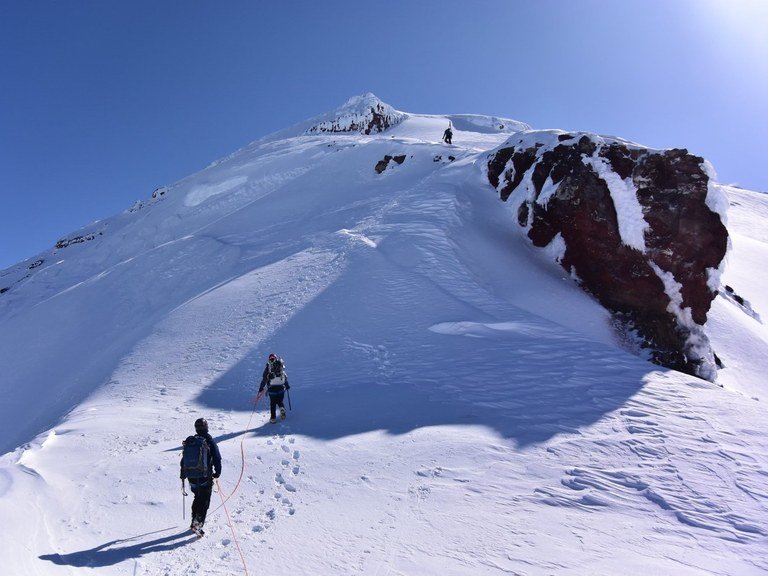
Mount Baker, a glaciated volcano visible from Vancouver Island and Seattle when weather conditions are right, is the dominant feature in the North Cascades. Unlike David Ogilvy’s day, many hiking trails now follow the ridges around Mount Baker and offer stunning views of the summit. Climbing to the summit is done mainly via the Coleman and Easton glaciers and requires technical expertise with high-altitude snow and ice. —Washington Trails Association
Accompanied by the noted British artist Edward T, Coleman, and two Americans, John Tenner and Thomas Stratton, Ogilvy succeeded where others had failed. Guided to the snowline by Indians, the party had pressed on alone to the summit. Although described as "most fatiguing," the push for the top, which involved a distance of about six miles, wasn’t as "perilous as was expected," and the adventurers completed the final leg of their expedition in less than a day.
However, as they had to be back in camp by nightfall, they were able to spend only an hour on the mountain's breathtaking peak, where they examined its 300-foot-wide volcanic crater.
As the first humans known to have examined Mount Baker’s volcano at close quarters, they noted with awe its “puffs of sulphurous vapours” and 600-foot depth. The mountain’s eastern peak was then named after Gen. U. S. Grant, and the shorter peak after Gen. William T. Sherman.
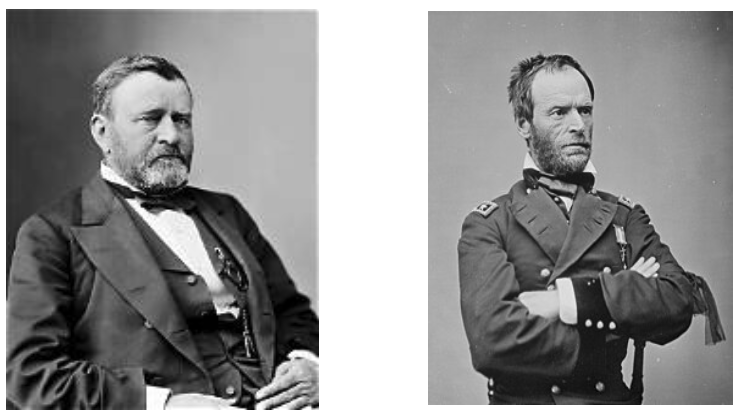
The explorers named two of Mount Baker’s peaks after U.S. President Ulysses S. Grant, left, and Civil War General William T. Sherman. —Wikipedia
Before beginning their descent, the adventurers planted the American flag with as much appropriate ceremony as was possible under the circumstances, then returned to camp.
There, their guides, who’d refused to follow them beyond the treeline, greeted them with “marked demonstrations of welcome and joy, evidently recognizing the danger and hardship on this part of the trip, and the courage and skill the explorers had shown in overcoming them so speedily”.
The only other signs of life observed at such a high elevation were the footprints of a giant grizzly bear—as close to the mountain’s keeper as they wished to venture.
Until his dying day, the ascent of Mount Baker remained David Ogilvy’s finest hour.
In his diaries, he referred time and again to that historic expedition, and mentioned an “oldtimer” named Amor de Cosmos, who’d greeted him on a Victoria street soon after his victory over Mount Baker. de Cosmos, he recounted, had asked “me if we had made it stick. I told him we had made it stick. He then said, ‘You have immortalized yourself.’”
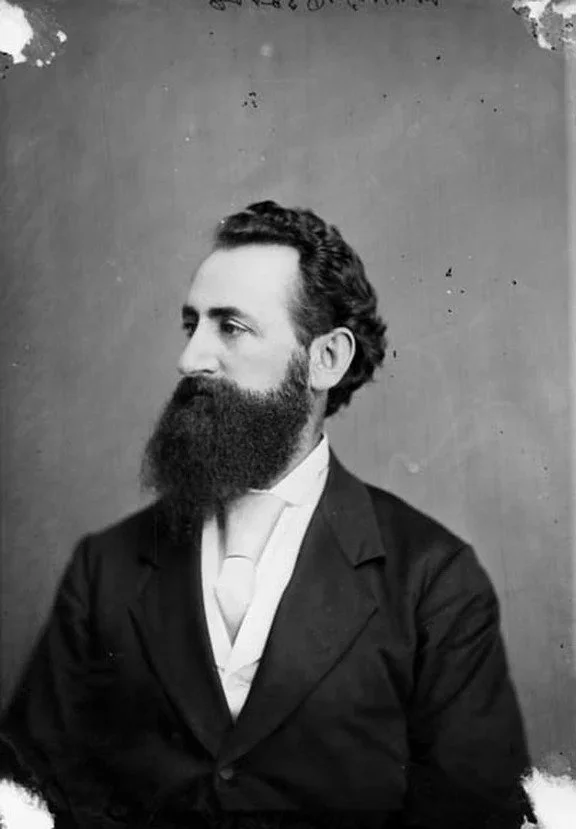
Newspaper publisher and BC Premier Amor de Cosmos congratulated Ogilvy for his ascent of Mount Baker. —Wikipedia
For more than half a century after, this feat remained as Ogilvy's greatest vanity; an idiosyncrasy which most, apparently, were willing to indulge over and over again, being unwilling to hurt the old storyteller's feelings.
In fact, according to a Colonist reporter, who visited him in his tiny boarding house room in 1918, "Anyone who takes the trouble to visit him...is assured of a pleasant afternoon's enjoyment, for once allowing Mr. Ogilvy to start, the listener is plunged into a veritable ocean of pioneer stories and experiences..."
(To be continued)
