
Ho! for the Koksilah
As you read this, there’s renewed interest in the three times abandoned ore dumps on Mount Sicker. The first time was a century ago when the three producing copper mines shut down; in the 1940s when they were worked for base metals; then again in the 1960s when an attempt was made to recover discarded ore values by a chemical leaching process.
Now another company has applied to process those same ore dumps and to clean them up environmentally.
All of which reminded me that there was another Cowichan Valley copper boom, this one little known.
By mid-1905, Mount Sicker’s phenomenally rich copper reserves whch had sparked three mines, two townsites, two smelters, a railway, a tramline and a deepsea shipping port, had peaked. Although the three producing mines continued to give diminished returns, the CEO of the Tyee, for one, began casting about for a new source of income.
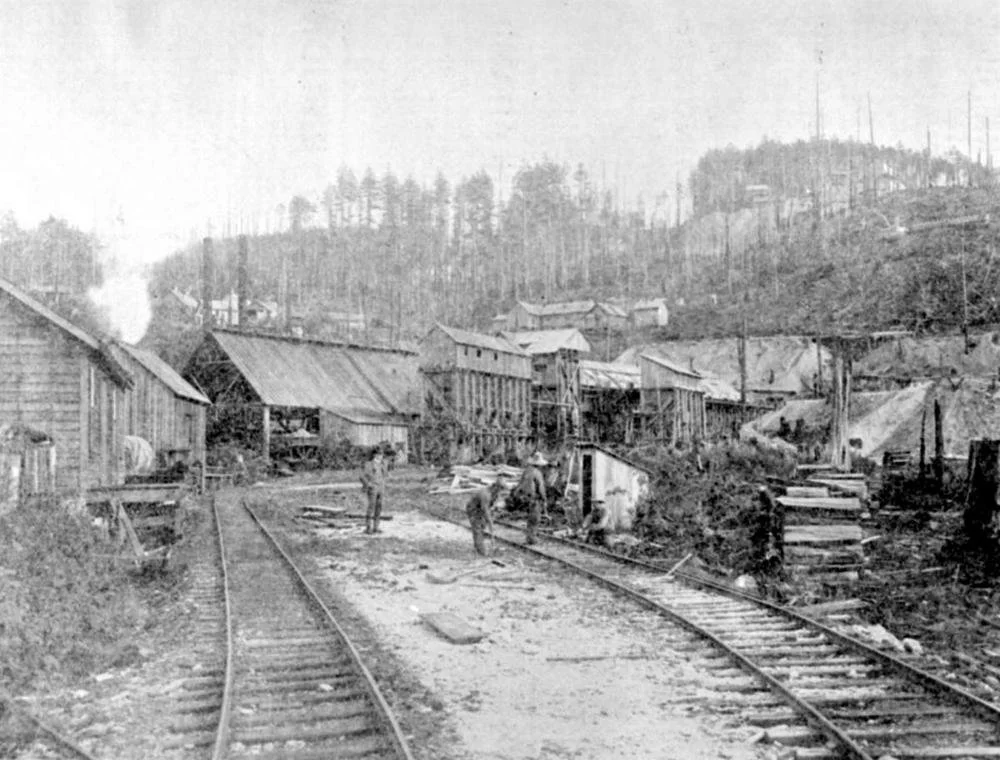
For a few short years the Lenora Mine, as was the neighbouring Tyee Mine, was fabulously rich. But, by 1905, the bloom was off the rose for Mount Sicker and all eyes were on the Koksilah. —BC Archives
The exciting rumours of a rich copper strike on the Koksilah River, in what was soon christened the Kinsol Valley, set his and others’ hopes soaring. Alas, Koksilah River copper never achieved the size and scope of the activity on Mount Sicker—but, for five years, it kept prospectors hoping and hopping.
* * * * *
“Koksilah River is coming to the front and bids fair to become one of the most prominent mining camps on Vancouver island. Mesrs. T.A. Wood and D. Alexander on last Tuesday paid a visit to this promising camp and they report that the men now engaged on development work on the Dora, Mabel and Ruby claims have opened up a fine body of ore which from present indications bids fair to prove one of the banner properties of this new camp.
“Mr H. Fry, P.L.S., during the past week has on behalf of the government located the new road to the these mines and to our reporter said that the grade was a good one and that the building of the road could be done at very small cost.”
“Mr. Fry states that he understands that the government will at once commence the construction of this new road [which] runs close along the north and west of Colvin Mountain touching at its terminus the Blue Bell, Spot Cash, Wallace and King Solomon mines and being practically the centre of the mineral belt.”
Three weeks later, it was reported that miners at the King Solomon, who were still waiting for the arrival of equipment, had uncovered promising copper ore. It was said to be sufficient to keep them at work for two or three months just stripping the surface vein. Over at the Dora, Mabel and Ruby, the Koksilah Mining Co. completed their survey work and set several men to work on the Ruby fraction and it showed the most immediate promise.
“They hope that, once they removed an iron capping, it would prove to be as good as the competing King Solomon or Queen of Sheba.”
By mid-August, miners becoming increasingly impatient with the slow progress of road construction; but the owners of the Solomon, although still without their machinery, happily reported the extraction of more rich ore, and work was about to begin on two other mines in the vicinity.
When, two weeks later, the road was finished, the Cowichan Leader predicted that the mines would take on a new life.
Work never had slowed at the King Solomon, where 150 tons of ore had been stockpiled even as they completed their own stretch of wagon road to connect with the public road. Once that was done, Hillbank teamster Will Forrest would haul the ore to the E& Railway at Cowichan Station.
And speaking of Cowichan Station, so optimistic of increased trade as a result of the mining was merchant Frumento that he enlarged his store.
Come December, for the first time, General Manager Clermont Livingston of the Tyee Mine is publicly linked to the activity on the Koksilah. He, mining developer T.W. Wood and mining engineer W.M Brewer. visited the properties owned by the newly formed Vancouver Island Mining and Development Co. of which they were the principals. Within days, they set 25 men to work clearing the ground and building a camp. They were confident enough of their properties’ prospects to speak of arranging for a stage service from Duncan.
“There is no doubt they will prove this ground,” declared the Leader, ever an enthusiastic booster of Valley enterprise. The King Solomon had made its first shipment of ore to the Crofton smelter and “we understand the ore values are very good. The Main Head [claim] is to be developed this spring and from the showing on work already there can be no doubt as to the value of this property. Altogether, things are looking good.”
Just a week later, Clermont Livingston exhibited “some very fine examples of ore” taken from the Koksilah property. Coincidentally—ominously—the Tyee Mine laid off 20 men and for the first time acknowledged publicly that development work was suspended.
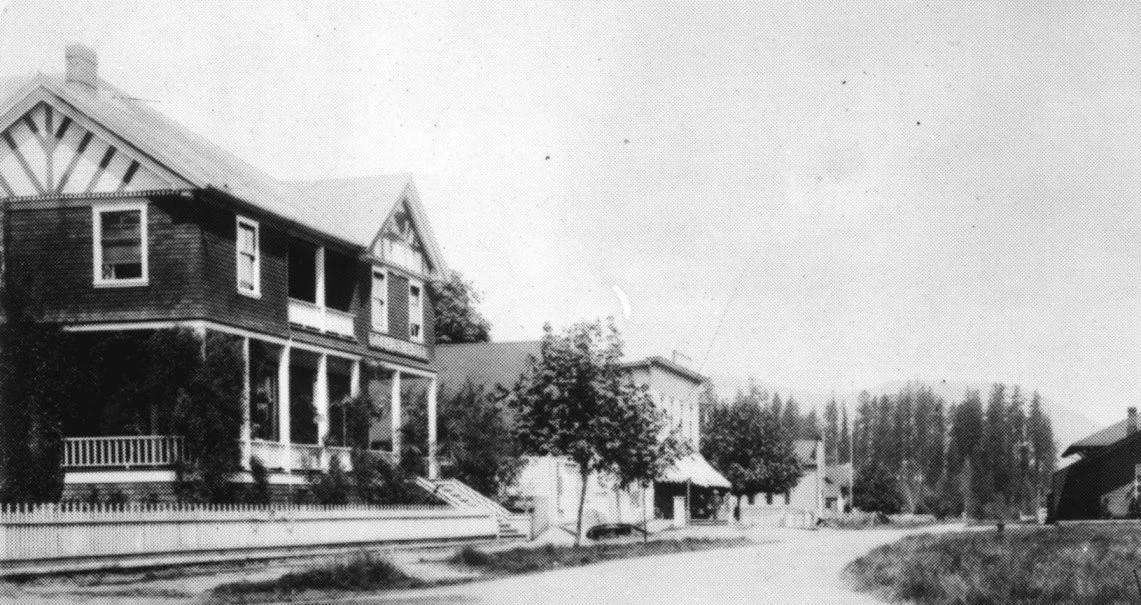
The Tzouhalem was Duncan’s leading hotel when the mining company directors met for their AGM. —Author’s Collection
At the Koksilah Mining Co.'s first annual general meeting, held in Duncan’s Tzouhalem Hotel, Chairman T.A. Wood reported the company to be in good standing, without debt and with money in the bank. Prospects for their holdings were A1. Mineral rights to the W.A.E. claim had been acquired from the E&N Railway, the crown grant for same was in process, and the Dora, Mabel and Ruby claims that the company had optioned looked very promising.
Indeed, “The mining is industry on this island is looking up,” the Leader assured its readers.
“Already the Vancouver Island Mining and Development Co. has considerable ore on the dump at the Mabel claim with every indication favourable to a large body. Heavy development work will soon be commenced by this Company and there is little doubt that the results will prove good.”
Mid-March 1906, there was another new kid on the block, the Blue Grouse (not to be confused with the later, successful copper mine at Honeymoon Bay). Three months later, the Koksilah mines were said to be “flourishing”. Clermont Livingston reported that his company had more than 200 tons of ore stockpiled at the Blue Bell Mine, immediately above the King Solomon, and the Leader proclaimed, “There is but little doubt that valuable mines will be producing rich ore for our smelters ere long.”
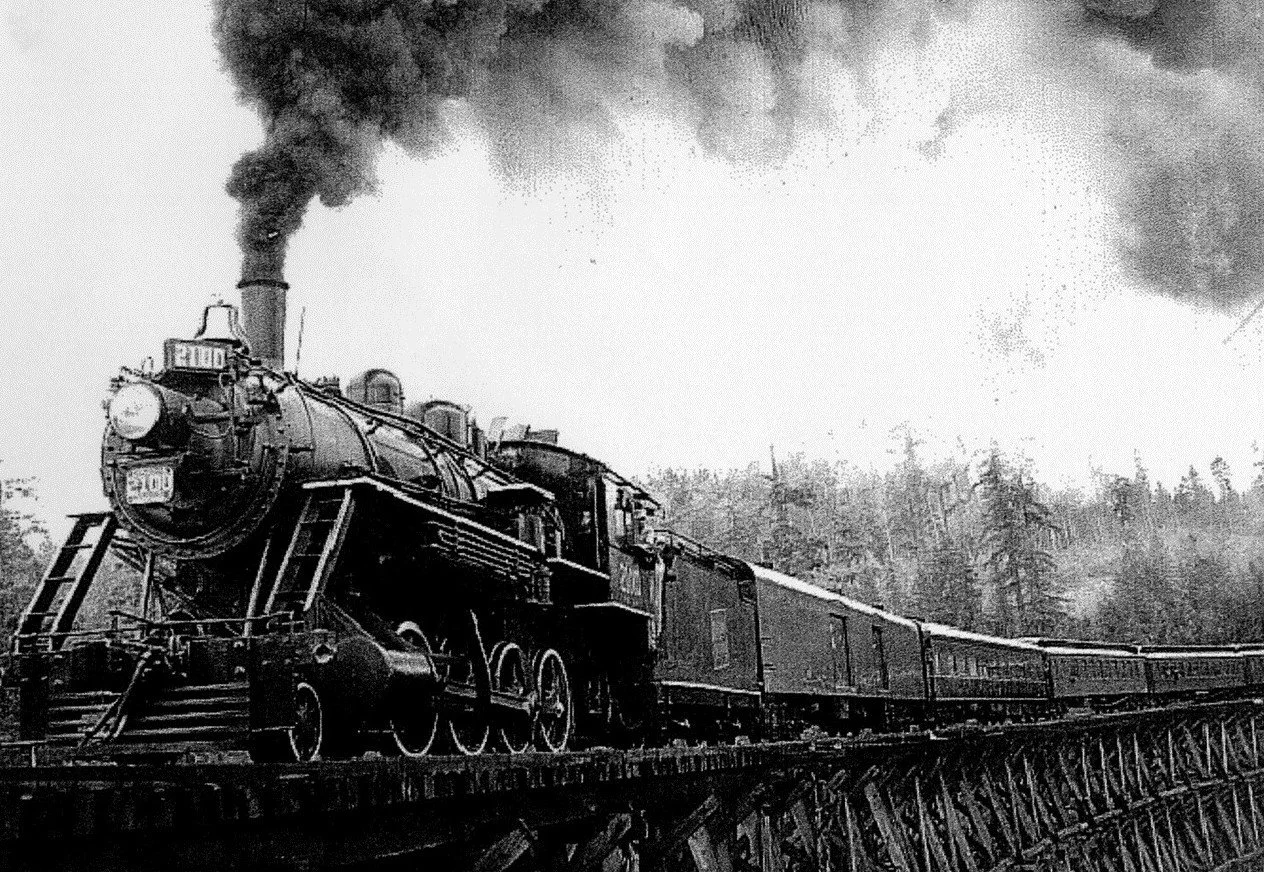
Too late for the King Solomon and Blue Bell mines, the new CNR mainline passed almost within spitting distance. This great action photo of a train crossing the famous Kinsol Trestle (which takes its name from the King Solomon) by the late Elwood White now graces a CVRD signboard. —Author’s Collection
The newspaper quoted an unidentified prominent mining man (it has to be the Island mining scene’s cheerleader, W.E. Brewer): “I believe that while many people are leaving here for other newly reported mining centres Vancouver Island offers as good opportunities for mines being opened up as any part of the Northwest and I am perfectly satisfied that the near future will demonstrate this to be a fact.
“Undoubtedly, this island is rich in mineral resources as already demonstrated, but the prospector is handicapped by the timber and thick undergrowth that exists in most parts of the Island.
“However, we believe that persistent effort will overcome even these drawbacks and in time our minerals will be developed and become a large part of our commercial products.”
At the beginning of 1907, the use of a Sullivan diamond drill enabled miners to do a series of tests down to the 110-foot level of the Blue Bell Mine. Management was sufficiently encouraged to sink a shaft to this depth despite what a provincial Minds inspector described as faults in the rock formations that tended to disrupt the ore bodies.
Soon the Blue Bell and the King Solomon were shipping ore, despite the inconvenience and expense of having to haul it four miles to the E&N at Cowichan Station. “That this camp only started active work last season and that so little work has given such good results in so short a time speaks volumes for mining on this Island,” the Leader chirped, while expressing the hope that things would pick up again on Mount Sicker.
One can sense the plaintive, subliminal hope that the Koksilah mines would rejuvenate this industry in the Cowichan Valley: “It is very gratifying to note that this camp, while seldom heard from, is going ahead and bids fair to become one of the banner camps of the Province.”
Another Sicker expatriate, Frank Lloyd, was doing the hauling for the Solomon company. Previously, he’d operated sawmills on Mount Sicker and at Westholme. This was another portent for those who hadn't been paying attention that not all was well on “The Hill” as it had become known to Duncan citizens, particularly its merchants who’d most benefited from the strike.
To date, references to ors being shipped from the King Solomon were more grandiose in their intent than in fact, these shipments having been small and selective as the mine still lacked heavy machinery with which to pursue the top veins. There was no machinery because the owners couldn't afford to buy it. What they’d achieved was to develop their property to the point that it could be offered for sale to new parties who had the wherewith all to place it in real production.
This state was evidently reached in March ‘06 with the mine’s reported sale “for a large sum to a strong company” of unidentified investors. Again, in mid-October 1907, there's reference to a syndicate of “local and Eastern men” acquiring the mine with a down payment of $10,000.
(This is confusing and could actually refer to the King Solomon and the Blue Bell individually as they were sold by their discoverers.)
Further evidence of Mount Sicker's meteoric decline was the announcement, six months later, that James Humes was one of the syndicate which had purchased the King Solomon. He was late of the Mount Sicker and Brenton Mines Ltd., which had successfully sought to tap into Mount Sicker’s known copper deposits from the opposite side of the Chemainus River.
However, hardly had Humes been identified with the excitement on the Koksilah River than he was off to take a position with a diamond drilling company in Oregon, although he retained his part ownership of the King Solomon and acquired it outright in 1909.
Another four years passed and he was back with an ambitious plan to drive a cross tunnel to intersect at a greater depth an ore body previously encountered. “This tunnel will give us a depth of 450 feet on the dip,” he explained. “The crosscut is now in a distance of 550 feet, and, from the dip of the veins, we should strike the ore vein in another 100 feet, provided the assumption is correct that the vein (seen in upper workings) will retain this present dip.
“We have cut three distinct veins in the tunnel, which give values in copper from a trace up to 2.5 per cent., with a trace of gold. We have not attempted to prospect these veins, preferring first to reach the main ore-body. The Canadian Northern Railway cuts through the middle of the property and is 60 feet vertically and 250 feet horizontally from the portal of the crosscut we are driving.”
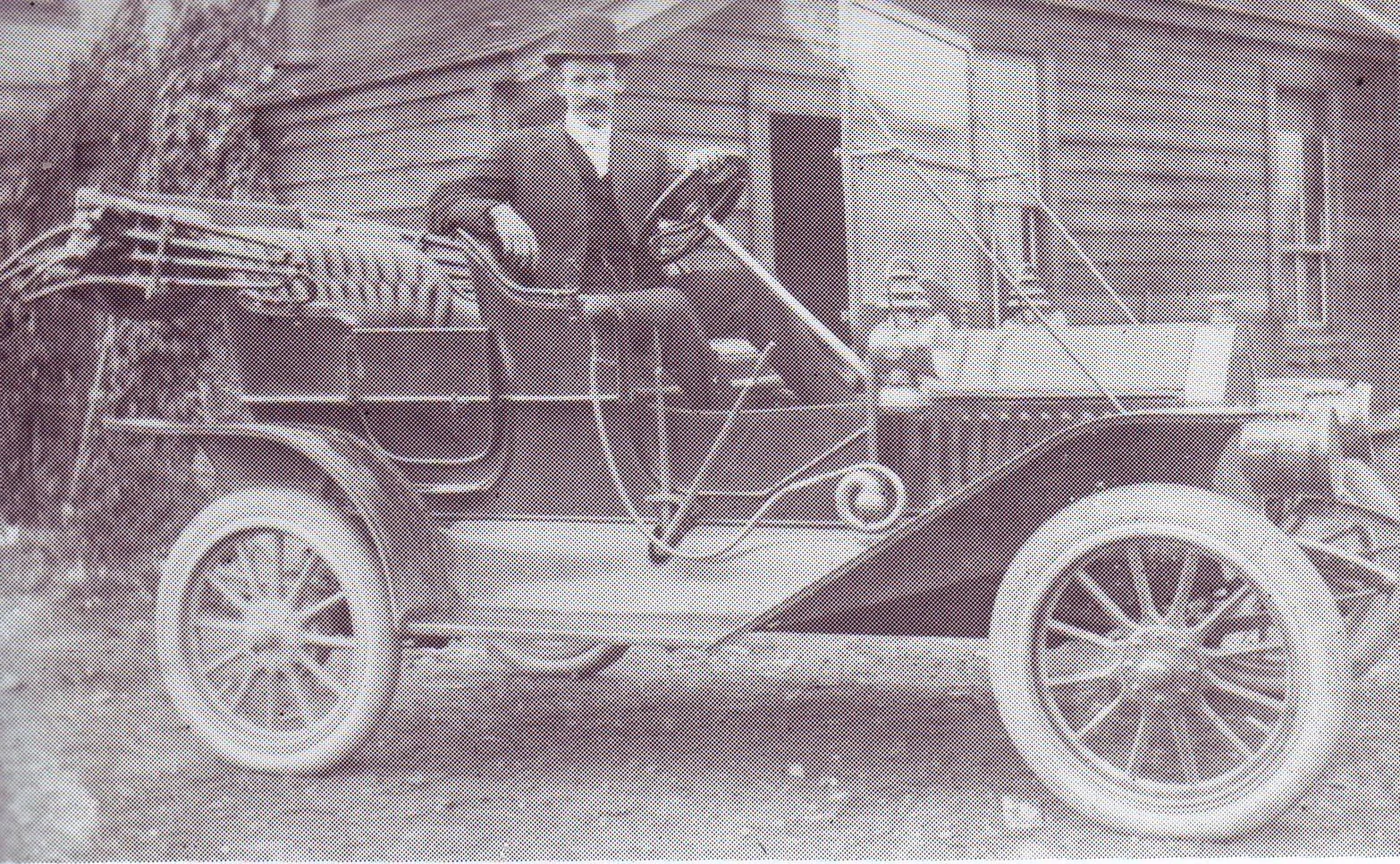
Bob McLay was one of the lucky ones. He actually made money from the King Solomon Mine—by selling it to wealthy Victoria businessman J.H.S. Matson. —Author’s Collection
“The company has installed an 80 horse-power boiler, a three-drill Ingersoll-Rand air-compressor, with two 1/4-inch Ingersoll-Rand machine-drills. There also has been installed an American sawmill of 20,000 feet capacity, consisting of a No. 4 American mill, Am. Junior gang-edger, which will cut up to 33 inches in width, a No. 7 Cowan planer and matcher, and a cut-off saw.”
Alas, when a mines inspector called the following year, all was quiet and he was unable to learn what work had been done or what work was intended.
Humes can hardly be faulted if even he had lost interest at that point. The Koksilah boom was a bust. At least, Mount Sicker had given its boosters a run for their money and, ever so briefly, had made some of them handsome dividends. But the Koksilah activity just withered away, without fulfilling its early promise.
In 1910, the Leader briefly reported that a “well known prospector” had made a new find on Koksilah Mountain. "”It seems to me to be the best property that has ever been struck in the district,” he told the newspaper during a visit to town. Apparently, prospectors were still poking about in the area and there was still hope, albeit faintly expressed other than by the above-quoted miner, for successful mining development. I
In 1916, one of them, Joe Gallo of Cowichan Station, shipped 250 tons of copper ore averaging 4 per cent. from three claims of his own, the Viva, Elsie D., and Comet.
It's for the nearby King Solomon Mine that our famous Kinsol Trestle takes its name, incidentally. Twenty years too late for the miners who’d had to ship their sacked ores by wagon to Cowichan Station. The CNR built its line within sight of the Solomon and the Blue Bell. That anomaly caught the attention of an inspector from the provincial Department of Mines in 1923. Surely, he thought, the close proximity of these two mines to the new railway gave them hope for a second life.
But when he visited the same, the shafts of both were flooded and even to pump them out to allow for superficial re-examination would involve considerable expense.
The late Cowichan Valley historian Jack Fleetwood held several claims in this area in later years, among them the Mabel (named for his wife), Swansea Girl, Red Emma and Cornucopia. Swansea Girl was in recognition of a famous Arizona mine. Red Emma was Jack's way of honouring, albeit tongue-in-cheek, American textile union agitator Emma Goldman, a Russian emigre and ‘anarchist’ who arrested in 1916 for publicly advocating birth control, and, in 1917, for obstructing the draft after the United States entered the First World War.
The late Cowichan Valley historian Jack Fleetwood.
Later deported, she returned to Russia but fell out with the new Bolshevik government and went on to play an activist role during the Spanish Civil War. She died in Toronto in 1940.
H.A. Nolte was said to own these properties in 1925 and, in 1959, it was reported that the Cowichan Copper Co., owners of the Blue Grouse at Cowichan Lake, were drilling at Cowichan Station for, of all things, diamonds.The brief news report noted that this company held the rights to the old King Solomon and the Blue Bell claims.
Officially, the King Solomon, in 1904, 1905 and 1907, shipped 250 tonnes of ore from which 6345 ounces of silver and 17,974 kilograms of copper were recovered. Valley historian Nathan Dougan, in a series of articles written for the Cowichan Leader from the late 1940s to the mid-’60s, many of which were later published by his son Bob as Cowichan My Valley, noted that there were rumours of gold being found in this region as early as the 1880s—earlier if Indigenous legend is accepted.
He described how logger Charlie Ryan and his brother, inspired by the excitement on Mount Sicker, discovered the Blue Bell and Solomon mines in 1902, at a time when others were doing their own explorations half a mile or so to the west. Their first sampling assayed as much as 30 percent copper although subsequent testing didn’t come near the same result.
His brother seems to have dropped out so Charlie approached his boyhood hum Bob McClay Jr. of Koksilah Station. Once they’d staked and recorded both claims they got down to the real work of development. With a wagon load of gear and several days’ worth of food for themselves and their horses, they headed out Riverside Road. From its terminus they had to brush a half-mile-long grade, then build a cabin and a blacksmith shop.
Only then could they get down to the business of mining, starting with the upper claim, the Blue Bell. Neither seems to have had any previous experience in hand-drilling and detonating dynamite but they soon learned and were 60 feet into the mountain before losing enthusiasm for the ore seam they were following.
They were more successful with the Solomon, exposing a sizable body of ore from which they extracted enough to justify sacking and shipping to the Tyee smelter at Ladysmith. All of this took months of back-breaking work, by which point they realized that their best hope lay in selling out to monied investors.
As a result, Victoria businessman J.H.S. (Sam) Matson bought the Solomon for $13,500 over three years. They didn't do as well with the Blue Bell, selling it to Clermont Livingston and his partners for $5,000, but at least it was in cash.
That was a lot more money then than now and, so far as is known, a greater return than the buyers made on their investments.
It's interesting to note that, had the Solomon and Blue Bell properties, which were immediately adjacent to each other, been successfully developed, it would have been history repeating itself. Clermont Livingston, of all people, should have known this. His Tyee Mine was immediately above the Lenora Mine on Mount Sicker.
Both worked the same rich but limited ore body as rivals when they should have worked it as a single unit. By competing they’d hastened their own demise.
