
Our Maps are Under Assault
You’ve seen it in the news: US President Trump has signed an executive order. Lake Ontario is now Lake America.
With the stroke of the presidential pen, a 400-year-old geographical name bites the dust!
In Trump’s dreams...
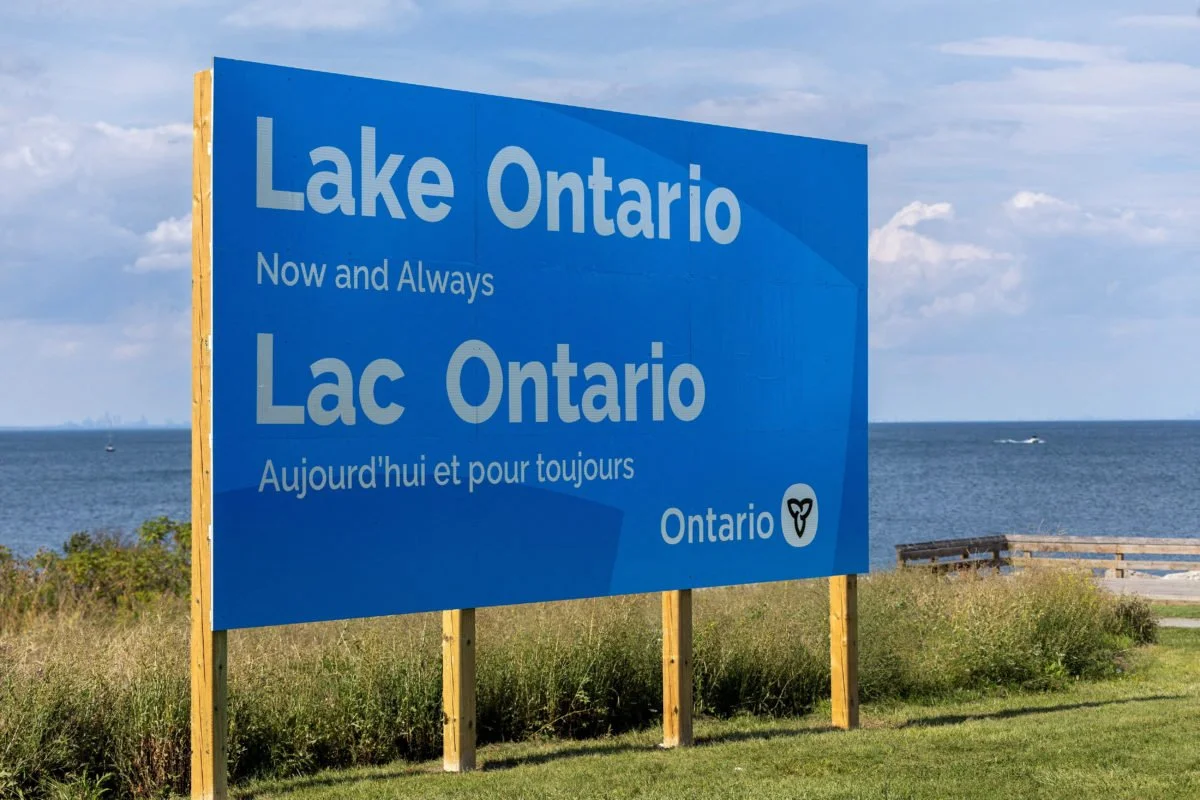
Ontario Premier Doug Ford’s answer to “Lake America.” —PBS
But he isn’t the only one who’s tinkering with our maps. Much closer to home, right here in enlightened BC, various movements are afoot to launder or influence and/or revise numerous geographical place names.
What follows is a look at just a few of the recent and ongoing efforts to change or ‘correct’ long established names of mountains, lakes, rivers, streets and schools. I leave it to readers to judge the validity and logic of revising maps and landmarks to accommodate modern-day interpretations of persons and events of the past.
(And, without further waste of precious editorial space, I leave Trump to his megalomaniac fantasies. Readers who wish to learn more can Google the Gulf of Mexico and North America’s highest peak, Denali, for further examples of his tampering.)
PS: my file of newspaper clippings over the past several years is now more than an inch thick—and growing. Not all of those clippings deal with BC locales, proving that remaking maps has become a continental phenomenon.
* * * * *
The most newsworthy of recent note is the naming of the artificial lake formed by the building of the Site C Dam after the late premier John Horgan who, as leader of the Opposition in the Legislature, promised to kill the project if the NDP won office. It did and he—changed his mind.
He isn’t the only provincial politician to grace our maps. In the Peace River country we have the W.A.C. Bennett Dam (as premier he named it after himself). Williston Lake Reservoir, BC’s largest (and the seventh largest in the world by volume), was christened for cabinet minister Ray Williston who oversaw the planning and construction of the Bennett Dam.
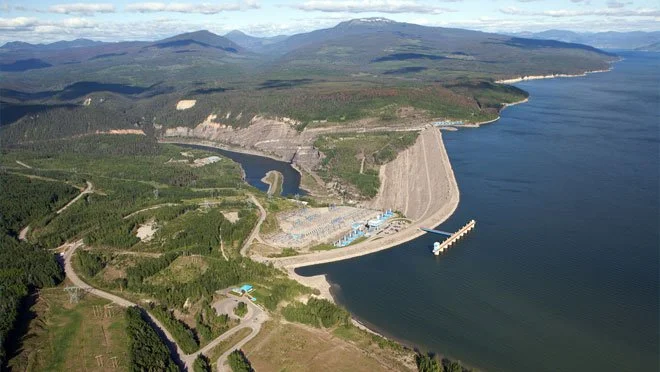
By volume, the Williston Lake Reservoir is one of the largest in the world. —BC Hydro
You can throw in the Gordon M. Shrum Generating Station at Bennett Dam, and other coined or rejigged geographical places from the Socred and Liberal eras, too. Obviously, if you want to get your name on the map, holding high political office helps.
Helpful, but not mandatory. Most name changes evolve from the grassroots level, where even a handful of activists can move (or rename) mountains.
Some proposed name changes would turn history on its head. For example, several years ago, the mayor of Asbestos, Que., led the charge to change that community’s name which originates from the mining of the fibrous white material. Used for fireproofing for centuries in building construction, its threat to human health by inhalation (asbestosis) has been known for decades but, in recent years, it has also been deemed carcinogenic.
In 2018, Canada banned, with some exceptions, asbestos and asbestos-containing products. The World Health Organization has deemed that the inhalation of asbestos fibres causes lung cancer, mesothelioma and other diseases that have killed 1000s.
Mayor Hugues Grimard told reporters that his town of 700’s now-negative name was driving away business: “If we want to go further in terms of development, then we don’t have [a] choice.”
The irony, of course, is that the now reviled asbestos was for almost a century this Quebec community’s economic mainstay and, despite its being shut down, the open-pit Jeffrey Mine remains a blot on the landscape—350 metres in depth and six square kilometres in area!
Before coming back to BC I’ll give a few more examples.
Two years ago, Winnipeg City Council voted to rename Bishop Grandin Boulevard in the city’s south end to Abinojii, meaning “children’s way” in Anishinaabemowin. Bishop Vital-Justin Grandin was demoted after the Truth and Reconciliation Commission “identified” him as having been a leader in the campaign for residential schools.
Mayor Scott Gillingham said renaming the street and two other thoroughfares commemorating Grandin acknowledged “past injustices and honours the resilience and strength of Indigenous communities”. He said that changing the names wasn’t simply a matter of cosmetics: “It’s an affirmation of our commitment to the preservation of Indigenous languages and cultures for future generations.”
Bishop Grandin isn’t alone in being dismissed.
The Toronto school board approved Ryerson University’s name change which was one of 22 recommendations made by a special task force. “The report provides a full picture of the past and present commemoration of Edgerton Ryerson,” university president Mohamed Lachemi explained, [and] its recommendations “are not based on either vilification or vindication of the individual.”
The re-branding process was intended to “engage with community members and university stakeholders” while paying due respect to Edgerton Ryerson and providing more opportunities to learn about Indigenous history.
All this had been provoked by news of the discovery of unmarked graves at some residential school sites which sparked Ryerson’s statue being pulled down because he’d participated in the creation of the residential school system.
There have been other cases of vigilantism but it’s not my intent to go there. Rather, I’m citing these case histories for Chronicles readers’ consideration. Let’s face it, Canada’s colonial governments of the past 200-plus years imposed most of the names on maps and nautical charts, invariably at the expense of long established First Nations’ usage.
And it’s an unfortunate fact that some geographical names have been ethnically and racially derogatory.
Others have their genesis in historical events. Two weeks ago, I was driving by Chase River Elementary School and it struck me that no one has made a case against ‘Chase’ which commemorates the capture of a Snuneymuxw man by the creek that gives this area south of Nanaimo its name. He and a Cowichan man were charged with murdering a Hudson’s Bay Co. shepherd, convicted aboard the company ship SS Beaver, and hanged off Protection Island’s Gallows (originally Execution) Point.
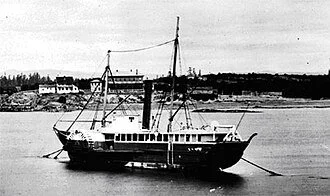
Among her many other duties, the good ship Beaver served as a police boat and floating courtroom. —Wikipedia
As it happens, critics have, in fact, objected that “a modern public school should not carry a name tied to the pursuit and execution of Indigenous people during the colonial era. Given the history, we have concerns about whether the current school name would [make Indigenous students] feel welcomed, honoured and represented in their learning environment,” assistant superintendent Jacquie Poulin told the Nanaimo News Bulletin.
Nanaimo has already seen ‘Coal Tyee’ School bite the dust. His crime: he introduced the Hudson’s Bay Co. to coal deposits that led to the founding of Nanaimo. What, we Whites are a pestilence?
This, I’m sorry to say, is where I and some of the more extreme revisionists part company. And I don’t just mean rioters tearing down statues; there are geographical names whose namesakes can legitimately be adjudged unworthy, even offensive to anyone knowledgeable of their history.
But there’s another potential angle to all of this: education. Use those individuals who are retroactively (not to mention posthumously) adjudged as wanting by today’s far more, shall we say sensitive, standards, to inform and to teach students. Who knows, they might learn something about Canadian history.
It isn’t going to be easy, as Campbell River city council found out, two years ago. The Ligwildax First Nation asked that Discovery Passage, (which forms part of the inner channel between Vancouver Island and the Discovery Islands, connecting Johnstone Strait to the north with the Strait of Georgia to the south) be restored to its original name, Ligwildax Passage, or Rapids.
They also requested that Quinsam River become Kwansem (pronounced ‘Quinsam’), and Tyee Spit to ?uxstalis, pronounced Oox-sta-lease. All three suggested revisions had already been submitted to the BC Geographical Names Office which then sought the city’s feedback.
In a letter signed by Mayor Kermit Dahl, Council asked the Names Office to allow time for public information meetings to allow for public input. “We believe these sessions would provide valuable insight into the cultural significance of the name changes, allow for meaningful community engagement, and ensure transparency throughout the process.”
Declaring that the city was committed to supporting a public engagement process, and looking forward to collaborating with the province to ensure a respectful and inclusive dialogue,” Dahl raised the financial implications of implementing any name changes.
The matter of resulting costs, and comments about the speed of reconciliation made during discussion of the proposed changes at a closed-door council meeting, drew an expression of disappointment from elected chief Chris Roberts of the Wei Wei Kum Nation and Chief Ronnie Chickite of the We Wai Kai Nation. It also prompted a blistering letter from the eight hereditary chiefs of the Ligwixdaxw:
“...If your biggest concern is that your navigation charts will not read correctly or that you should have been consulted first, then none of you are at all considering reconciliation or having any type of relationship with the Indigenous community, and you are only perpetuating the impacts of oppression and colonialism of the Indigenous people....”
(Readers can read the chiefs’ response to council at mycampbellrivernow.com/ 78393/general/hereditary-chiefs-upset-at-response-to-place-name-change-request/).
A response from the city wasn’t long in coming. At a closed-door meeting Council wrote the BC Names office, “The City supports the application from [Ligwildax] Nations (We Wai Kai, Wei Wai Kum and Kwiakah) to change the official names of Discovery Passage to Ligwildax ‘Passage,’ Quinsam River to Kwensam and Tyee Spit to ‘?uxstalis.’”
As Mayor Dahl put it, the naming of geographical features is a provincial, not a city, prerogative, and he concluded: “It is encouraging to see the community weighing in and engaging on such an important topic.”
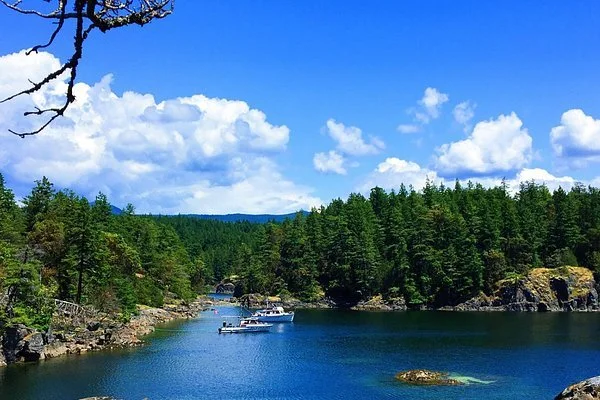
BC’s beautiful Sunshine Coast has also experienced geographical place name changes.—www.tripadvisor.com
Previously, in August 2021, it was reported that “two English places names on the Sunshine Coast are changing to reflect the language and culture of local Indigenous people. In a joint statement the Ministry of Indigenous Relations and Reconciliation and the Forests Ministry said that they’d been working with the shfshhalh Nation to rename Wilson Bay, south of Sechelt, to ts’ukw’um, and the nearby Saltery Bay south of Powell River to skelph.
These names are ancient, said the province, and recognizing Indigenous place names “is part of the work to implement the United Nations Declaration on the Rights of Indigenous people”.
And so it goes, with no apparent end in sight, a mix of revising history that’s now deemed to be offensive or otherwise objectionable, and the restoration of ancient Indigenous place names. Practical considerations aside (the costs of changing maps and directories, etc.), there are valid arguments to be made for many of the revisions, but not all of them.
I could go on, my file is so thick, but I think this tip of the iceberg is enough for today. All that I ask is that, when it comes to erasing pioneers from our geographical landscape is it’s done on the basis of solid research. After all, isn’t that what records are for? Shouldn’t the deeds and misdeeds of our forebears speak for themselves? That said, however, don’t we owe it to their memories to think before we leap?
Several years ago, after intense agitation that was accompanied by wide media coverage, one of the initiators of a campaign to change a dormitory building’s name told reporters, “I don’t really know much about history but...”
She didn’t know much about history but—.
Not good enough for me.
