
The Whisky-Selling Livermores
They were as unholy a pair as ever bedevilled a police department.
Notorious for their chosen calling, the whisky-selling Livermores, known respectively as Liverpool Jack and Whisky John, became courtroom regulars during their short careers.
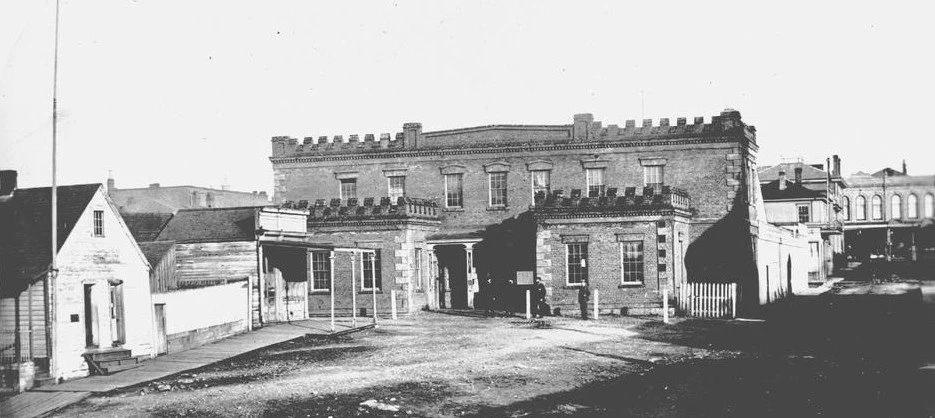
The Bastion Square police barracks, which doubled as Victoria’s jail, became the two bootlegging Livermores’ second home. —BC Archives
As far as is known, they weren’t related, although it’s surprising that there could have been two John Livermores in such a tiny outpost as Fort Victoria in the 1860s. But no matter, bootleggers they were.
* * * * *
Liverpool John, who was better known as Liverpool Jack, and by far the star of the two, first gained public record in October 1863 when he was charged with disturbing the peace. Eight months later he again achieved recognition for a practical joke he’d played on some unsuspecting prospectors who’d joined in the stampede to Leech River, following the discovery of gold.
Jack accompanied the party as far as Thompson's Landing, where the eager greenhorns scrambled ashore to dip their gold pans in search of ‘colour’. Rather than see them disappointed, the mischievous Jack salted the first pan with 50 cents of dust from his own pocket.
The prospectors were so elated they didn’t wait to confirm the value of their ‘strike’ by washing more gravel; rather, they rushed back to the beach to inform all and sundry of their momentous find.
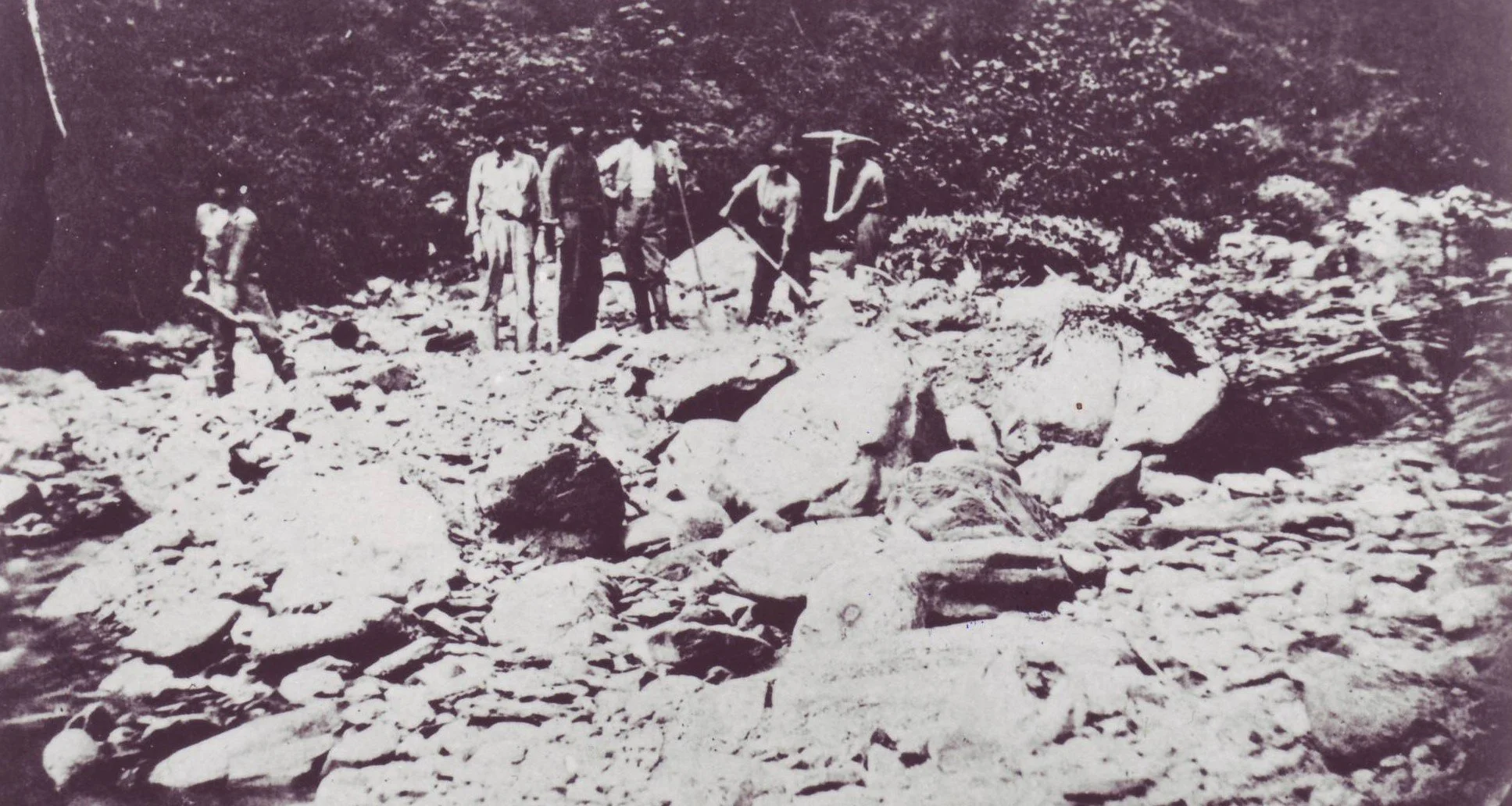
The gold in the Leech River, a tributary of the Sooke River, was there, but you had to really work for it if you didn’t have a helping hand from Liverpool Jack. —BC Archives
Only then did Jack enlighten them as to his part in in the discovery. Their disappointment can well be imagined; as can be the hasty retreat made by the laughing blackguard from Victoria.
Only five weeks later, Jack's situation was anything but a laughing matter. He'd been arrested on Trial Island by Police Sergeant Wilmer, who testified at his trial that he’d caught him in the act of selling three casks, containing almost 200 gallons of tanglefoot whisky, to a flotilla of Indians.
Also seized were a spirit measure and a funnel, tools of the bootlegging trade.
Wilmer said that Jack had attempted to paddle away upon the officers’ approach, then had declared that he was on his way to the American side. According to Wilmer, there “appeared to be communication and understanding” between Liverpool Jack and the Indian canoe men, and, convinced that Jack was bootlegging, he’d arrested him, seized the liquor, and escorted both back to Victoria.
At the trial, Capt. Wootton, city harbour master, who appeared for the defence, testified that Jack had obtained clearance for the San Juan Islands. At the behest of John's counsel, Mr. Bishop, Capt. Wooten also stated that it was not irregular to land goods at any intermediate place.
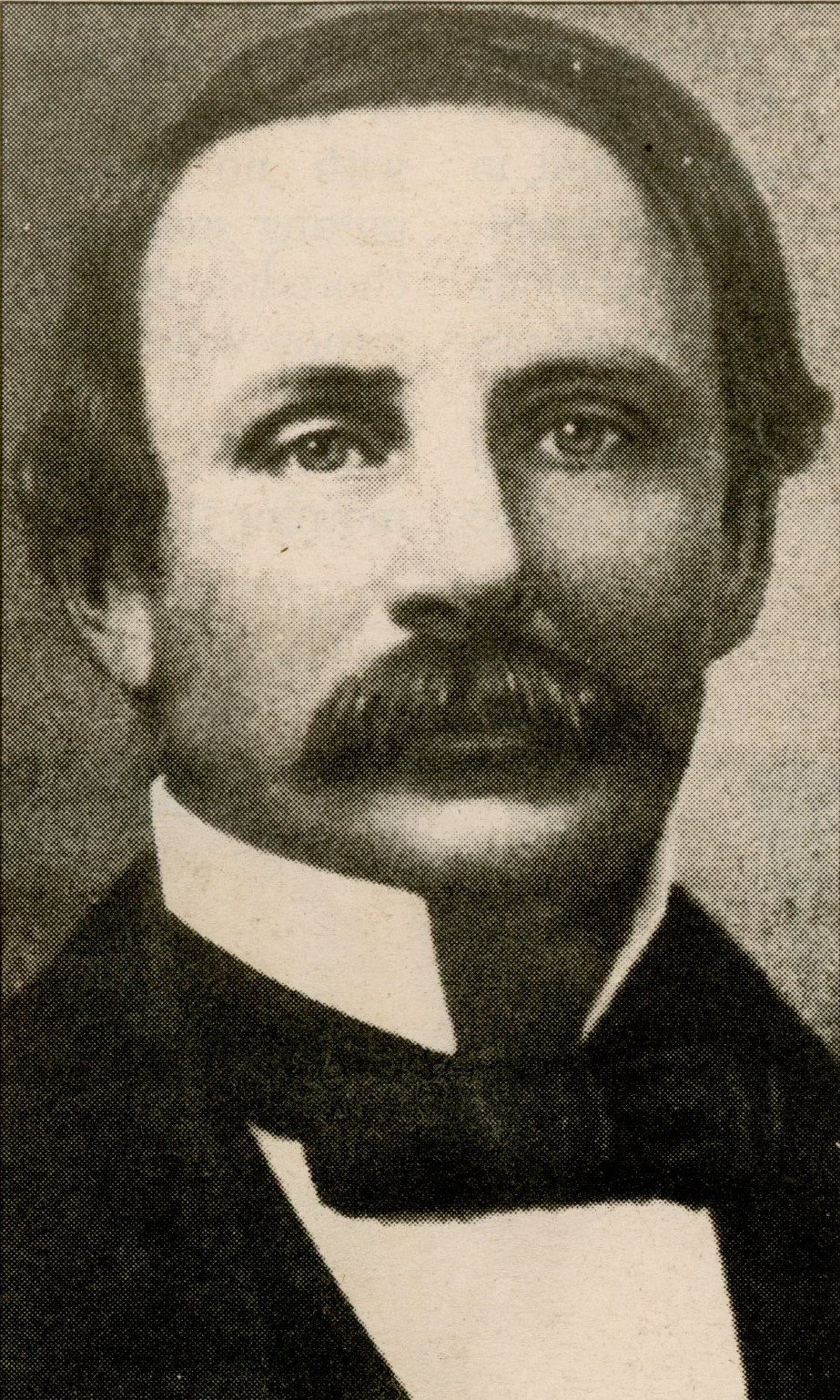
Victoria Police Magistrate A.F. Pemberton gave Jack the benefit of the doubt. —BC Archives
Despite corroborating testimony by the constable who’d accompanied Sgt. Wilmer, Magistrate A.F. Pemberton ruled that, because of the seriousness of the charge, he couldn't accept the officer's evidence as conclusive, and dismissed the charge. He also dismissed the second charge, undoubtedly pressed by the Crown in a fit of pique, that John was a “worthless character, an associate of thieves and vagabonds, and without any extensible means of subsistence”.
The prosecutor, obviously, didn’t mince words!
That fall, John, “who has long been known to the police as the most determined dispenser of spirits to Indians, and who has previously escaped conviction,” was again brought before Magistrate Pemberton, this time charged with having been caught in the act of selling three casks of an unspecified alcohol—120 gallons—to Indians. Defence counsel Ring did his best to challenge the testimony of the arresting officers, Black and Metcalf, but to no avail.
While interrogating one of the officers, Ring had succeeded only in having the constable reaffirm his evidence that Livermore had been arrested while in possession of the barrels of booze. Almost in despair, Ring asked how the policeman had been so sure that the casks in Liverpool’s canoe contained whisky. To his surprise, the officer replied that he he couldn't swear that the cask contained whisky.
Ring, who’d been clutching at straws, was illuminated with hope. “Oh!” he exclaimed, “you can't swear that it was whisky. I now ask you, Sir, if you will undertake to say what it was.”
“Rotgut,” replied the policeman with a straight face, and Ring abandoned the attempt to save Livermore from justice. Pemberton gave him the full penalty of 100 pounds or 12 months as a guest of the Colony.
Apparently, the bootlegging business paid well, for John obviously paid his fine, a substantial sum of that age. Only five days later, he again made news—this time in the unusual role of hero.
When one of the last three surviving buildings of the original Fort Victoria caught fire in the early hours of Oct. 26, 1864, the alarm was quickly given. “...In a very few minutes the fire champions, with their apparatus, were on the spot, and had a copious stream of water playing over the burning structure,” reported the Colonist.
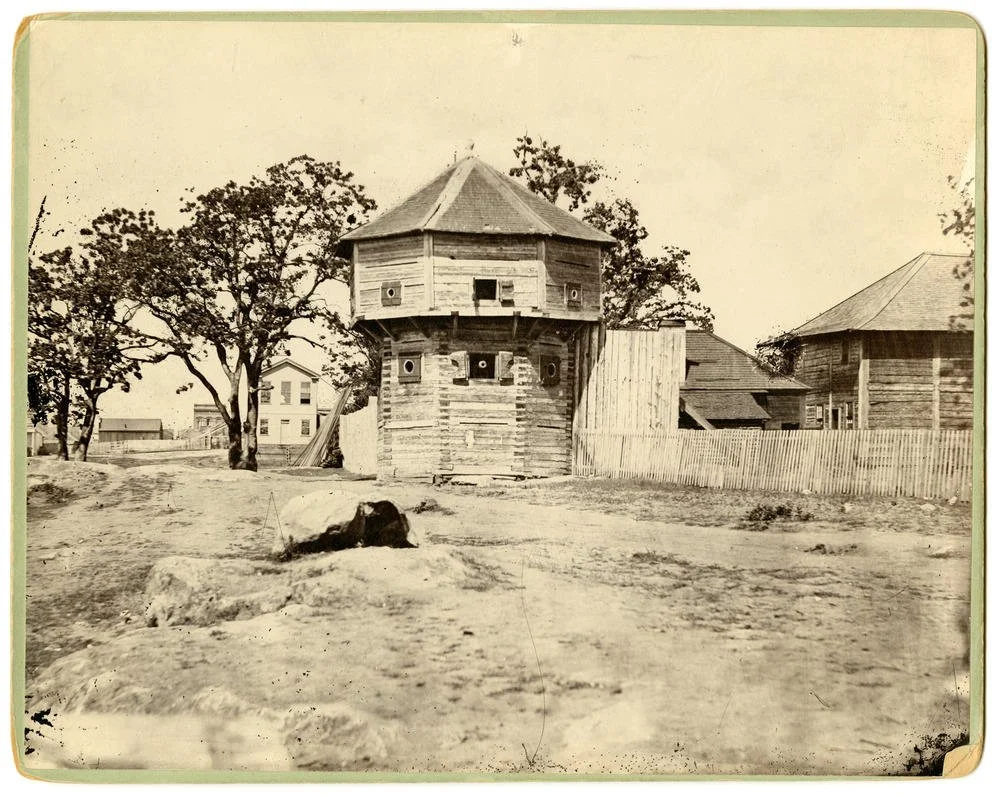
Even as early as 1864, just three of the original buildings of Fort Victoria remained standing. When one of them caught fire, Liverpool Jack proved himself an unlikely hero. —BC Archives
“Mr. Nathan's dwelling house, adjoining the Fort buildings, also caught fire, and but for the vigorous efforts of the firemen would soon have been a mass of flames; as it was, it was saved with some difficulty. The burning building was pulled down by the Hook and Ladder Company, and water was poured over the ruins during the forenoon to prevent further mischief. Some 30 tons of hay were destroyed by the conflagration.
The fire department deserve great praise for their promptitude and energy.”
Among those who’d earned recognition was Liverpool John, the “well-known character”.
He’d joined the efforts of the Hook and Ladder Company and, while helping to protect the adjoining dwelling from damage, had had the presence of mind to save Mr. Nathan's valuable gold watch. This, he handed over to the fire chief.
A bootlegger John may have been, but, it would seem, he was no thief.
Alas, his colourful career was drawing to a close. Four years later, although he’d forsaken Victoria for Puget Sound, the Colonist recorded his something less than flattering obituary: “Poor Jack! who was so long, but not favourably known in Victoria—sometime since, died of consumption at Port Townsend yesterday morning, on board the Eliza Anderson, while being taken from Port Ludlow to the hospital at Port Townsend.
“In the police court calendar—‘John Livermore supplying liquor to Indians,’ was often to be met with.”
Then there was ‘Whisky John’ Livermore, aka Liverpool John, whose antics paled alongside of those of Jack Livermore, described above.
The Colonist of July 3, 1867 had as little patience with him as it had had for his namesake: “JOHN LIVERMORE, a notorious old vagrant, who just served out a long term in the chain gang, was arrested again on Monday upon a charge of selling whisky...and sentenced to six months’ additional punishment. John is never happy except he has a chain and ball about his leg.”
July 10, 1867, “LIVERPOOL JOHN, the notorious, having stolen a wheelbarrow from Wilson & Murray, was yesterday sentenced to imprisonment with hard labour. In order to give him a ‘show’ to live leave the country, sentence is suspended for three days.”
There was, briefly, yet another Liverpool John, or, rather, John Liverpool, in Victoria’s infancy. He, too, had a reputation; in fact, it was said that he’d skipped San Francisco one step ahead of the Vigilante Committee.
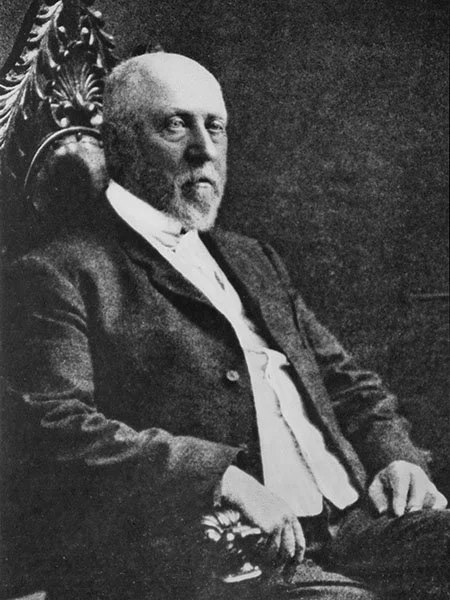
Eyewitness David W. Higgins later wrote of Liverpool’s humiliation aboard ship and how he achieved revenge once in Victoria. —Author’s Collection
Thanks to the incomparable journalist, historian, politician and raconteur D.W. Higgins, I’ve told his story in the Chronicles. Very simply, Liverpool was one of 30,000 other adventurers who were drawn to BC by the discovery of gold in the Fraser River. While sailing north to Victoria, his attentions to a young woman resulted in a fight with another passenger, George Sloane, that left him humiliated and thirsting for revenge.
Once on shore, he challenged Sloane to a duel, tricked him into facing the afternoon sun, and shot him dead. He had to flee, of course, and later found himself back in the Bay City—where the Vigilantes were waiting for him.
So there you are: Liverpool John, Liverpool Jack and Jack Liverpool, BC pioneers and rotters all.
