
"Bulldog" Kelly
Had Friends In High Places
(Part 1)
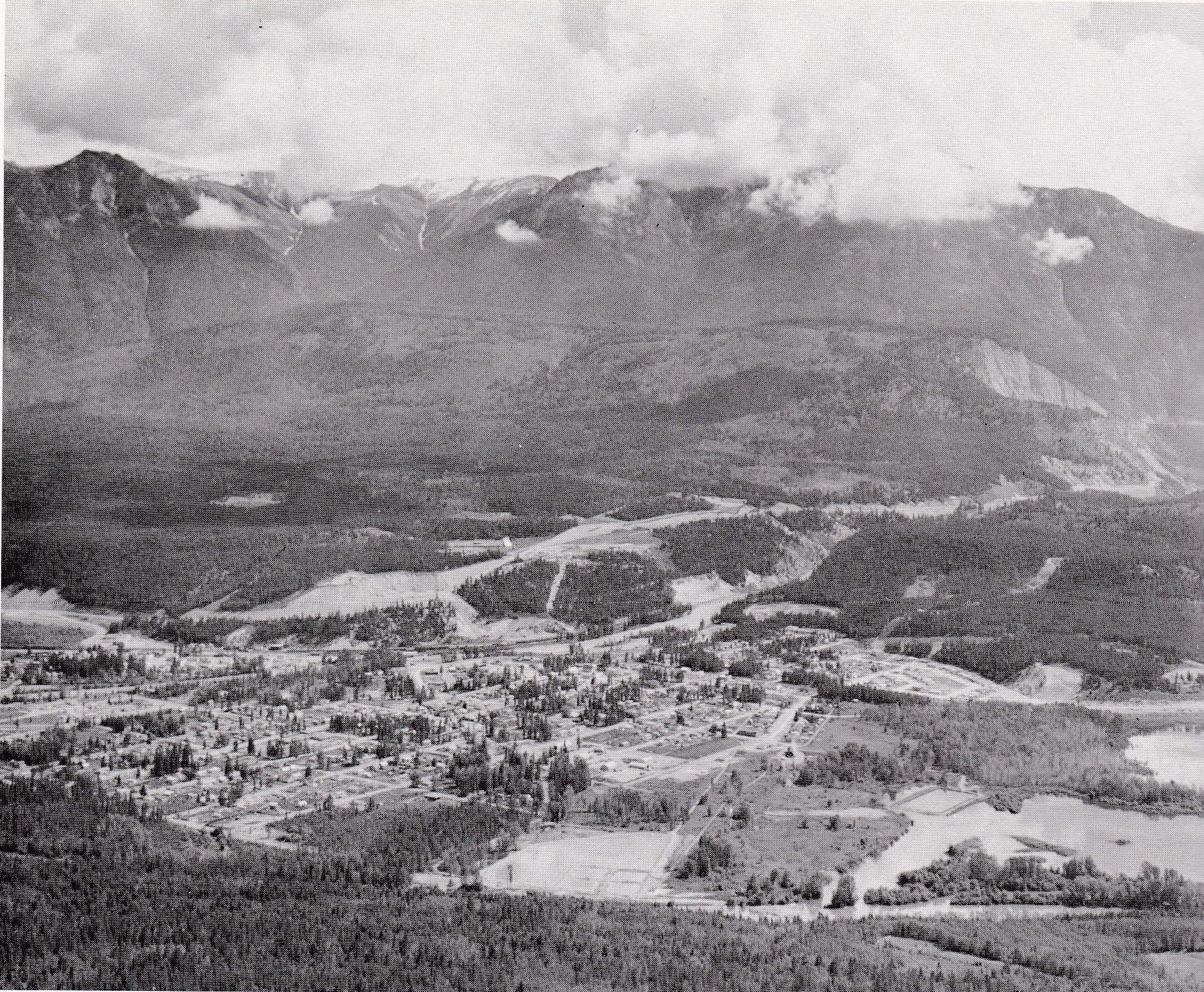
Golden, B.C., where “Bulldog” Kelly hung out until committing murder.
“Money and political influence have been too potent, and Kelly is now treading the firm soil and breathing the pure air of a country where all are free—free to make justice a travesty, to treat murder as a joke, and to turn a criminal trial and sentence into a mockery…"—Victoria Colonist.
It would take little less than a full-fledged miracle to uncover a murderer's loot cached near the town of Golden, British Columbia, but if a treasure hunter could match painstaking research with phenomenal luck, he might find himself $4,500 (actually much more at today's values) richer.
This is the money stolen in a wild robbery over a century ago; a rip-roaring gun battle whose shots resounded from the wilds of British Columbia to the national capitals of Canada and the United States When the smoke cleared—six years later—history finally drew the curtain on one of the most unusual criminal cases in provincial record.
It was 24 miles south of Golden, where the Kootenay trail shouldered Kicking Horse River, on the chill morning of November 27, 1884, that our strange tale of murder and lost treasure begins.
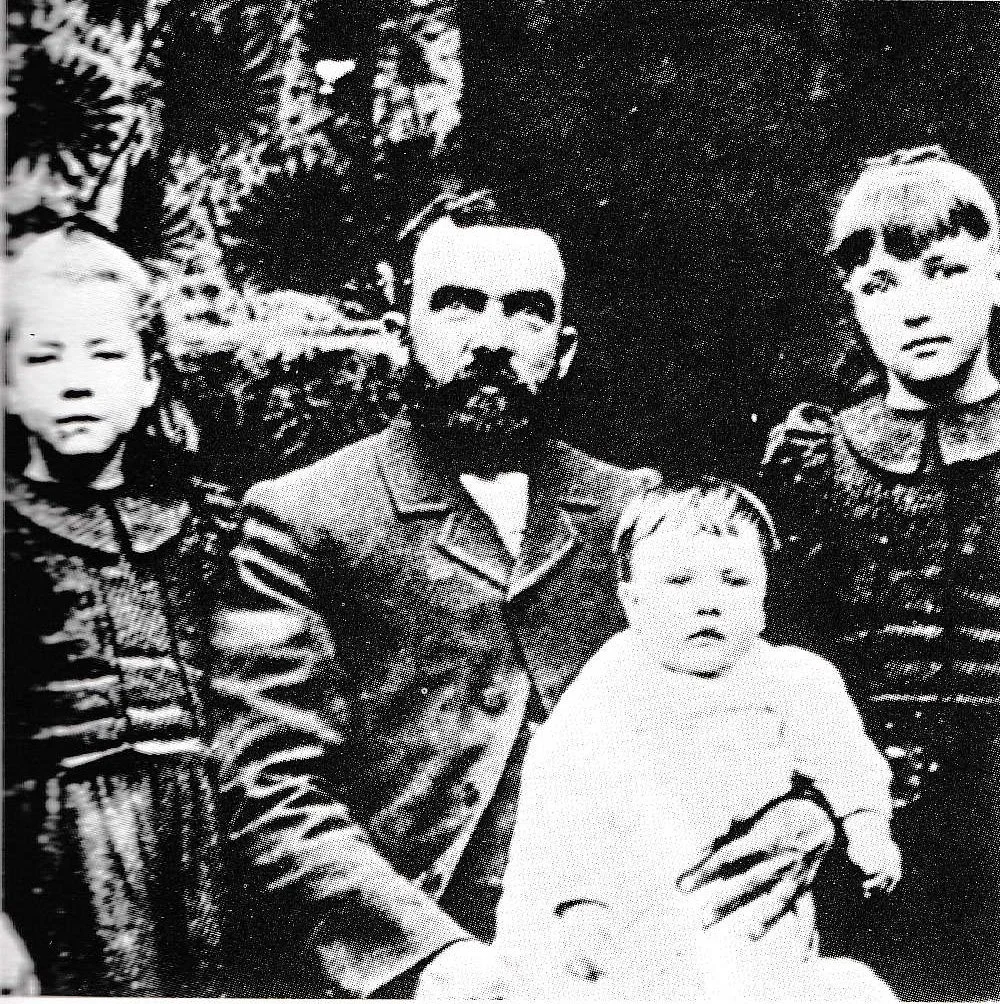
Manvel Drainard - survived the deadly ambush set up by "Bulldog" Kelly.
In the half-light of dawn, three horsemen picked their way, single-file, through snowdrifts which covered the narrow, winding trail. Leading was a young man named Manvel Drainard, followed by well-known Montana liquor salesman Robert McGregor Baird. Popularly known as Harold Baird, the American was returning to Missoula, Montana with his season's receipts for Eddy, Hammond & Co. It had been a good trip; in his bulging pocket and saddlebag was $4,500 in gold and currency.
Bringing up the rear was his packer and guide, named Harry.
The trio continued southward at a slow but steady gait. Baird was halfway across a wider stretch of the trail when a shot punctured the stillness. The heavy ball caught him square in the chest, spinning him, lifeless, from the saddle. Taken completely by surprise, Drainard snapped a frightened look back, saw Baird pitch to the ground, then spurred his mount. Unarmed and totally unnerved, his only thought was to get beyond range. The terrified youth charged off down the trail, leaving an astonished Harry with a corpse—and a hidden killer.
Glancing wildly about, Harry spotted the sniper just as he fired again. A solid wall of white-hot pain slammed the packer as the bullet tore into his hip. The concussion almost knocked him from his saddle but, regaining his balance, he managed to jerk his rifle from its scabbard, lever a shell into the breech and fire, all in single motion.
His shot whistled harmlessly into the trees as the startled killer snapped off a third round, which also missed. Before either could reload, Harry had closed with the stranger. The frightened horses collided, squealing, as their riders savagely jousted with empty rifles. His wound forgotten in the heat of battle, Harry leapt onto the murderer, both men crashing heavily to the ground.
Then—despite his shattered hip—Harry grappled with the unknown antagonist for what he later guessed to be almost 15 minutes.
But he was bleeding badly and, unable to land a solid blow in the wild scuffle, was rapidly fading. Making the struggle even more one-sided was the fact his opponent proved to be of extraordinary strength and stamina.
The end came quickly. Overcome by loss of blood and shock, Harry slumped to the trail, unconscious. To make sure he'd be no further trouble, the exhausted assassin delivered several fierce kicks to the fallen man's head, then staggered to his horse to catch his breath.
When Harry came to, he was alone. It took several seconds before his reeling senses cleared enough for him to observe the killer's handiwork. Baird lay in the mud where he'd fallen, almost naked. The highwayman had methodically slashed open his clothing, even removing boots and socks. Nearby, Baird's horse grazed quietly, freed of saddlebags. These, too, had been slashed apart and ransacked.
But Harry wasn't thinking of the missing money.
He had just enough strength to struggle into the saddle and knee his horse toward Kicking Horse, a booming construction camp of the Canadian Pacific Railway. It was nightfall when the battered guide arrived. He was almost unconscious, eyes and mouth swollen shut, teeth caked in dried blood. Somehow he managed to mumble details of Baird's murder. As someone ran for medical assistance, Harry, with a last surge of will power, described the killer then passed out.
In the meantime, young Drainard had been busy also. Panic-stricken when the killer had started blazing away from the trees, he'd galloped several miles down the trail before reining in his lathered horse. For long minutes the youth debated his course of action. Should he hurry to Golden for help or return to the others? He had no gun...was probably too scared to use it anyway.
At last he decided.
Squaring his shoulders, Drainard wheeled his horse about and galloped back to his companions, arriving minutes after Harry had begun his painful ride to Kicking Horse. Upon seeing that Baird was dead, and not knowing what had become of Harry, Drainard hurried to Golden with the news.
At Kicking Horse, the manhunt was already underway as outraged construction workers eagerly volunteered to join the posses being formed by Northwest Mounted and Provincial Police officers. The angry posses fanned out from Golden and Kicking Horse, combing every ravine, every creek bed, every goat track that might offer an escape to the murderer.
Telegraph keys chattered noisily from Victoria to Winnipeg, Manitoba, as the details of the cold-blooded killing and Harry's description of the slayer were distributed to all law enforcement agencies.
The hunt became even more active when the Montana firm which had employed Baird offered a reward of $1,000, to which the province added $250. Everywhere, hundreds of probing eyes carefully scrutinized all strangers—even friends—for a man "about five feet 11 inches in height...blue eyes, mustache of a light colour, turned up at the ends, reddish complexion, and chin whiskers apparently cut with scissors...dark suit, sack coat and Scotch cap with peak".
Police had already put a name to the description: "Bulldog" Kelly, a loudmouthed, red haired American of questionable employment who'd been drifting about the Kootenays for about a year.
But there was no trace of Kelly himself.
It was a big, rugged country and he'd vanished like a ghost. Even Indian trackers had little success following the signs left at the murder scene. The single, solid clue they found was the murder weapon, Kelly having dropped or thrown the rifle into the Kicking Horse River.
Police received a report that “Bulldog” was in Golden but a thorough search of the town and vicinity failed to yield a sign of the wanted man. Kootenay Gold Commissioner Vowell dispatched two more constables to assist the investigation at Kicking Horse.
Days later, the search had slowed to a frustrating crawl.
Scant clues were forthcoming; it looked like “Bulldog” had made good his escape to the American side. Then, whether acting on a hunch or on information suddenly come to hand, one of the officers decided to have the Winnipeg bound train searched. Firing off a telegram to a water stop ahead of the train, he asked the crew to check its passengers for Kelly without, if possible, arousing his suspicions if he was on board.
Coincidentally, among the passengers were two qualified to act upon the request: none other than Colonels A.G. Irvine and McLeod of the NWMP. The telegram gave a brief outline of Baird's slaying and Kelly's description. Irvine and McLeod decided it was a good time to stretch their legs and separated.
Irvine spotted him first.
Dressed in the rough garb of a railway worker, the red haired suspect was watching the vast prairieland sweep by his dust-streaked window. Irvine strolled through the car, seemingly preoccupied with his own thoughts, passed the stranger, then paused at the end of the car. This was Kelly, he was sure. Without glancing back, he decided to arrest him then and there rather than wait for McLeod.
When Irvine turned—the man was gone. The alarmed officer strode to the door, jerked it open and stepped onto the platform. He almost collided with Kelly, who was leaning against the railing. Just as Irvine "put out his hand to arrest him..." reported the Victoria Colonist, "the man LEAPED FROM THE TRAIN, which was not running at a very rapid rate. He was not injured, and the moment he regained his feet he ran for dear life across the plains."
Irvine instantly yanked the emergency cord and the train screeched to a halt.
But Kelly was gone. The Mounties had no choice but to return to the train and telegraph the news to all detachments from the next station.
Days, weeks...months passed without a clue as to Kelly's whereabouts. That he would return to the U.S., Canadian authorities were certain. They concentrated their search by circular, giving his description to law enforcement agencies as far south as Oregon as far east as Minnesota.
Baird had been buried almost eight months when Provincial Constable Jack Kirkup of Revelstoke found Kelly.

B.C. Provincial Const. Jack Kirkup traced “Bulldog”-Kelly to St. Paul
Working on special orders from Victoria, with permission of Minnesota authorities, Kirkup had traced the suspect to Crookstone. Once he'd found Kelly, it was an easy matter to have him arrested by local marshals.
And that, thought Kirkup, was that. A brief extradition hearing then Kelly would be en route to B.C. in irons to stand trial.
If only Kirkup could have known!
(To be continued…)
