
Rags to Riches to the Gallows
Emilio Picariello could have served as a role model for fellow immigrants. He came to Canada with few worldly goods and the added handicap of speaking English as a second language at a time when visible minorities were treated as second class citizens.
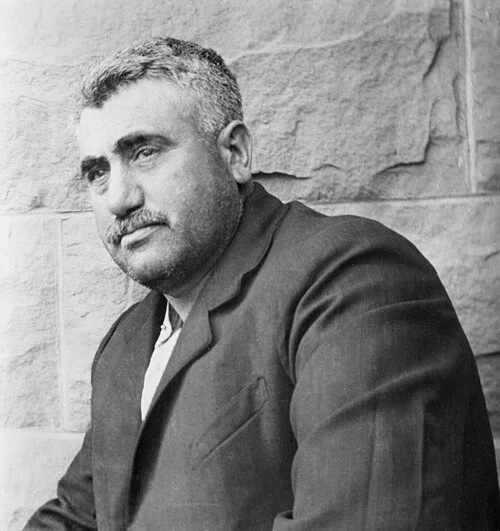
Emilio Picariello made his fortune, only to lose his life on the gallows. —Wikipedia
He did have two aces: a convent education which few immigrants of the day had, and a burning drive to succeed.
Beginning as a 20-year-old labourer in the U.S., he polished his English while he worked his way as a railway electrician’s helper to owning a grocery store in Toronto then a confectionery in Montreal. A friendly supplier encouraged him to move to Fernie to manage a newly-opened macaroni factory and Emilio and family headed west, settling in in 1910. Soon he’d bought the business and began making cigars and ice cream, even buying a small farm across the border in Spokane to grow his own produce.
Naturally gregarious and now affectionately known as ‘Pick,’ his BC and Alberta ice cream sales made him a favourite with children who could swap used bottles for cones. Collecting and reselling bottles proved to be another thriving business and soon he was advertising himself as “E. Pick, the Bottle King.” In 1914, he added yet again to his business interests by becoming a salesman for a winery.
It would prove to be an inauspicious time for liquor vendors. First, Alberta voted “dry” in 1916, a state of affairs that lasted until 1923 and prompted widespread bootlegging and illegal stills. BC’s own “Noble Experiment” was imposed the following year but was repealed just four years later.

A wholesale warehouse in Nelson before Prohibition in 1917 shut everyone down but the bootleggers.—BC Archives
U.S. Prohibition arrived in 1920. By this time Emilio was married with a growing family and had, by all appearances, life by the tail. But, living as he did just over the border in BC’s Crowsnest Pass, he recognized opportunity on a scale grander than anything he’d done to date—bootlegging.
Like everything else to which he’d turned his hand, he was soon successful. Illegal liquor sales would, in fact, make him rich, but cost him his life.
* * * * *
To put Emilio’s fall from grace in historical perspective, American Prohibition lasted until 1933. With millions of thirsty customers south of the 49th parallel seeking solace, the road to riches was plain to many Canadians besides Emilio Picariello.
Smaller, more daring entrepreneurs—the so-called rumrunners, although whisky made up the bulk of the trade—challenged American coast guard, customs and police officers by delivering the goods themselves. Canadian businessmen with deeper pockets and the right connections made the lion’s share but kept their hands clean. Simply by acting as brokers, they bought legally bonded Canadian booze and sold it to offshore distributors who took the risks of delivery.
In short, Emilio Picariello wasn’t the only otherwise honest and upright Canadian who forsook judgment and scruples for fortune. However, in his case, his hands-on managerial style would be his ruin.
He moved to Alberta so as to be able to serve Montana customers with BC booze which, despite prohibition in that province, could be legally purchased for export. He bought the Alberta Hotel in Blairmore, just over the Alberta border, as a base of operations but had to go underground when that prairie province also banned liquor sales and consumption.
When I say underground, I mean, literally. Ever adaptable, he had the hotel’s cellar enlarged and a tunnel dug so as to covertly accept and ship the goods from the hotel. A player piano in the hotel lounge covered any noise while these excavations were underway!
Then began a cat-and-mouse game with Alberta Provincial Police who set up check-points in Crowsnest Pass, hoping to intercept Emilio’s booze buggies, two Buicks, a Hudson, a Maxwell and a Cadillac, all of them customized for off-road travel and converted to carry liquid cargoes.
They became known as Emilio’s ‘Whisky Specials’. His slower, heavier trucks made use of old logging roads that spider-webbed both sides of the border between Fernie, Coleman, Blairmore and Lethbridge.
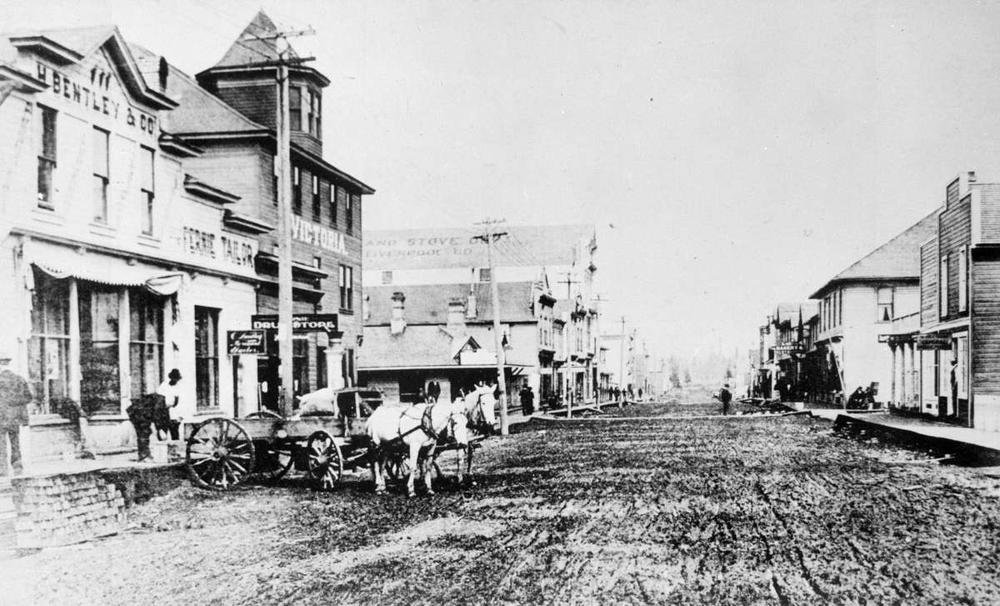
Victoria Avenue, Fernie, before the ‘Great Fire” of 1908. Emilio’s first venture in the coal town was running a macaroni factory. —BC Archives
Should any of his fleet be stopped by police, the liquor was disguised in sacks of flour. Usually, he’d send out several cars at a time; the first ones empty, to see if they could get through the pass unmolested. If police were on the job and gave chase, the loaded car was able to go its merry way.
Thanks to prohibition’s general unpopularity, none of this harmed Emilio’s standing in the community. As he grew rich, so did his esteem, the Bottle King becoming known as ‘Emperor Pic.’ He was elected alderman in Blairmore and celebrated for his philanthropic efforts. One of these was donating bacon and flour to needy families—the flour left over from his successful smuggling deliveries.
During the First World War he made a show of patriotism by buying 1000s of dollars worth of Victory bonds. When coal miners went on strike, he helped to provide for their families.
Ever humble, he usually dressed in overalls and an old shirt and carried his bank deposits—cash—stuffed in sugar sacks; he once misplaced a flour sack containing $20,000.
By this time everyone knew that he was a bootleg kingpin although he’d been busted just once when fined $20 for possession of alcohol. His second slip-up, in January 1922, was more serious and resulted in $500 fine after police linked him to barrels of beer seized in a rail car. Obviously a clerical error, protested Emilio, but the judge ruled guilty. (In her book The Rise and Fall of Emilio Picariello author Adriana A. Davies makes a case that his bootlegging competitors collaborated with the police to bring him down.)
Under intense political pressure the Alberta Provincial Police had reorganized in 1921, a new superintendent adding 50 men to the force and deploying many of them to the Crowsnest Pass area.
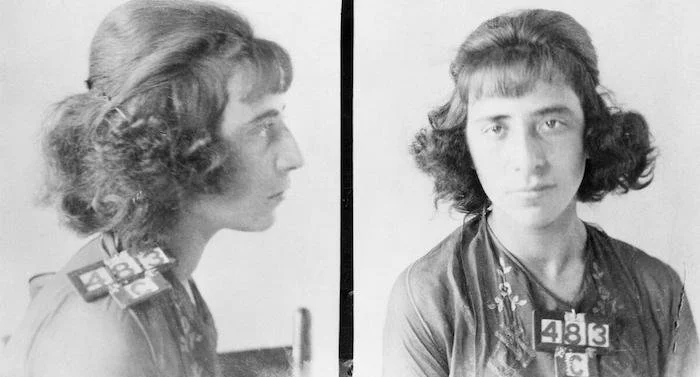
Florence Lassandro’s mugshots after she was charged with shooting Constable Lawson. —University of Calagary
It all began to unravel in 1922. Emilio had, so it was rumoured, taken as a mistress Florence Lassandro, his nanny, bookkeeper and part time chauffeur who was the wife of his hotel manager, Carlo Sanfidele aka Lassandro. Emilio had also, over his wife’s protests, put 17-year-old son Steve to work, driving a Whisky Special. During one of his deliveries in September, Steve encountered a police roadblock and, while fleeing at high speed, was shot in the hand by Constable Stephen Lawson.
The word that got back to Emilio was devastating—Steve had been shot!
Although informed by Steve himself in a phone call that the wound wasn’t serious, Emilio was beside himself with rage. With Florence driving, he raced to Coleman and confronted Lawson at the APP police barracks as he was washing up to have dinner and was in his undershirt. There was an argument, Emilio pulled a .32 pistol. Lawson jumped on the running board and attempted to disarm him. A single shot dropped Lawson to the ground and Emilio and Florence sped away.
That’s the way it was described by the only witness, Lawson’s nine-year-old daughter. In fact, several shots were fired during the struggle, one bullet embedding itself in the dashboard, another shattering the windshield. Sitting at the wheel and within two feet of the men as they wrestled for Pick’s gun, Florence would later—supposedly under police pressure—claim that she became fearful for her own safety. Grabbing a .38 from a holster on the dashboard, she aimed at Lawson’s shoulder “to make him stop”.
The bullet severed his spine and he died on the spot.
It didn’t take police long to arrest both suspects, Florence making it easier for them by turning herself in. The only real question posed at their five-day-long joint trial was who’d actually killed Lawson, Emilio, Florence, or both of them? In a ‘confession’ that has been challenged by historians, she admitted to shooting Lawson but insisted that she never intended to kill him. Upon their being sentenced to hang, Emilio gallantly insisted that it was he not she who fired.
Astonishingly, defence counsel called no witnesses, and what likely would be a simple question for ballistics experts today was more complex, a century ago.
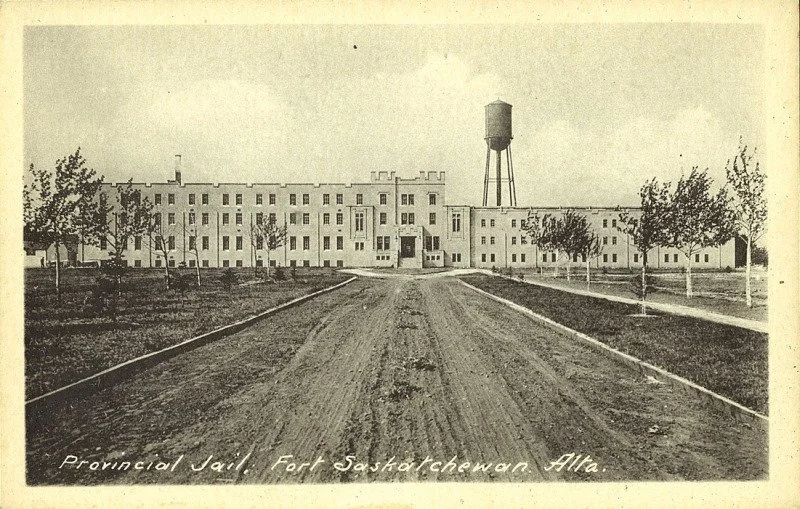
A postcard of the Fort Saskatchewan provincial jail where Emilio and Forence went to the gallows. —Public Domain
Or perhaps the Crown just had no wish to spare Florence; both were convicted and both were sentenced to die. Meaning, for Florence, the dubious distinction of being the first woman to hang in Alberta history.
On the rainy morning of May 2, 1923, clemency having been refused by Ottawa, both went to the gallows in the Fort Saskatchewan Penitentiary. Emilio went first, Florence shortly after. In a last letter to his wife he claimed he’d go to the scaffold “an innocent man”.
Almost exactly a century later, Florence’s descendants believe she was innocent, describing her in a family obituary notice in the Fernie Free Press as “a young married lady [who] was put to death by hanging on May 2, 1923,” after a “sinister” trial, and blaming reporters, writers, authors, artists, and others “who took latitude of interpretation and opinion to injure Florence’s character for personal gratification”.
In recent years an opera was made of Picariello’s and Lassandro’s story, there have been museum exhibits and at least one book about this remarkable man.
How ironic it is that sympathy for the popular Emilio Picariello, despite his conviction for the slaying of a police officer, and general antipathy towards immigrants, should have, as some believe, influenced voters’ renouncement of prohibition in Alberta the following year!
