
I’m sure readers will forgive me—you may even thank me—if I cut some of this week’s look-back at a century ago to the bone. The front page of this issue of The Leader is divided into three main news stories. Now, for those readers who raise chickens professionally or are dairy farmers, I’m sure these stories would be fascinating. But I really don’t think I have many of such callings among my subscribers and I’m going to chance editing this down, down, down...
Read More
I’ve never understood the human fascination with crime but there’s no denying its universal appeal. Crime stories, particularly those about true murders, unsolved and otherwise, are the subject of movies, plays, books, magazines and websites; they’re on television and radio, and among the headliners of daily newscasts.
Read MoreNorth Cowichan Council chambers presented a very animated scene, as the Leader so quaintly put it, when those for and against blasting restrictions appeared to present their respective cases. Against were poultry farmers who were then raising chicks in incubators and for whom loud explosions were detrimental; for were those who wanted to go about their business of road building, construction, mining and land clearing without hindrance.
Read More
Victoria’s famous Dallas Road waterfront has always been a ‘high rent district’. It wasn’t necessarily the houses that made these properties so expensive as most of them, 50 years ago, were older, some of them pretty modest if you went by appearances. It was that mantra of real estate, location, location, location (if you focused on the sweeping views of Juan de Fuca Strait and the Olympic Mountains and ignored the Ogden Point lumber wharves). Since then cruise ships (pre-pandemic) have taken the place of lumber piles, freighters and a grain elevator, and succeeding years and upgrading have made Dallas Road more popular and ever more expensive.
Read MoreAs befitting a quiet rural backwater such as the Cowichan Valley, there are no blaring headlines of gruesome crimes or other sensational events in this issue of the Leader, just the usual weekly wrap-up of city and municipal council news and social events. All in all, one might say, it had been a dull week.
Read More
One of the joys of publishing what really amounts to an online magazine is that it often draws a response from readers, usually as brief comments but, sometimes, something much more ambitious.
Read MoreHere’s an interesting headline for you: “NORTH COWICHAN PROBLEMS – Council Attacks Them Manfully.”
(They just don’t write newspapers like they used to.)
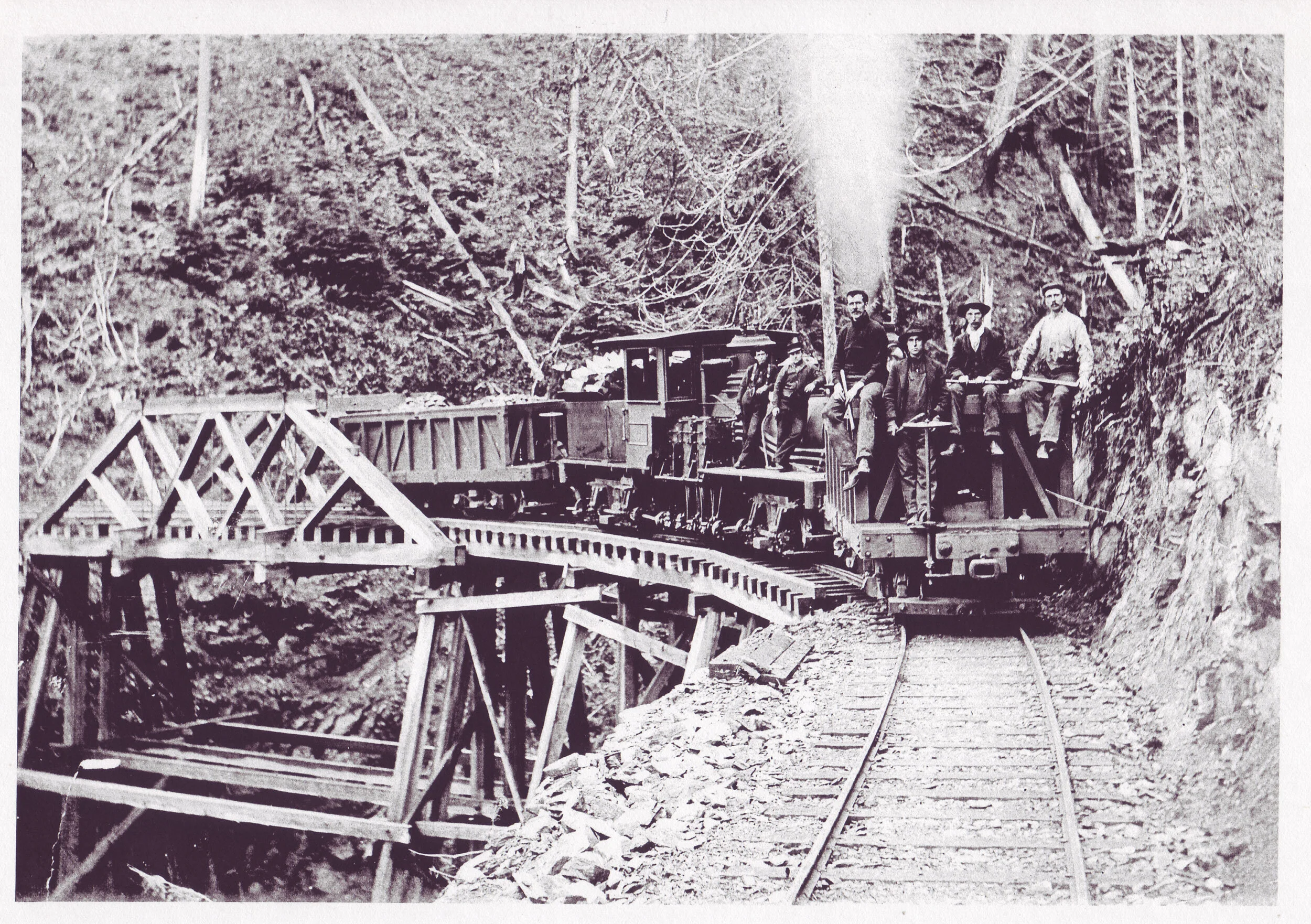
Many of you will know that the copper mining activity on Mount Sicker at the turn of the last century has intrigued me from even before I moved to the Cowichan Valley. I’ve since written about it in newspaper articles, columns and even a book, Riches to Ruin: The Boom to Bust Saga of Vancouver Island’s Greatest Copper Mine, from which much of today’s story is taken. To tell the incredible story of Mount Sicker in as few words as possible (my 2007 book is 300 pages)!
Read MoreTwo deaths, one accidental the other mysterious, were in the news 100 years ago but the big story on the front page of The Leader was about coming to a decision about the War Memorial.
Read More
As I’ve said so many times before, history just keeps on coming.
Everywhere I go, every time I open my mail, every time I read the paper, there’s something ‘old’ in the news. So often lately that they’re ganging up on me. So, next week I open my mail bag and my clippings and email files and share with you some of these news stories whose roots are firmly in the past.
Some of them may surprise you. I promise they will entertain you.
That’s this week in the Chronicles.
St. Andrew’s Presbyterian Church was on a roll 100 years, with intentions to enlarge its accommodation after becoming debt free by paying off its mortgage. Although only 30 families attended St. Andrew’s they totalled 100 adults and children.
Read More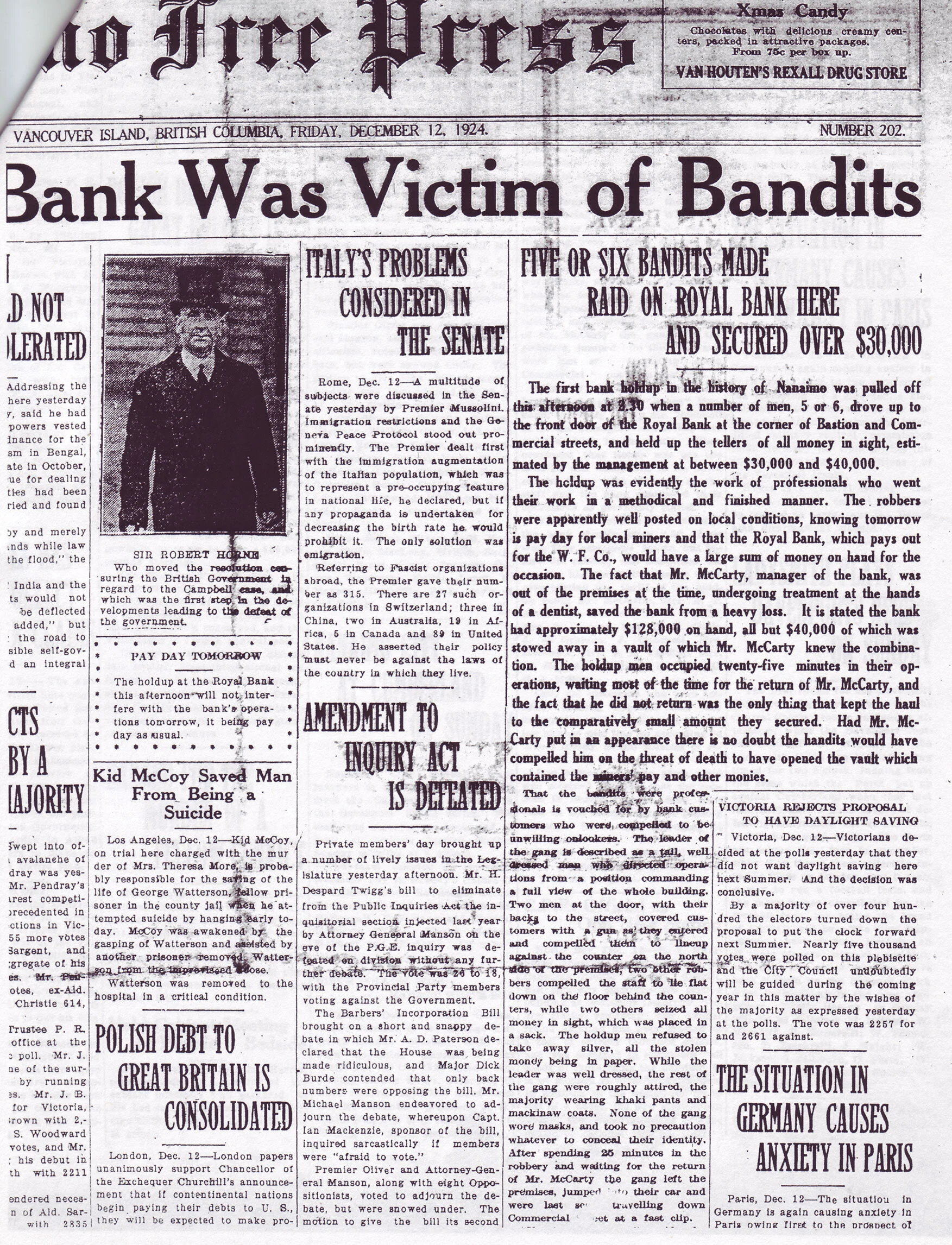
Back in 2007 the Nanaimo Star ran a look-back piece on the city’s ‘Costco Caper’ robbery of Mar. 7, 1996.
This was a rather ingeniously planned heist of Loomis Armoured guards as they made a delivery of cash to Costco’s ATM machine. The lone robber escaped with seven cassettes of currency; the amount stolen has never been released to the public.
For those of us who’ve become used to, even jaded by, world news of catastrophes and political crises, it was a very quiet week in the Cowichan Valley, a century ago. Every front-page news item on the front page of The Leader for this week in January 1920 was hum-drum, mostly about agricultural affairs.
That’s something we don’t have much of today: news about local farming. The Valley still has a large dairy industry and other agricultural enterprises, of course, but when did you last read about them in the Citizen or saw a feature on TV?
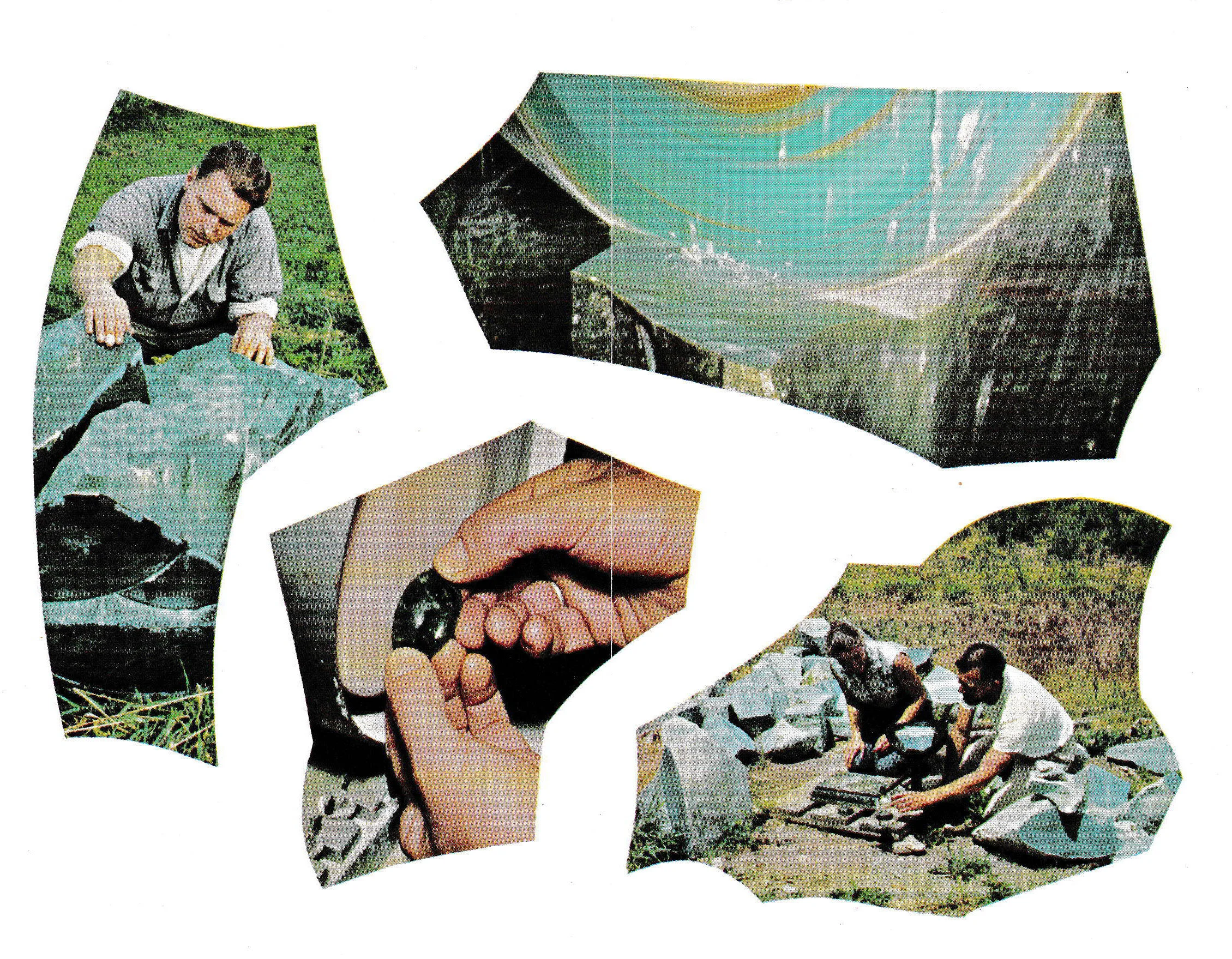
It took well over a century but the hardy Chinese miners who helped to carve a province from wilderness enjoyed the last laugh.
Today, decades later, thousands of recreationists throughout British Columbia are participating in a modern-day boom in their eager search for that once derided ‘green gold,’ jade.
Today’s prospector are called rockhounds but the name of the game is the same—the thrill of the hunt and the pride of achievement that comes from transforming a piece of stone into a beautiful gem.
Read MoreThe big news story of the day was the forthcoming municipal elections. A.C Aitken had been nominated for the reeveship of the Municipality of North Cowichan by incumbent A.A.B. Herd (said to have been a surprise) and Thomas Pitt was returned by acclamation to the mayor’s chair in Duncan for a third term. All the aldermanic seats of both municipalities and those of school trustees and police commissioners were up for grabs by incumbents and newcomers.
Read More
For years I’ve been a devoted fan of garage sales, flea markets and thrift stores, always on the lookout for the useful, the exotic and the unique—as I define the terms.
One of my more outstanding treasures turned up in a community 'free store' on Gabriola Island years ago. It’s a framed colour photo of a church memorial window. Not in itself a real turn-on for me.
But that changed when I read the penned caption. It identified the window as a memorial for Michael F.A.Ney, RCN. RCN, of course, stands for Royal Canadian Navy.
In that long-ago age before COVID-19, when friends could safely get together to greet the New Year, they did just that. To celebrate New Year 1921, according to The Leader headline, the Duncan Volunteer Fire Brigade and 300 “friends” ushered out the old year and welcomed the new with “the noisy clarion of cow bells, the throwing of coloured serpentines and the singing of Auld Lang Syne”.
Everyone present, it was reported, was out to have a good time and their wish was certainly granted, the Opera Hall having been decorated for the occasion with coloured paper and green branches, while at one of the exits were hung a Roll of Honour, with the names of all the Volunteer Firemen who’d enlisted during the war, and a framed picture of former members of the Fire Brigade.
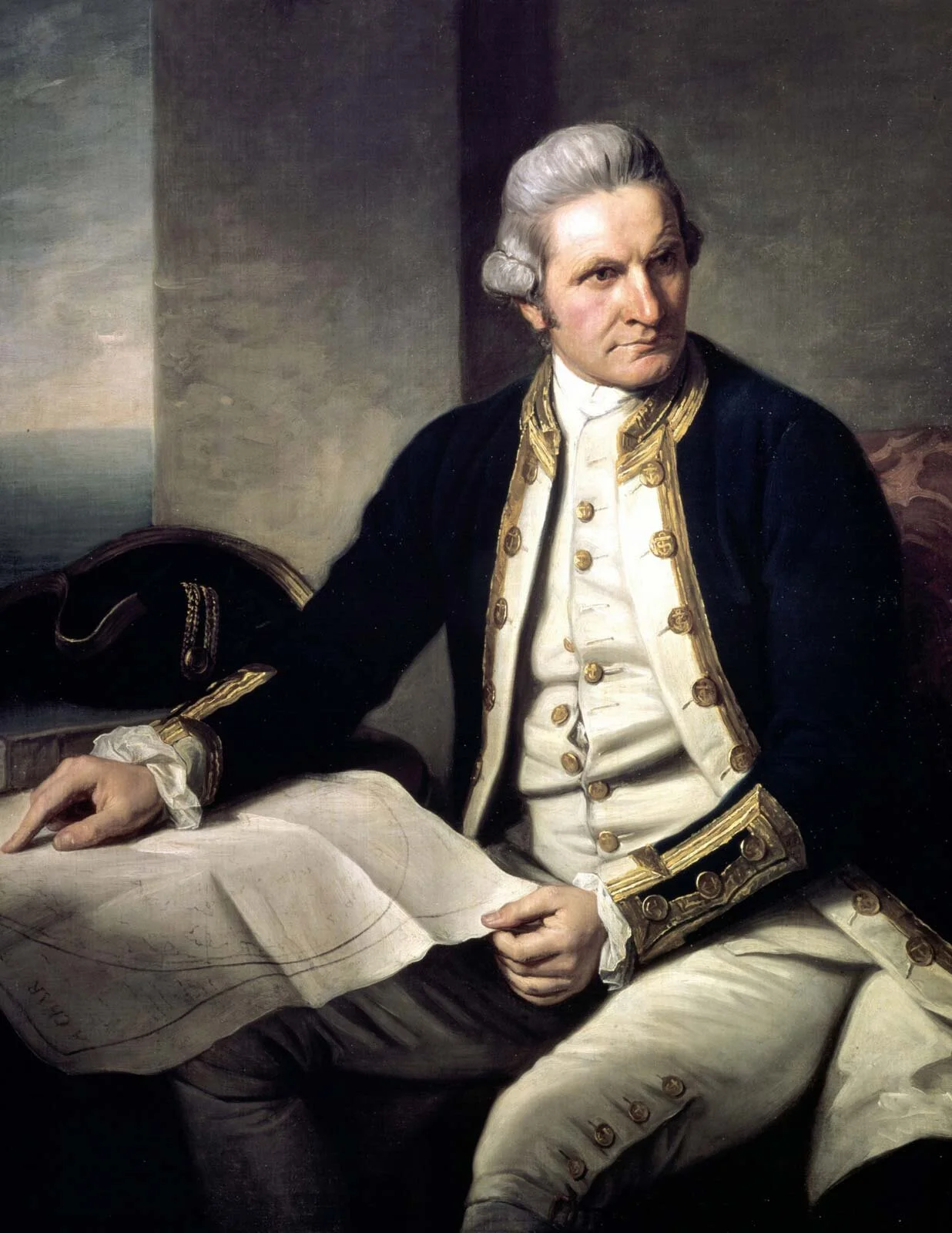
It should go without saying that we live in a world of constant change.
One of those changes is profound, even in a world besieged by pandemic.
I’m referring to the recent tsunami wave of consciousness of our colonial past. For Americans, it’s acknowledging a groundswell of resentment for more than two centuries of mistreatment of indigenous and black people. Even the Confederate flag, revered by millions, has come into disrepute.
Falling between Christmas and New Year’s, this issue of The Leader was light on hard news.
First up was North Cowichan Council which had met on the 27th for their last time of the year. Clrs. Hilton and Smith announced that they weren’t going to run for re-election.
The annual general meeting of the Cowichan Creamery Co-op was the big news story of the day for the Christmas edition of The Leader.
92 members and 32 non-members were present in the Knights of Pythias Lodge room to discuss financial and directors’ reports, one of which was that farmers should expect no discounts when buying farm machinery.