
There’s no mistaking the lead story in this issue of The Leader. Two full columns in the middle of the front page (continued on page 10) are headlined IN FAVOUR OF PROHIBITION.
At least it was a change of view, after weeks of articles mostly criticizing B.C.’s experiment with legislated temperance. As the referendum on continuing a revised form of Prohibition or replacing it with government controlled distribution of liquor rapidly approached more and more citizens wanted to have their say at public meetings.
Cowichan’s legendary Tzouhalem is in the news again.
Not the Quamichan war chief himself—he’s been dead for well over a century—but the fact that he's going to be the subject of a movie.
Reporter Robert Barron recently reported in the Cowichan Valley Citizen that documentary filmmaker Harold C. Joe, a member of Cowichan Tribes, and a film crew are making a television documentary that will “examine the near-mythic figure of Chief Tzouhalem through interviews and creative re-enactments".
The operative word here is “creative” as the only existing written records that refer to Tzouhalem are the hand-me-downs of non-Indigenous (i.e. white) contemporaries (some of them in positions of authority and therefore adversarial).
With no fewer than 12 stories featured on the front page of the October 7, 1920 edition of The Leader it’s difficult to know which was meant to be the headline story. As the City and North Cowichan Councils shared equal billing with the Duncan Board of Trade, let’s begin with City Council.
Two years after Armistice, Council expressed amazement upon learning that the War Trophies Commission had allotted the City a single machine gun and a trench mortar.
It wasn’t near good enough!
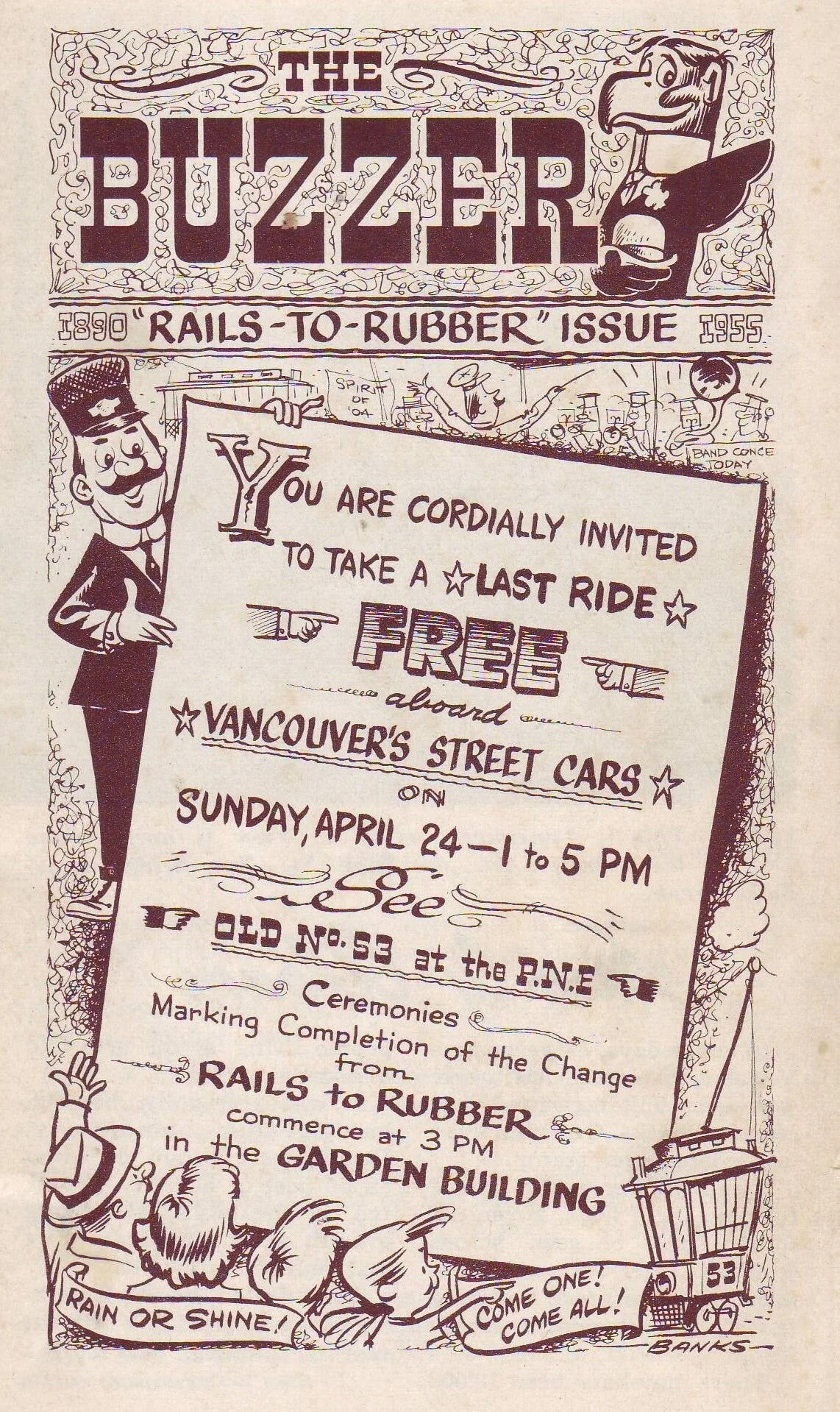
This special April 1955 issue of The Buzzer, entitled Rails-to-Rubber, “cordially invited” the public to “take a last ride FREE” aboard Vancouver’s street cars which were about to be retired.
This week I share this Buzzer with Chronicles readers who will, I’m sure, find the photos of this now long-gone mode of public transportation as fascinating as I have. Anyone who has ridden a bus lately will realize how far we’ve come in 65 years!
The report of the Cobble Hill Fair shared equal billing with news of the latest developments as the deadline neared for the plebiscite on Prohibition—two columns each.
But first the four smaller items on the September 30th front page.
The provincial government had approved the addition of 20 teachers at the Duncan public school. But the shocking news for the Consolidated Schools board was a government report that, within a year, facilities at the high school would be inadequate.
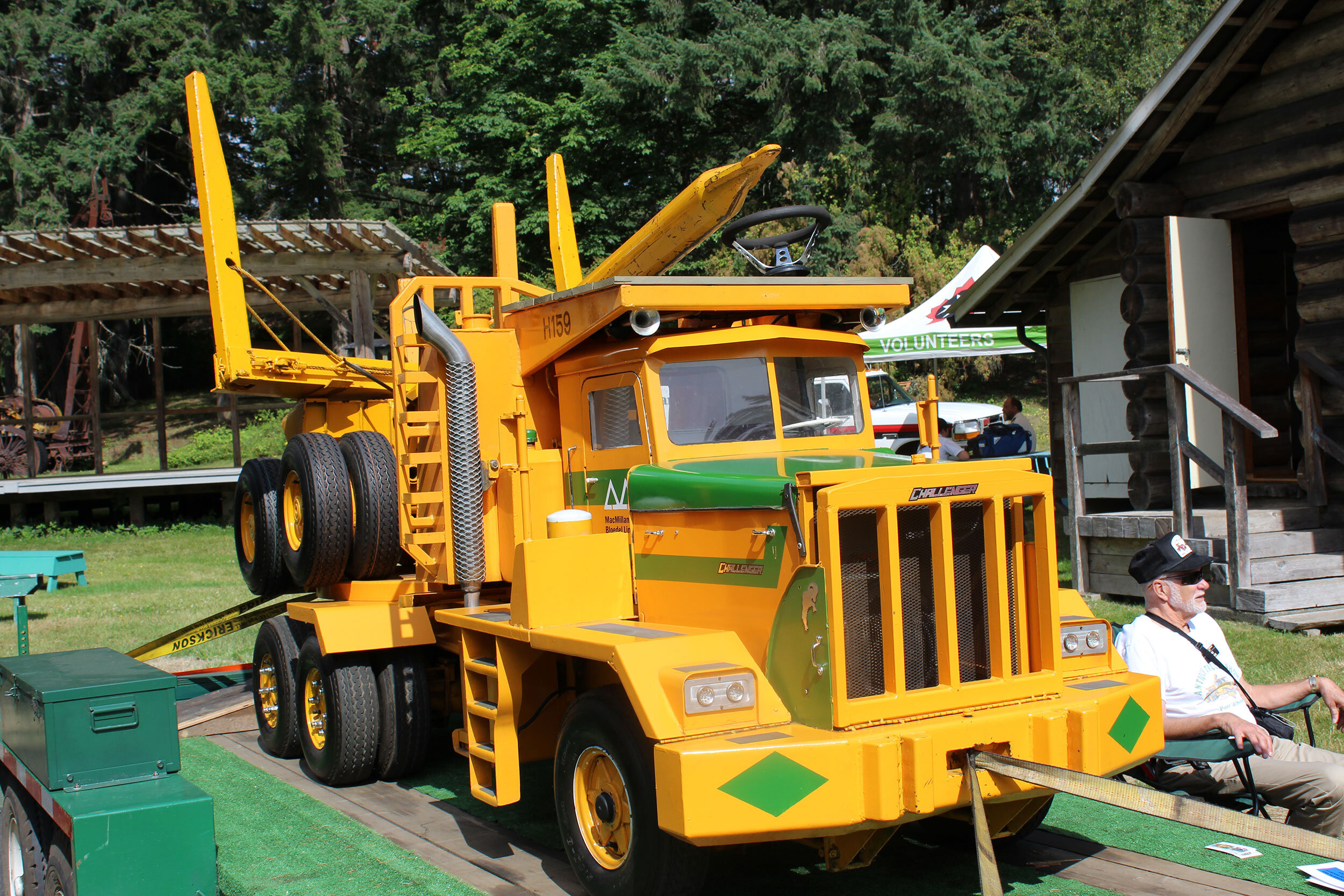
When Hayes Forest Services Ltd., an industry stalwart and one of the biggest contract logging companies on Vancouver Island, shut down in 2008, it ended the latest chapter in a forestry family tradition that went back three generations and left its hallmark on both logging and trucking.
Coincidentally, a showing of ‘antique’ logging trucks—not all of them really that old but most of them really, really big boys’ toys—at the Cowichan Exhibition grounds had included several Hayes logging trucks.
Yes, the just-held Cowichan Fall Fair was the headliner for this issue of the Cowichan Leader—but let’s start with a rash of auto accidents. This was 1920, remember, when cars on the road were still few and far between, if not the accidents.
Mrs. R.H. Whidden (married women went by their husband’s names and initials in those days), wife of the Duncan undertaker, had suffered a broken rib, Mrs. W.M. Dwyer (ditto) a scratch on the head, and Mr. And Mrs. James Marsh were severely shaken when the Duncan-Victoria stage (bus) left the road near the Malahat summit.
Long before there was an E&N Railway or the Island Highway over the Malahat, Maple and Cowichan Bays served as the gateways to the Cowichan Valley. Hence Maple Bay was a likely site for a Methodist church. Previously, Methodists had shared the Anglican chapel at Somenos, their minister attending from Victoria. In 1868 they held the first of three annual outdoor meetings at the site of today’s Maple Bay Inn. The Saanich-milled lumber from the ‘tents’ used for those occasions was recycled the following year in construction of a modest log church on 100 acres pre-empted by the Rev. E. White.
Read MoreThere were splendid exhibits at the 52nd Fall Fair—so proclaimed The Leader’s six-column-wide headline for September 16.
Livestock, garden produce and children’s displays were especially prominent as, once more, the Cowichan Agricultural Society presented the “busiest of scenes as...exhibitors from far and wide [brought] in their treasures”.
Highlights included, besides three classes of cattle and garden produce exhibits, what were termed educational entries. Horse entries were down slightly, thanks to the advent of gasoline tractors, but there were more poultry exhibits than ever.
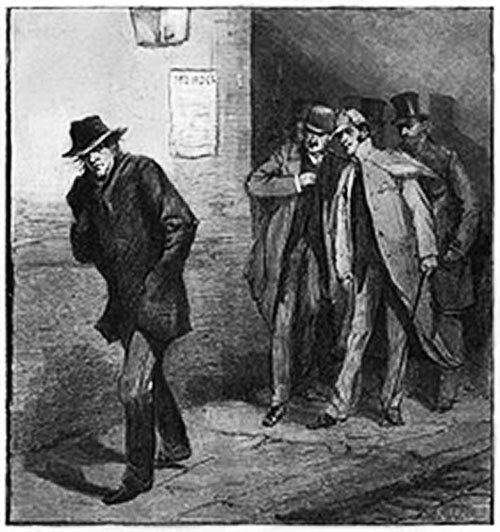
I had no intention of following last week’s post on the Westwell’s tragedy with another tale of violent death by human hand.
And I wouldn’t want last week’s tale of a family tragedy brought on by mental illness to be equated with this week’s story—which is nothing less than a home-grown replay of the most infamous serial killer of all time, Jack the Ripper.
No, I must lay the blame on the ‘Visual Storytellers,’ an offshoot of the popular online nostalgic Facebook photo gallery, “You Know You’re From Duncan...” and their recent post about, of all sinister things, Duncan’s Holmes Creek.
A full-width headline reminded readers they had until 6 p.m. Saturday to enter the Fall Fair.
But the major news story was about the Labour Day reunion of veterans of the ‘Great War’ which had been favoured with ideal weather. “Everything passed off most successfully and the large number of visitors from all parts of the district enjoyed one of the best sports entertainments ever held.”
Unfortunately, the baseball game scheduled between Duncan and Granby didn’t materialize; however, some quickly mustered teams of local players filled the breach and “some snappy play was witnessed”.
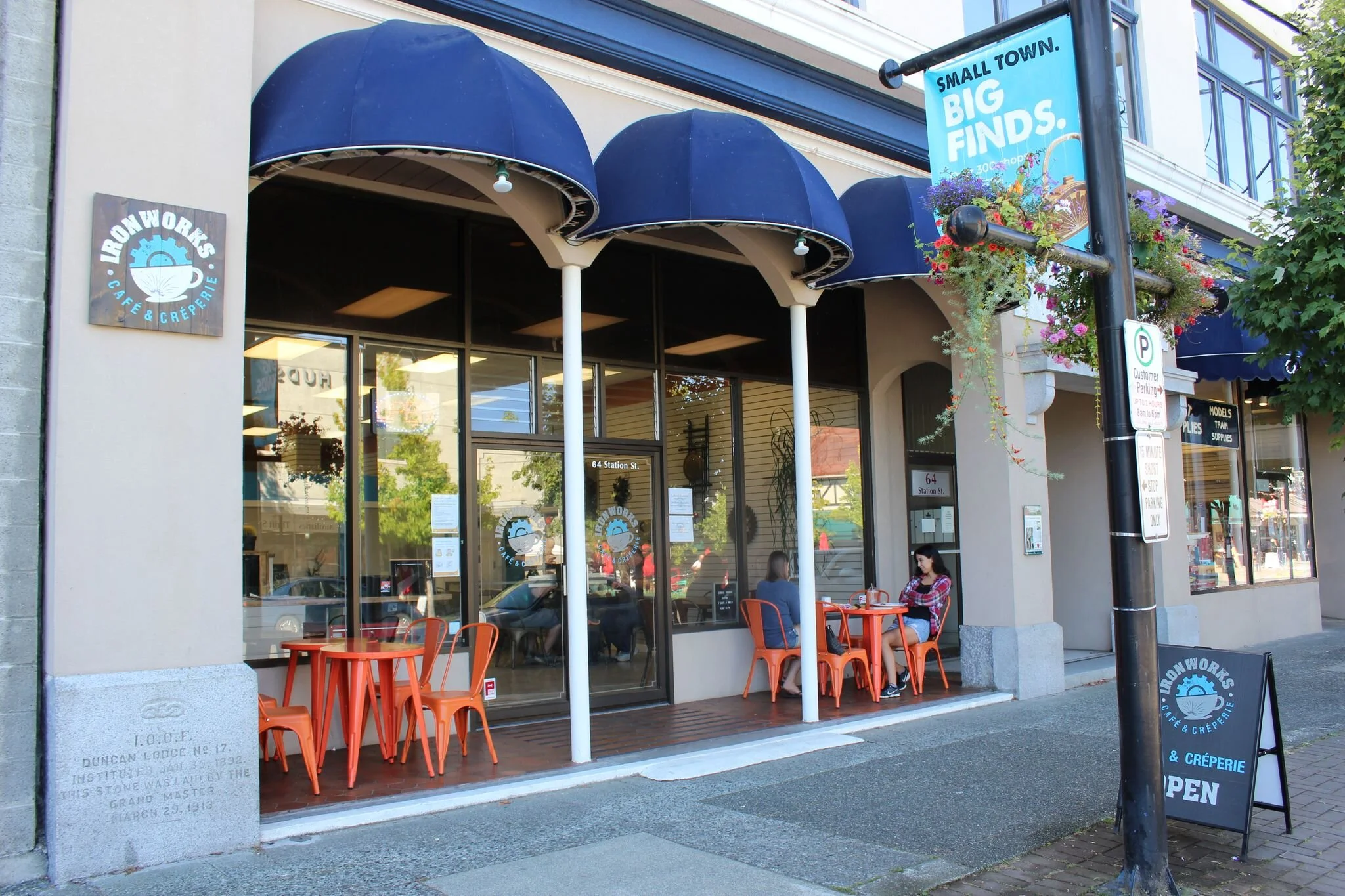
The difference in journalistic style between a big city daily and a small town weekly newspaper couldn’t have been more different—even extreme.
The headline for the Mar. 26, 1949 edition of the Victoria Daily Colonist was wall-to-wall and set in type one and a-half inches high.
It’s the sort of headline that’s usually reserved for such extraordinary news events as wars, toppling governments, outrageous scandals and disasters.
At last! the 100-odd “Imperial Pressmen” have come to Duncan and gone again after an indoor luncheon at the Agricultural Hall.
Some were entertained privately by individual citizens but most joined a like number of residents in the hall because the planned picnic beside the Cowichan River had been cancelled because of rain.
They were greeted by Duncan Mayor Pitt, North Cowichan Reeve Herd, MLA Duncan and the president of the Duncan Board of Trade. The esteemed guests were spared speeches of welcome. Lord Burnham did thank their hosts and said that their visit to the Island, brief though it was, was among the highlights of their tour and he could well understand its attraction to British emigrants.
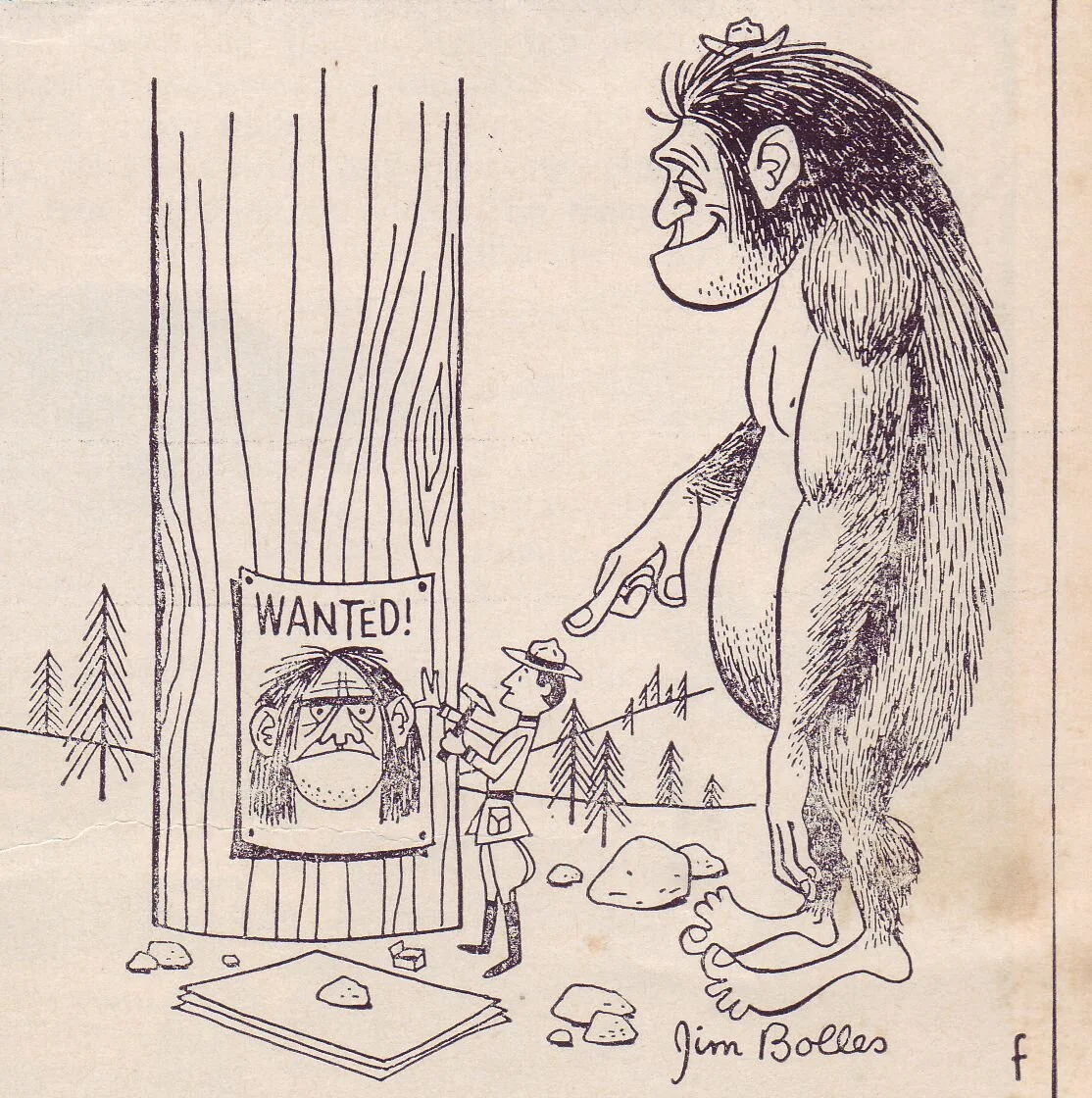
Somewhere in the dense rain forests of the Pacific Northwest, particularly British Columbia, is North America’s version of the Abominable Snowman.
This mysterious creature is known throughout California, Oregon and Washington as Bigfoot or Mr. Bigfoot; in B.C., he’s Sasquatch although some First Nations tribes have christened him individually.
Described as being extremely shy and peace-loving, this mammal is said to be “related to both homo sapiens (man) and the Himalayan yeti (Abominable Snowman)”. Supposedly ranging, when fully grown, from eight to 18 feet in height, and weighing from 500 to 1200 pounds, the hairy vegetarian is one of the most persistent and tantalizing legends of the West Coast.
‘FROM THE SEVEN SEAS – Journalists of British Isles and Dominions Visit District on Saturday’
Yet another issue of The Leader touting the forthcoming visit, two days hence, of this travelling troupe of big-name international journalists. After spending Friday at Butchart’s Gardens and the provincial legislature they were to be motored, next morning, to Duncan.
(Because this is the third lead-up to their visit I’ll wait until next week to conclude...)
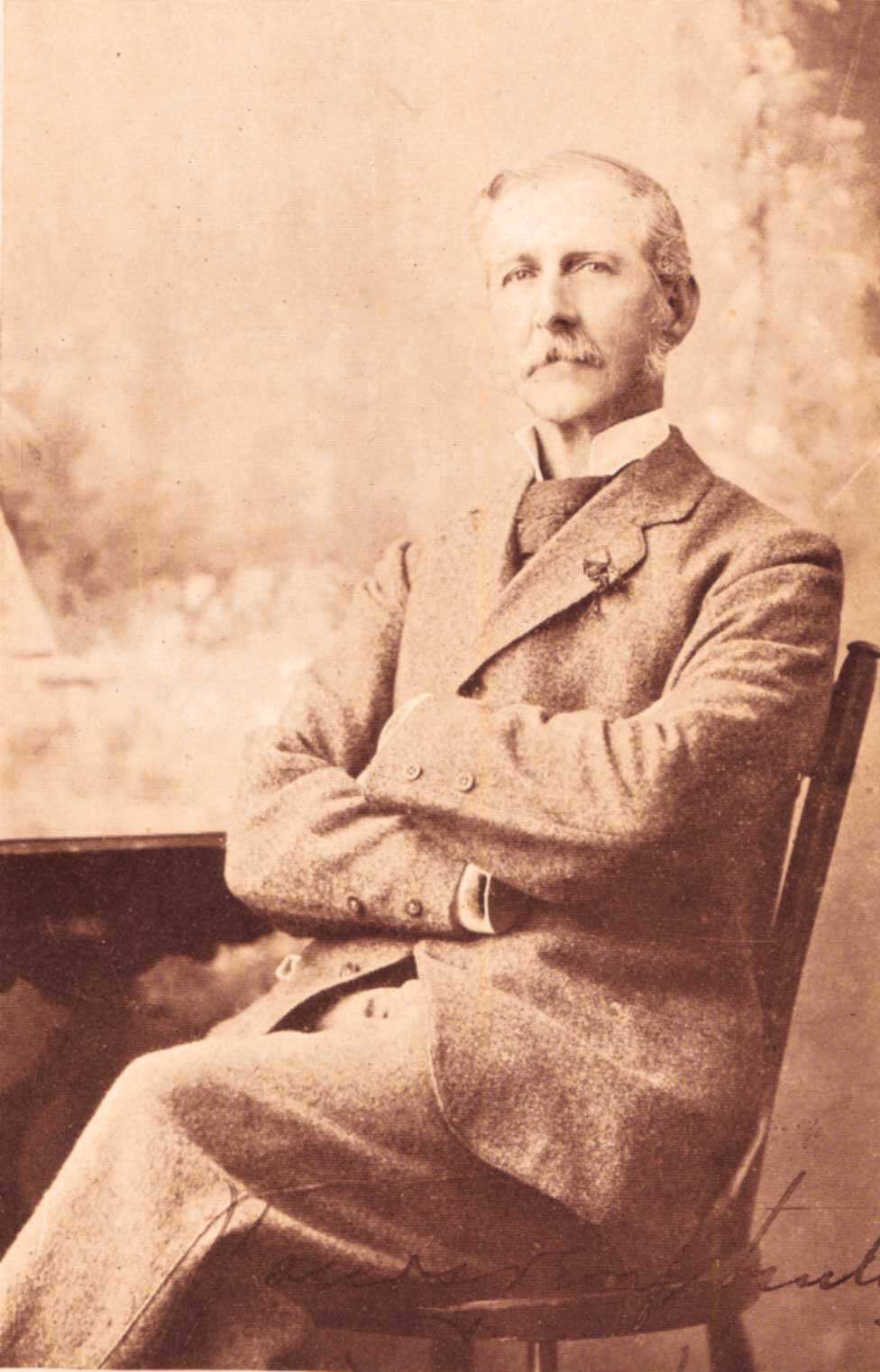
I’ve already told you how I became acquainted with right-in-my-own-backyard history thanks to neighbouring Miss Fawcett’s allowing me to read—not borrow—her father’s rare book, Some Reminiscences of Old Victoria.
Even then, when I was just a young teen, that book was highly collectible and it was a long time before I acquired a copy for myself from an antiquarian bookseller for what was, to me, an extortionate price.
There was little in the way of sensationalism in the pages of The Leader of a century ago. Hence the story that a firebug was on the loose in Cobble Hill is almost overwhelmed by miscellaneous headlines about more mundane events.
First up for August 19 was “Aquatic Sport,” an entire column on an afternoon of “unalloyed pleasure at Maple Bay”. This was an account of the Maple Bay Regatta which had been blessed with brilliant sunshine and a full tide. No surprise, then, that there was a large turnout.
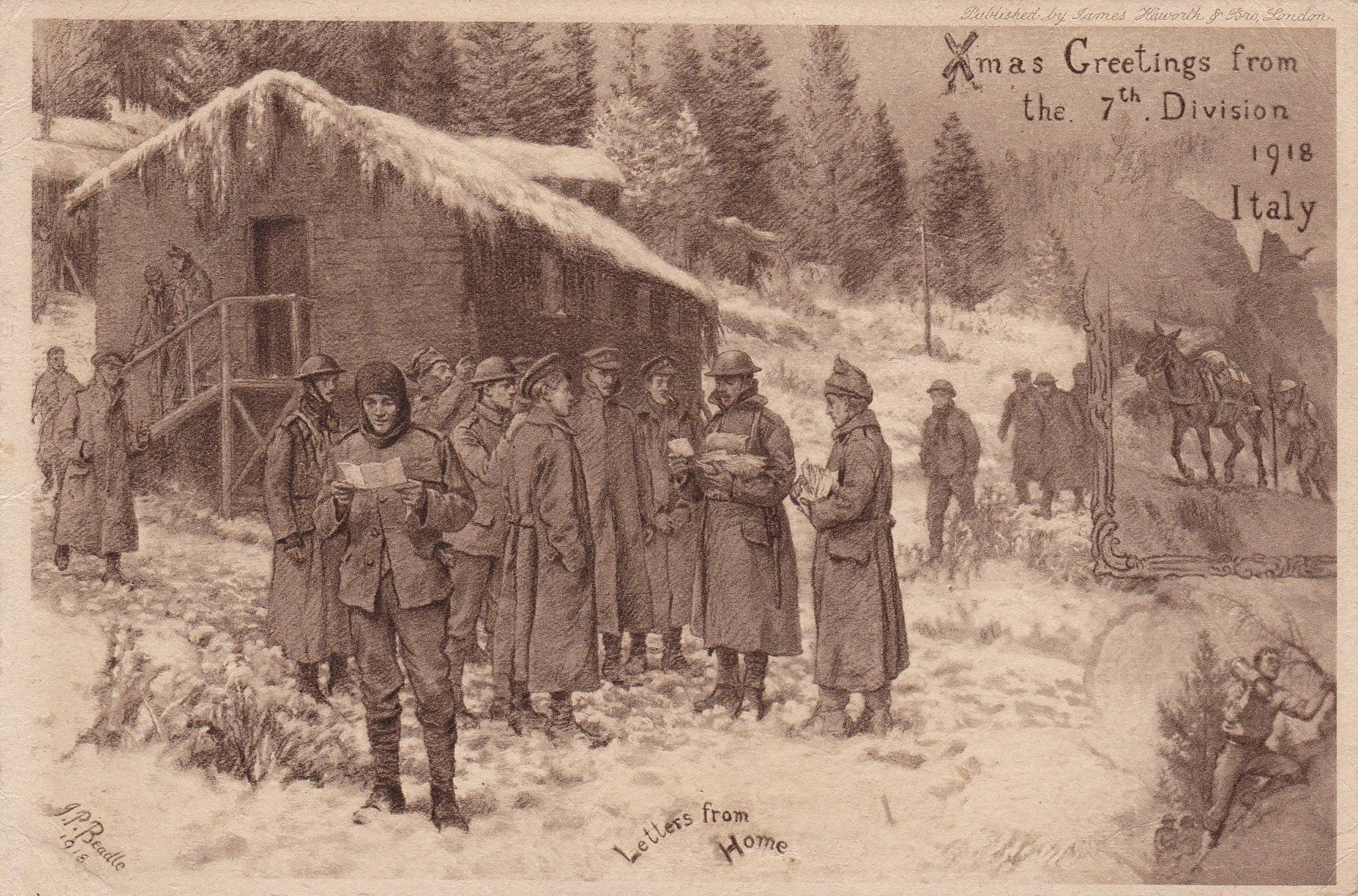
April 1918. No one knew it but the First World War, the worst yet in history, had six more months to go. This was a matter of great interest to Cowichan Valley residents because Duncan had the highest enlistment per capita in all of Canada.
That’s when the Duncan Board of Trade (the Chamber of Commerce of its day) chose to publish a small pamphlet on Valley industries and enterprises. Not for investors or tourists as would normally be the case, but for the edification of local men who were serving in the trenches.
The big news of the week was the impending arrival of 90 members of the Imperial Press Conference. “No more important or influential body has ever visited Canada,” crowed The Leader of this group which included one viscount, a lord, eight Sirs and a colonel among its dignitaries.
Meeting in Victoria, they represented over one-quarter of the Dominion (the British Commonwealth) and were scheduled to visit the Valley on the coming weekend.
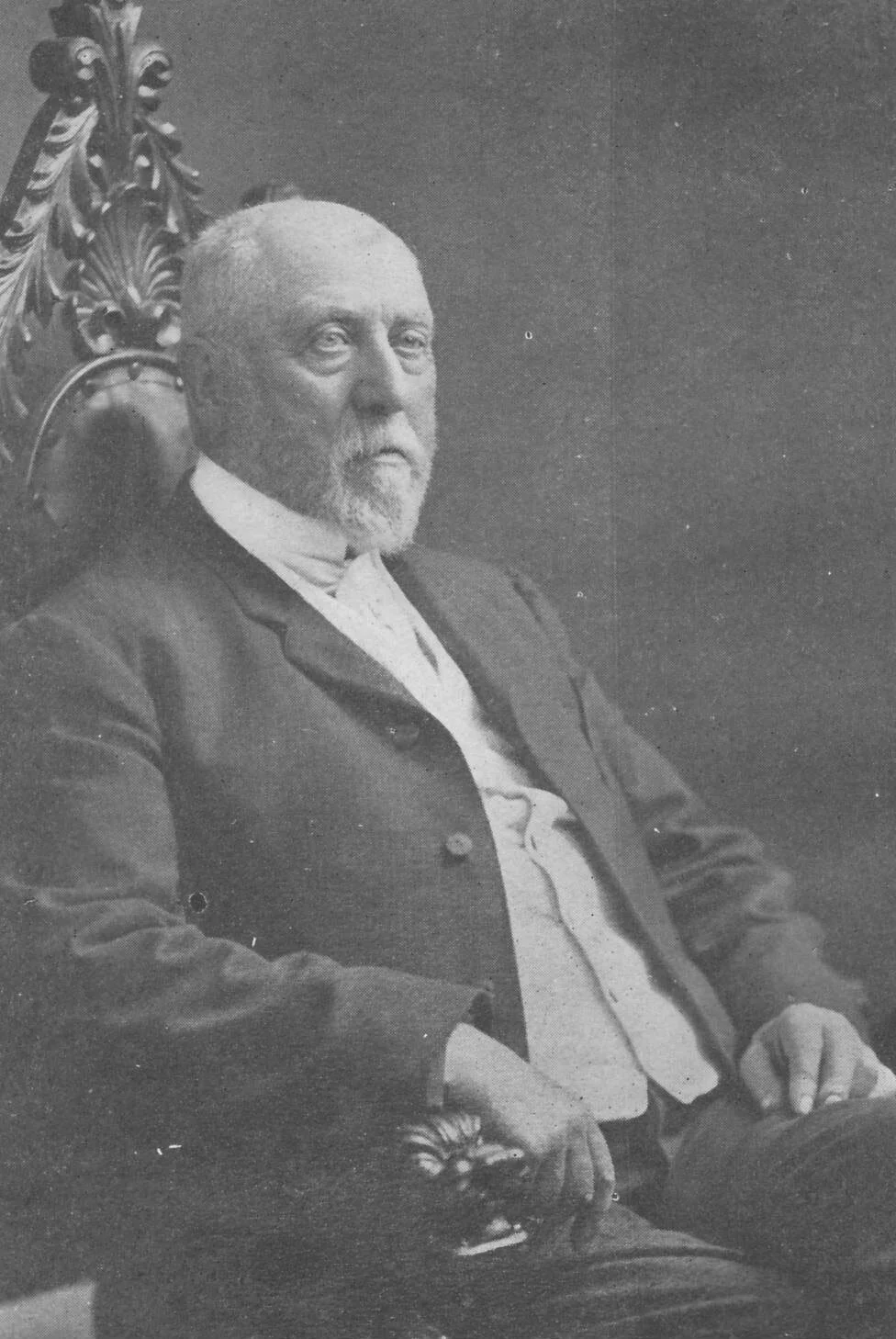
I’ve already dealt with the subsequent careers, at least so far as can be determined at this late date, of three of the principals. By all indications banker A.D. Macdonald was financially ruined and had to work for a living for the rest of his life; clerk/bookkeeper Josiah Barnett whose subsequent release after his arrest on the vaguest of suspicion said it all; and Manager John Waddell who, within three years of the robbery popped up in Ontario as the owner of several sawmills and a yacht.
Read More