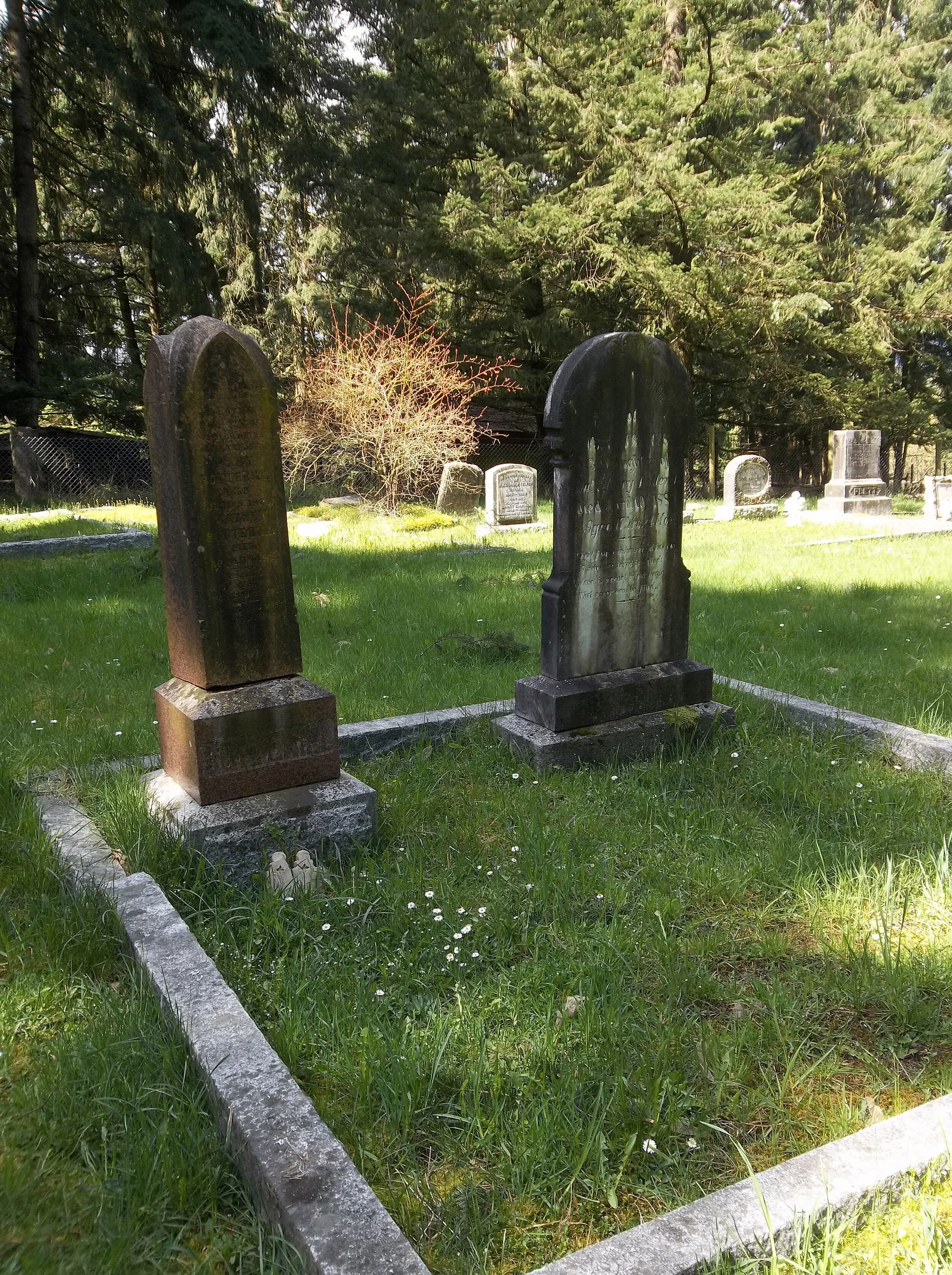
Pioneer Methodist Cemetery
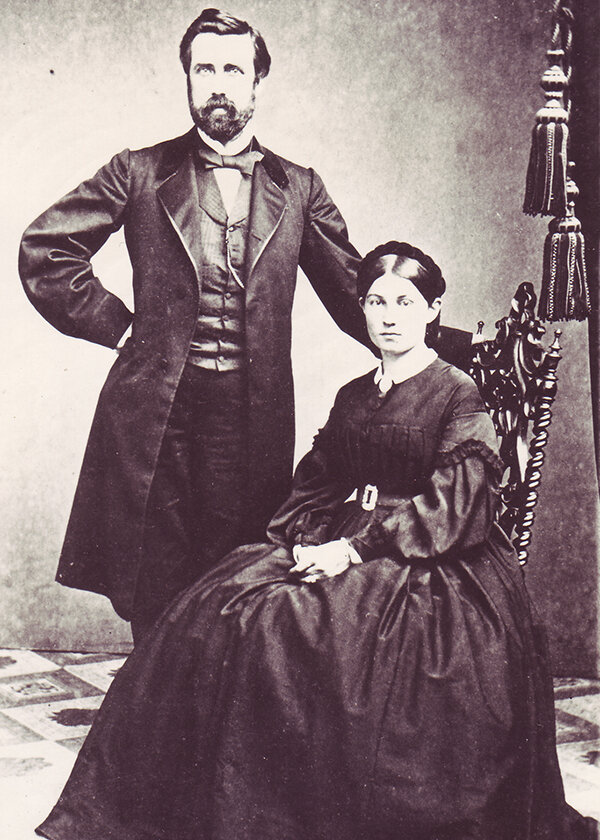
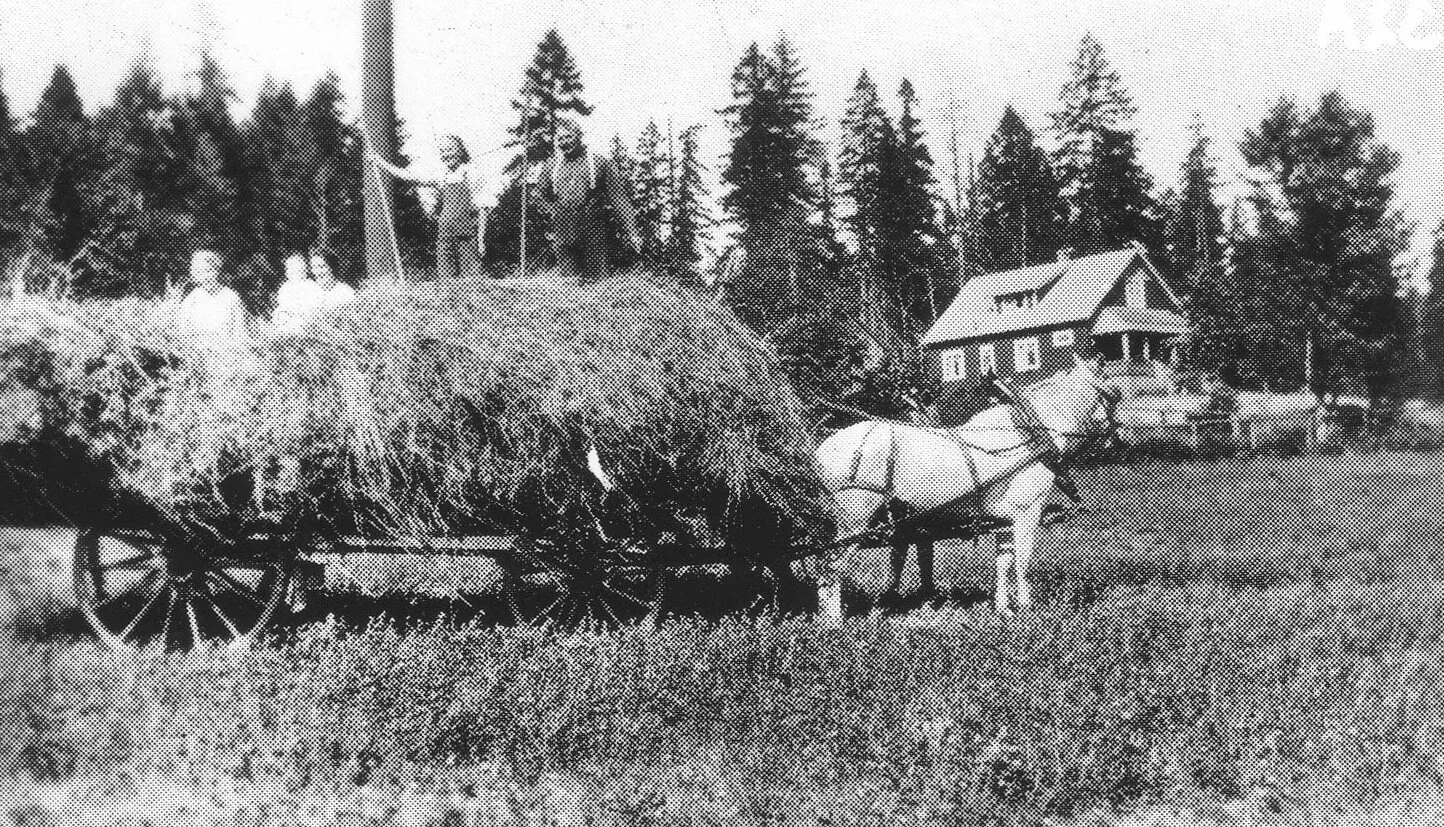
Long before there was an E&N Railway or the Island Highway over the Malahat, Maple and Cowichan Bays served as the gateways to the Cowichan Valley. Hence Maple Bay was a likely site for a Methodist church. Previously, Methodists had shared the Anglican chapel at Somenos, their minister attending from Victoria. In 1868 they held the first of three annual outdoor meetings at the site of today’s Maple Bay Inn. The Saanich-milled lumber from the ‘tents’ used for those occasions was recycled the following year in construction of a modest log church on 100 acres pre-empted by the Rev. E. White.
Read More
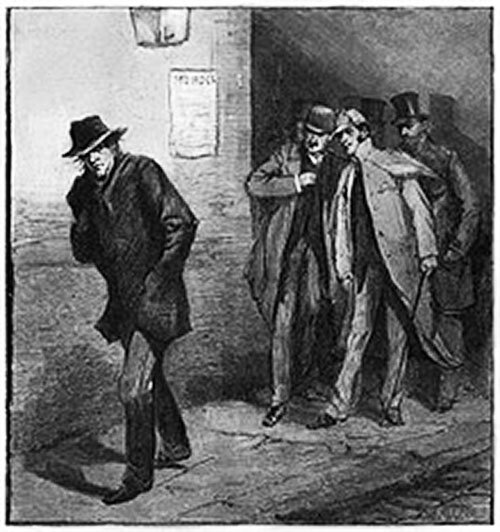
The Monster and Mrs. Bings
I had no intention of following last week’s post on the Westwell’s tragedy with another tale of violent death by human hand.
And I wouldn’t want last week’s tale of a family tragedy brought on by mental illness to be equated with this week’s story—which is nothing less than a home-grown replay of the most infamous serial killer of all time, Jack the Ripper.
No, I must lay the blame on the ‘Visual Storytellers,’ an offshoot of the popular online nostalgic Facebook photo gallery, “You Know You’re From Duncan...” and their recent post about, of all sinister things, Duncan’s Holmes Creek.
Read More
Murder at Westwell’s Gifts & Stationery Store
The difference in journalistic style between a big city daily and a small town weekly newspaper couldn’t have been more different—even extreme.
The headline for the Mar. 26, 1949 edition of the Victoria Daily Colonist was wall-to-wall and set in type one and a-half inches high.
It’s the sort of headline that’s usually reserved for such extraordinary news events as wars, toppling governments, outrageous scandals and disasters.
Read More
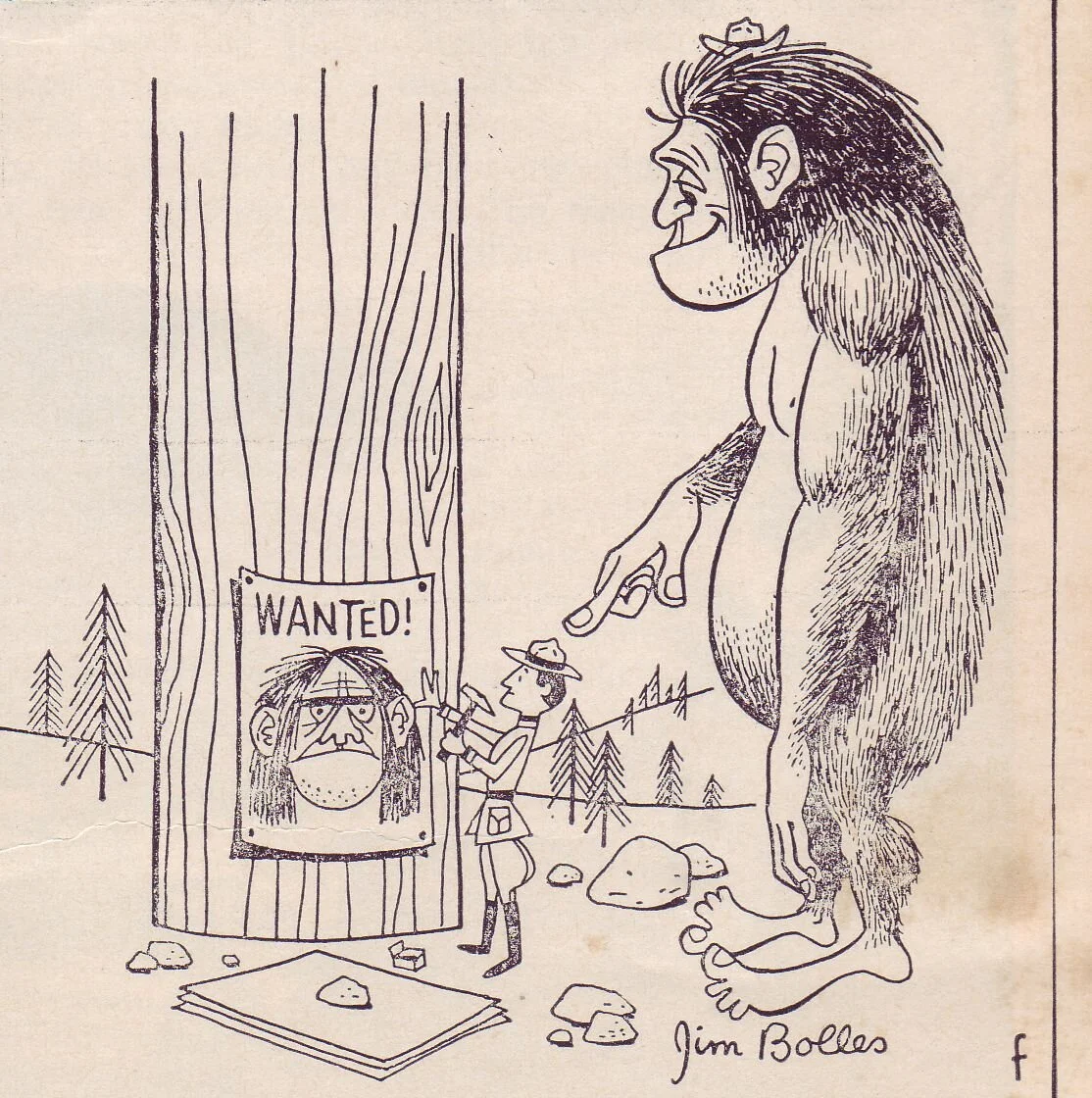
Sasquatch
Somewhere in the dense rain forests of the Pacific Northwest, particularly British Columbia, is North America’s version of the Abominable Snowman.
This mysterious creature is known throughout California, Oregon and Washington as Bigfoot or Mr. Bigfoot; in B.C., he’s Sasquatch although some First Nations tribes have christened him individually.
Described as being extremely shy and peace-loving, this mammal is said to be “related to both homo sapiens (man) and the Himalayan yeti (Abominable Snowman)”. Supposedly ranging, when fully grown, from eight to 18 feet in height, and weighing from 500 to 1200 pounds, the hairy vegetarian is one of the most persistent and tantalizing legends of the West Coast.
Read More
Neither Regret Nor Remorse: Edgar Fawcett’s Boyhood
I’ve already told you how I became acquainted with right-in-my-own-backyard history thanks to neighbouring Miss Fawcett’s allowing me to read—not borrow—her father’s rare book, Some Reminiscences of Old Victoria.
Even then, when I was just a young teen, that book was highly collectible and it was a long time before I acquired a copy for myself from an antiquarian bookseller for what was, to me, an extortionate price.
Read More
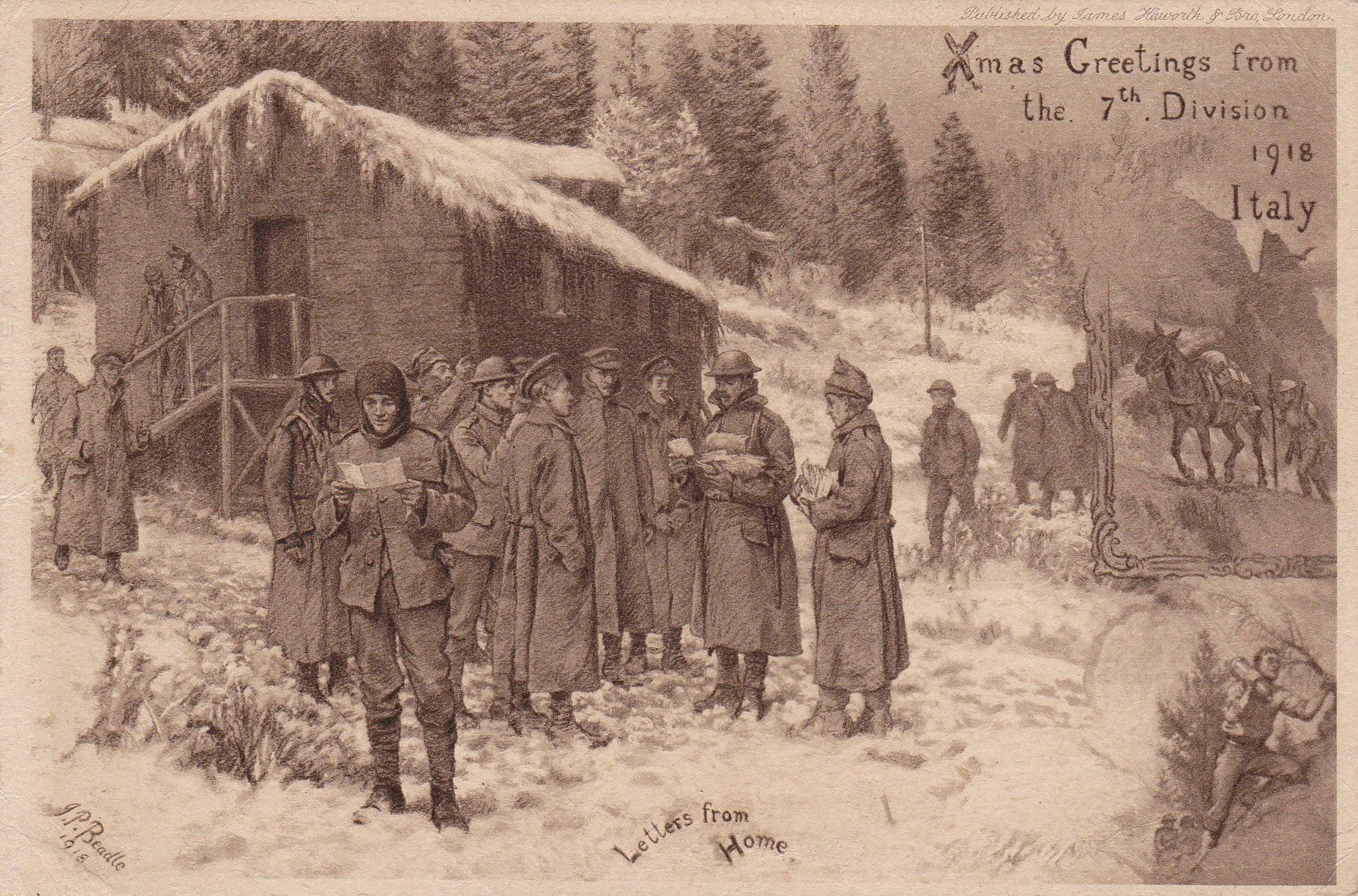
‘Pen Pictures’ of Cowichan a Morale Booster for Local Men Serving Overseas
April 1918. No one knew it but the First World War, the worst yet in history, had six more months to go. This was a matter of great interest to Cowichan Valley residents because Duncan had the highest enlistment per capita in all of Canada.
That’s when the Duncan Board of Trade (the Chamber of Commerce of its day) chose to publish a small pamphlet on Valley industries and enterprises. Not for investors or tourists as would normally be the case, but for the edification of local men who were serving in the trenches.
Read More
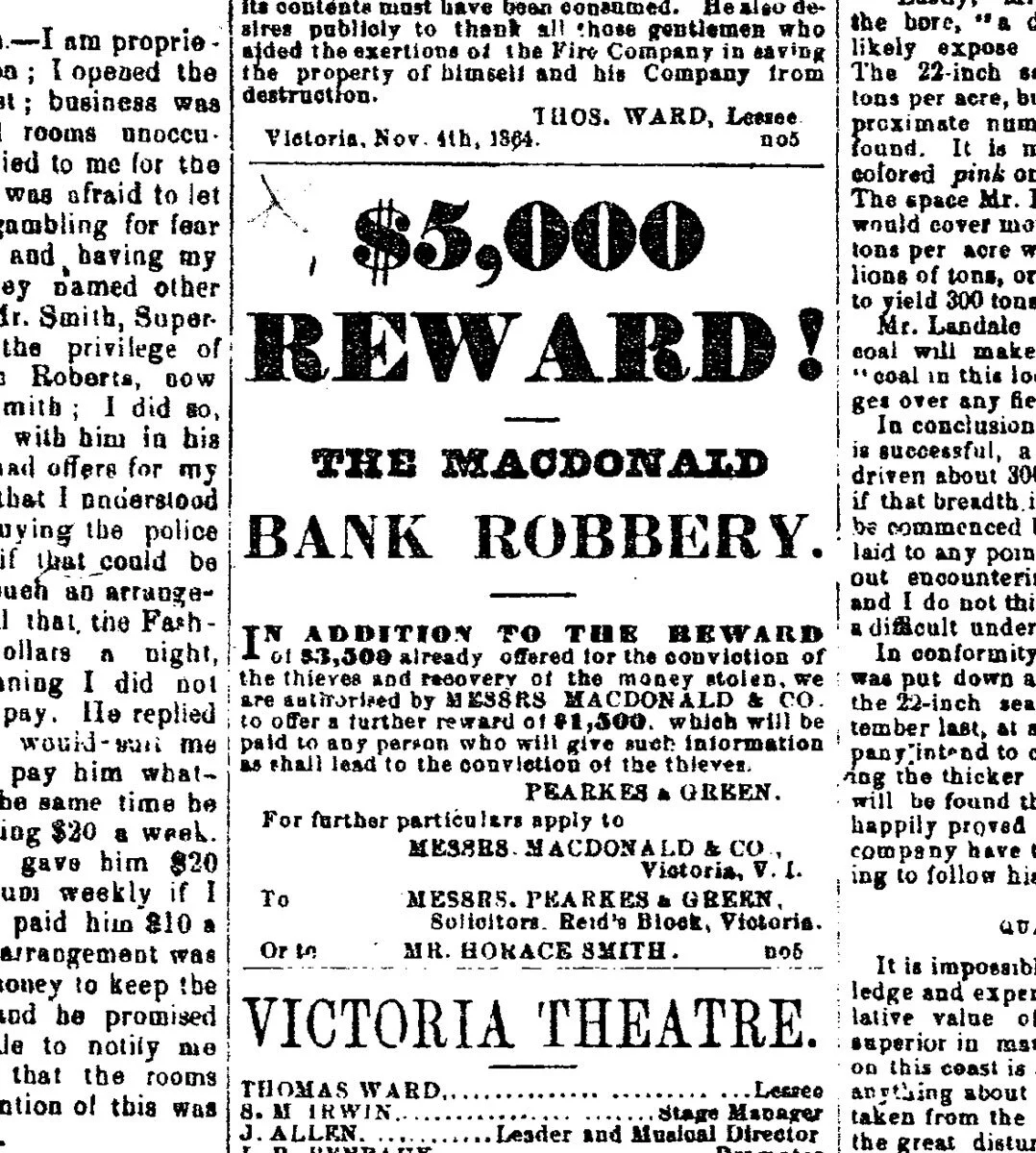
Macdonald’s Bank Robbery (Conclusion)
I’ve already dealt with the subsequent careers, at least so far as can be determined at this late date, of three of the principals. By all indications banker A.D. Macdonald was financially ruined and had to work for a living for the rest of his life; clerk/bookkeeper Josiah Barnett whose subsequent release after his arrest on the vaguest of suspicion said it all; and Manager John Waddell who, within three years of the robbery popped up in Ontario as the owner of several sawmills and a yacht.
Read More
Macdonald’s Bank Robbery (Part 2)
So: who did rob Macdonald’s Bank in the early hours of September 23, 1864?
How did the thief or thieves know of the $30,000 in gold, silver and banknotes (the equivalent of $900,000 in today’s dollars) that was being kept overnight before shipment to the Cariboo in the morning?
The brazen theft had to have been planned, as evidenced by entry to the bank having been made by means of a ladder of the exact length required to descend from a skylight, and a key found on the floor that fit the safe lock.
Read More
Macdonald’s Bank Robbery (Part 1)
“One of the last remaining links with Victoria’s perfect crime—a scandal that made headlines as far as San Francisco—has fallen to the wrecking crews of progress. A landmark for more than a century, imposing Springfield Manor of 633 Michigan Street, is being razed to make way for a 23-storey apartment building...”
Such was my lead-in, in March 1969, to the tragic story of Macdonald’s Bank and its mysterious robbery that has become one of Victoria’s most enduring legends.
Read More
In the Headlines: What’s Old Is New(s) Again
Who’d have thought that COVID would bring with it, besides world-wide contagion, illness, death, financial devastation and workplace upheaval, the—return of the drive-in movie.
There was a time, way back in the 1950s, when drive-ins were the rage not just for what was showing on the screen but for what went on in the cars around you when the lights were turned down.
Read More
Sea Serpent Cadborosaurus Calling!
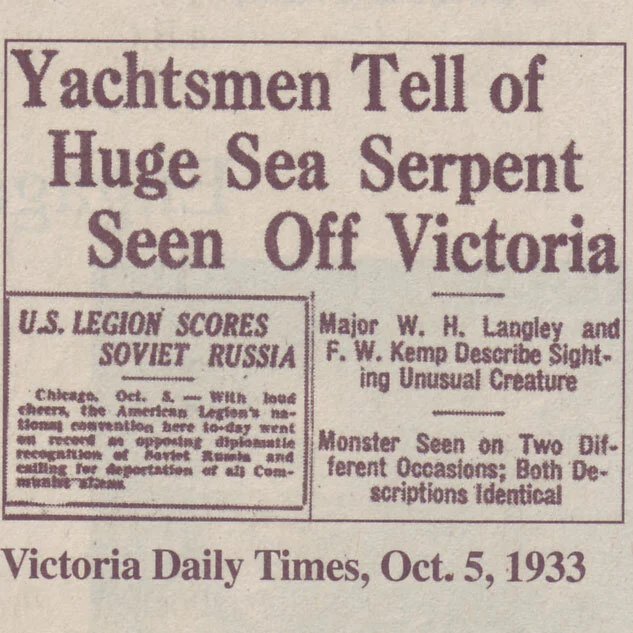
For almost a century, hundreds of witnesses have claimed to have seen B.C.’s fabled sea serpent, Cadborosaurus, better known as “Caddy,” frolicking in southern Vancouver Island waters.
Their sightings have inspired legends, jokes and, thanks to Victoria’s enterprising Chamber of Commerce, world-wide publicity.
Read More
Pioneer Days in the Cowichan Valley (Conclusion)
This is the third and final instalment of an unidentified pioneer’s recollections of Cowichan Valley pioneers, most of whom he’d known personally, and of the dramatic changes he’d witnessed over his own lifetime.
To maintain its original flavour, I’ve kept editing to an almost non-existent minimum. To correct the misspellings and grammatical errors would take away much of its charm. Hence I’ve only interceded when I felt absolutely compelled to do so to maintain clarity.
Read More
Pioneer Days in the Cowichan Valley (Part 2)
This is the second instalment of an unidentified pioneer’s recollections of Cowichan Valley pioneers, most of whom he’d known personally, and of the dramatic changes he’d witnessed over his own lifetime.
To maintain its original flavour, I’ve kept editing to an almost non-existent minimum. To correct the misspellings and grammatical errors would take away much of its charm. Hence I’ve only interceded when I felt absolutely compelled to do so to maintain clarity.
Read More
Pioneer Days in the Cowichan Valley (Part 1)
I’ve long joked that I shuffle more paper in a working day than a civil servant.
That no longer really applies (to civil servants, I mean) since the arrival of the computer.
But nothing has really changed for me. Yes, I’ve computerized too, but I still work with paper—17 file cabinets’ worth. Which is the way I prefer to work and to archive the thousands of files I’ve been building over most of a lifetime.
Read More
Are they out there? John Magor’s UFOs
I’ve never been able to quite believe in UFOs (flying saucers). Or Sasquatch. Or ghosts.
Mind you, I’ve wavered a few times, if only briefly; sometimes from reading or hearing particularly credible news reports or solid firsthand accounts of alleged sightings. Mostly, my skepticism has come closest to losing its resolve after
Read More