From Shetland to Vancouver Island
Eric Duncan is remembered for having written what has been described as “the most important document for the history of the Comox Valley,” From Shetland to Vancouver Island: Recollections of Seventy-Five Years.
Published in Edinburgh in 1937, it’s a fine read but long out of print. Happily, I’ve had a copy—a first edition, to boot—for years and have read it twice. It was, in fact, one of my earliest antiquarian book finds.
Recently, I scanned it again and found a chapter which I’m sure will please Chronicles readers.
Read More
Six Weeks of Death
April 1925 marked the highlight of a lifetime for 86-year-old prospector Bill Brown of Barkerville.
For those who don’t recognize his name, B.A. McKelvie was a leading provincial journalist and the foremost historian and writer of ‘popular’ B.C. history in the 1920s-’50s. He was gone when I, a kid, history buff and aspiring author/historian, discovered him during my first visit to the BC Archives while looking for such serious topics as lost treasures, shipwrecks, stagecoach robberies...
Read More
Bill Brown of Barkerville
April 1925 marked the highlight of a lifetime for 86-year-old prospector Bill Brown of Barkerville.
Read More
When British Columbia Had Its Own Mint
Back in 1861, the Crown Colony of British Columbia was hindered by a shortage of money of all types.
At that time, the future Pacific province was supposed to be on the pound sterling of the Old Country. In reality, there was a shortage of coins and almost any coin of almost any realm was accepted if of gold or silver.
Read More
Who Shot Victoria Police Constable Alex. Smith?
What a way to start the new year of 1896. City Constable Alex Smith was at death’s door. Shot in the chest, he’d been rushed to Royal Jubilee Hospital where doctors announced that they could do little for him.
Read More
‘Crime of the Century’ – The Case of the Stolen Church
Such it was called in a full-page story in the Vancouver Province in 1933.
A slight exaggeration to say the least, but a great story all the same!
Read More
Forgotten and Forlorn: the Ghost Town of Donald, B.C.
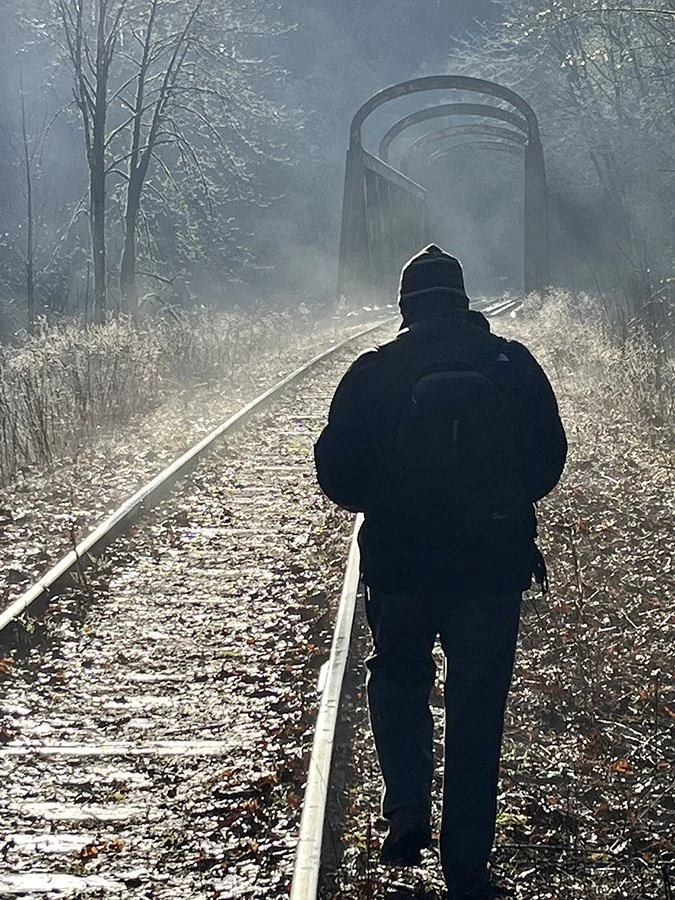
In February, Chronicles readers met guest columnist Tom W. Parkin (TW2 here at the BCCs.ca) who wrote about hiking a stretch of the beleaguered E&N Railway.
I’m pleased to say that he’s back this week with a photo feature on the little-known B.C. ghost town of Donald, a construction camp during the building of the CPR.
Read More
Cold Christmas for Errant Colonial Treasurer
In the year and a-half since his arrival in Victoria, George Tomline Gordon had been appointed treasurer for the Crown Colony of Vancouver Island, elected the member for Esquimalt in the Legislative Assembly, and elected commanding officer of the No. 1 Company, Vancouver Island Volunteer Rifle Corps. He had a beautiful wife, a large, loving family and a fine farm.
Read More
The Second World War is Still With Us
Officially, the Second World War ended with Japan’s surrender, 80 years ago. In at least one sense, however, the war goes on.
Although no hostile action was fought on Canadian, let alone British Columbia soil, we, too, have a history of live ordnance—so-called ‘friendly fire’—turning up, sometimes in the unlikeliest of places; several times, it has killed.
Read More
The Man With the Touch of Gold
If there is a single name that is synonymous with lost treasure in British Columbia that would have to be Neville Langrell (Bill) Barlee, school teacher, politician, entrepreneur, environmentalist, historian, writer, publisher, prospector and treasure hunter extraordinaire.
By all appearances, he scored at almost everything he did or touched.
Read More
Morris Moss, Man of Mystery
As told in last week’s Chronicles, Morris Moss was as colourful an adventurer as they come. Fur trader, mining speculator and customs officer, he survived shipwreck, at least one murder attempt, chased bootleggers, became embroiled in the aftermath of the Chilcotin War, was caught up in the Pelagic Sealing controversy, then— disappeared.
Read More
Troubleshooter Morris Moss Fought Murderers, Bootleggers
We don’t cherish our heroes in Canada.
Oh, briefly perhaps, at the moment of their celebrity, but as the years pass so do they—into the mists of time and forgetfulness.
I can’t offer a better example than Morris Moss who once was described as “one of the most colourful figures this coast has ever seen”.
Morris who?
Read More
Exploring a Railway Legacy
Guest column by Tom W. Parkin
Photos © TW Parkin
Read More
Deserter Islands Murders Cost Governor His Job
Feuding Governors: The Grand Inquisitor versus the Monopolist.
Recent notice of this talk by acclaimed historian Barry Gough as one of the Marion Cumming Lecture Series hosted by the Oak Bay Heritage Foundation, reminded me yet another great story within a great story.
In this case, how the northern Deserter Islands near Port Hardy got their name.
Read More
Golden Bralorne Got Off to a Slow Start
Interest in the Bridge River Valley’s mineral potential dates all the way back to 1865 when a government-sponsored mining exploration party reported having found gold in “that part of the country lying between the Chilcoaten and Bridge Rivers,” specifically on Cadwallader Creek on the South Fork of the Bridge River.
Read More
John Butts, King of Knaves
Conclusion
While serving yet another sentence for bootlegging, John was stricken with paralysis from the waist down and taken to the hospital in a hand cart. There, he was again examined to ensure that he wasn't faking. Upon being satisfied that he was indeed paralyzed (a test involving needle pricks, no doubt), hospital staff gave him every attention.
Read More
John Butts, King of Knaves
Part 1
So who is Victoria's most outstanding character?
Such a distinction might seem to be a difficult one to assign, given the many weird and wonderful individuals who’ve walked our Capital’s streets during the past 160-plus years. But there is one man who stands head and shoulders above all the others.
Without doubt, the most fabulous character ever to call Victoria home port is John Butts. Or John Charles Butts, ‘town cryer to her Britannic Majesty,” as this rogue preferred to call himself. A newspaper of the day expressed the view of many citizens when it declared John to be “a greater scourge than cholera or smallpox.”
Read More
Evil Agnes – The Ugly
Too late, as I admitted last week, did I realize I had the perfect play on the popular Spaghetti western movie title, The Good, The Bad and The Ugly.
With a difference—women.
By too late, I meant the correct sequence: I’d already led with Belle Castle, The Bad (in the sense that she was a ‘fallen’ woman who redeemed herself too late for love). making Nellie Cashman, The Good, the second instalment by default.
But now we’re back on track with Agnes, The Ugly.
Read More
The Good, the Bad and the Ugly, Women’s Style
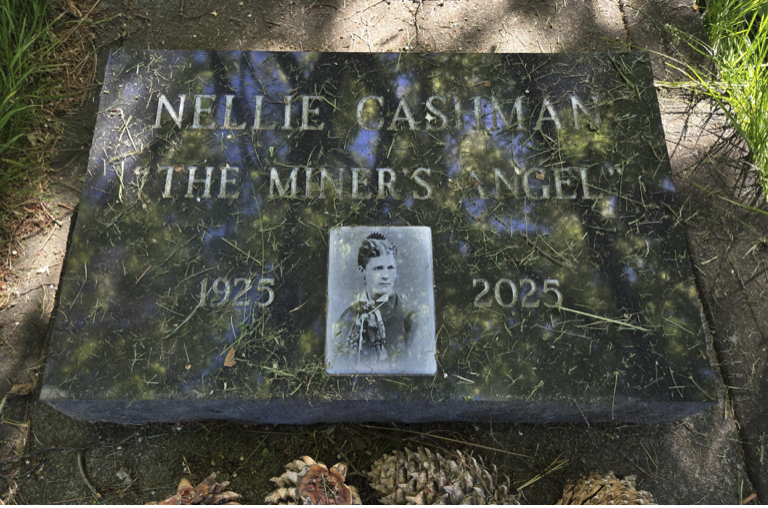
This week, it’s the turn of The Good - The Miner’s Angel whose name was synonymous with warmth and generosity in every mining camp from Mexico to Alaska.
* * * * *
Nine years ago, Victoria's old Cemetery Society established a special Nelly Cashman Fund to raise money for a centennial stone to be placed on her grave in Ross Bay Cemetery. “Nellie Cashman deserves our recognition,” the Society’s Patrick Perry Lydon and Donna Chaytor told the Times Colonist.
Read More
Love Came Too Late for Beautiful Belle Castle
Her real name and where she came from, no one knew. But that she’d been beautiful and a lady, all were agreed. Upon her death in a lonely B.C. mining camp, forsaken by all but the man who loved her—and the rose tree she’d nurtured and cherished with a mother’s devotion—her secret went with her to the little cemetery on the hillside.
Today, even her grave site is unknown and the mystery of Belle Castle, as she called herself, remains safe with the ages.
Read More